Trips of up to 5 days — do almost nothing
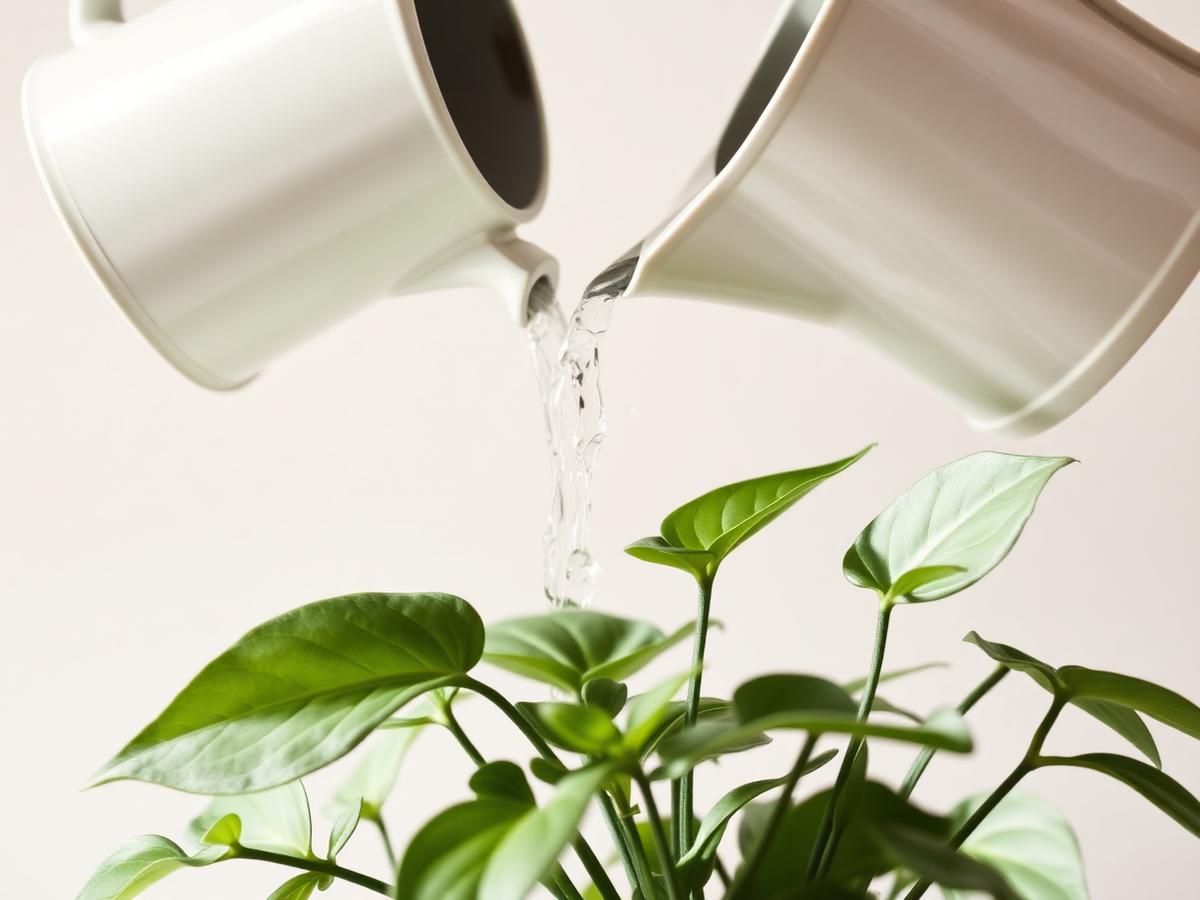
Most common houseplants handle 5 days without watering as long as they're not in direct sun. The single best thing you can do is water deeply the morning you leave — fill the pot until water runs freely, let it drain, empty the saucer. The root ball stays moist through a full work week for almost any established plant.
Two small adjustments extend this further without effort: move plants out of south- or west-facing windows (direct sun doubles soil drying) and into bright indirect light instead, and close blinds partially to reduce transpiration. Turn the heating down a couple of degrees if the season allows.
Trips of 5–10 days — the grouping trick
Beyond a week, a simple group-and-shade approach keeps most plants happy. Cluster plants close together (not touching) on a towel in a cool, bright but non-direct-sun spot — a bathroom with a north window or a living room corner away from radiators work well. Grouped plants create a microclimate where humidity from one plant slows drying in another.
A few specific tricks at this tier:
- ·Bottom-water each plant thoroughly the day before you leave (20 minutes in a tray) — this reaches deeper roots than top watering.
- ·Cover the soil surface with a thin layer of damp sphagnum moss or LECA balls to slow evaporation from the top.
- ·For drought-sensitive plants (ferns, calatheas) add a clear plastic bag loosely over the top, leaving the bottom open so the plant doesn't overheat.
- ·Turn the heating down and curtains partially closed — the temperature/light combo drives drying rate more than time does.
- ·For humidity-dependent plants, run a humidifier on a timer (4 hours at dawn) if you have one.
Trips of 10–21 days — self-watering systems
At two weeks, passive methods alone aren't enough — you need some form of water delivery while you're gone. Three methods work reliably for most plants; see self-watering methods for houseplants for full details, and watering plants while away for two weeks for a specific two-week plan. A summary here:
- ·Cotton wicks: run a cotton shoelace from a bucket of water into the soil of each pot. Capillary action draws water into the soil at the rate the plant uses it. Tested with one plant for 24 hours before you leave.
- ·Inverted water bottles: a plastic bottle with a small hole in the cap, inserted into the soil. Releases water slowly as the soil dries. Cheap but unreliable — test before you go.
- ·Bathtub shallow pool: stand all plants in 2–3 cm of water in a bathtub lined with a towel. Cool, indirect light; water stays 10–14 days. Only for plants that tolerate wet feet (pothos, peace lily, monstera); snake plants, succulents, and ZZ plants rot in this setup.
- ·Sub-irrigated planters (SIPs): self-watering pots with a reservoir. If you already use these, fill the reservoir full before leaving — 2 weeks of water for most plants.
Trips of 3–6 weeks — humans or drip systems
At a month plus, passive systems run out. Two options:
- 1Ask a friend to visit once a week. Leave them a checklist (which plants, where, how much water, where the watering can is). One visit per week is enough for most collections; more frequent visits aren't better.
- 2Install a drip-irrigation kit on a timer. A basic system (€30–€60 on Amazon or a hardware shop) runs from a reservoir to spaghetti tubes at each pot, with a battery timer dispensing water every 2–3 days. Reliable for several weeks, but test for at least a week before you rely on it.
Trips over 6 weeks — dedicated care
Longer trips need someone committed to regular care, or a fully automated system that you've already used through an earlier vacation. Hiring a pet sitter who also handles plants, or asking a neighbour to check twice a week, is usually more reliable than any timed system running unsupervised for months.
Prepare the collection before you leave: prune heavy growth (reduces water demand), repot anything in dry or root-bound soil, isolate any plants showing pest issues so they don't spread, and leave specific written care notes per plant rather than generic "water them" instructions.
What to skip
Three commercial products that get oversold:
- ·Glass watering globes (those bulbs you insert into the soil): they release water in uneven bursts, often delivering a week's water in the first two days and then nothing. A DIY inverted bottle does the same thing more controllably.
- ·Hydrogel crystals marketed to retain water: they work but also retain water when the plant is already drowning in it, compounding root rot risk.
- ·"Self-watering mats" or capillary mats without a reservoir: they evaporate dry in 3–4 days unattended and provide no benefit after that.
Pre-trip checklist
Two weeks out, start preparing. One week out, make final decisions. The day you leave, execute.
- 12 weeks before: confirm trip length, assess which plants need special attention (thirsty species, recent repots).
- 21 week before: fertilise once (lightly) — leaves extra reserves but not enough to burn.
- 33 days before: move plants out of direct sun to bright indirect light.
- 42 days before: bottom water each plant thoroughly.
- 51 day before: set up any self-watering systems and test them for 24 hours.
- 6Morning of departure: top-water any plant that's dried since the bottom-water, confirm room temperature is moderate (18–20°C), close blinds partially.
- 7Leave a note for anyone checking — species-specific instructions beat generic ones.