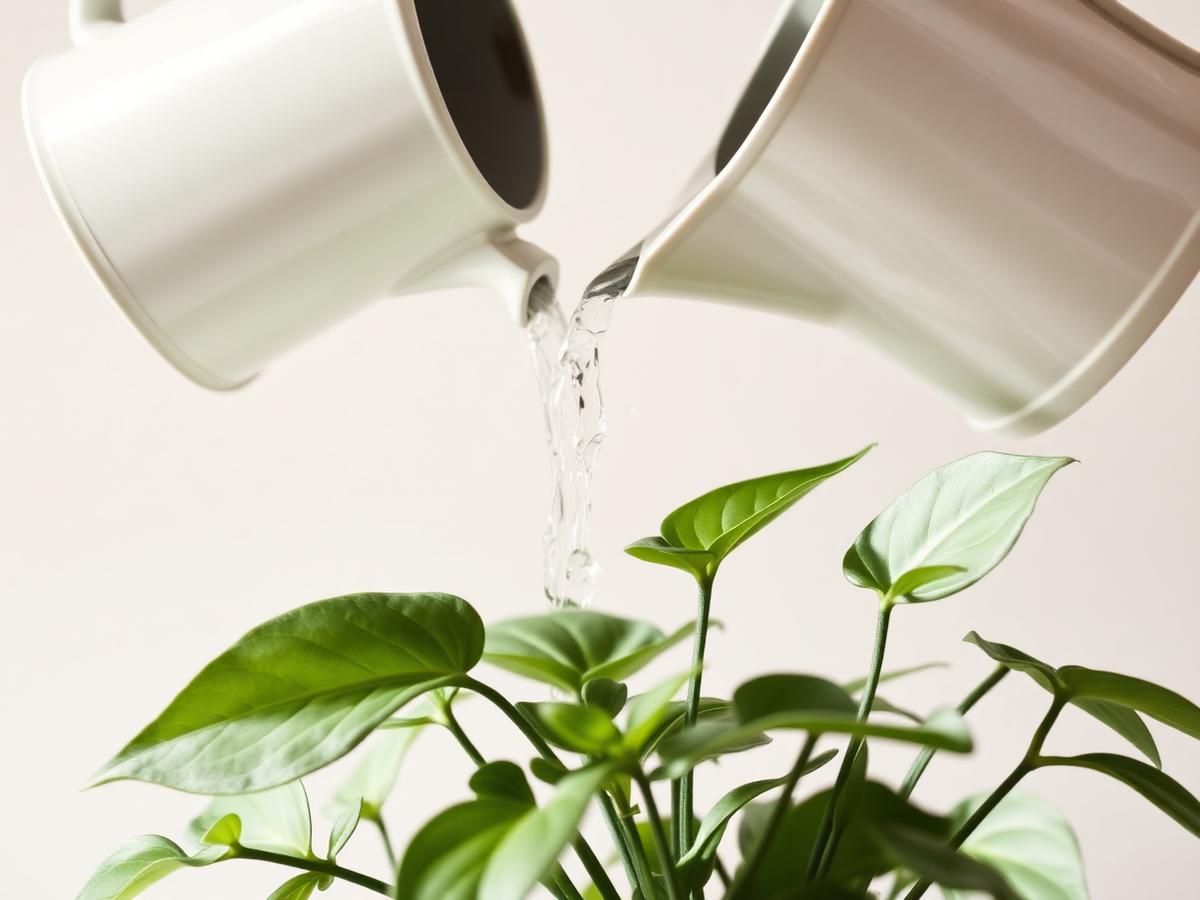
Why winter cadence stops working in March
Indoor plants in a UK or Nordic flat use dramatically less water in winter than summer. Shorter days cut photosynthesis by half or more, cool rooms slow transpiration, and many tropicals enter a genuine dormancy or near-dormancy state. A monstera that drank 500 ml a week in July typically uses 200–300 ml a week in January in the same flat.
As daylight lengthens and temperatures gradually climb — from mid-March through early May in most of the UK — the plant's metabolism resumes. Stomata open for longer each day, photosynthesis accelerates, and the plant pulls water from the soil faster. If you keep watering on the winter schedule while the plant has ramped back up, you are essentially underwatering — the soil dries before your next scheduled visit, and the plant runs dry in short cycles you don't see.
The reverse problem, swinging too fast to summer cadence before the plant has actually resumed, is equally common. A plant that's still half-dormant in early March doesn't need summer volumes yet, and the extra water pools in the root zone where transpiration can't move it out. This is why March and April see an uptick in root-rot reports — not the winter, when most people expect it. The pillar watering guide covers the seasonal shifts in full.
Three signals that say "resume"
Rather than switching cadence by calendar date, watch the plant itself. Three signals reliably indicate it has resumed active growth and that water demand is climbing.
- 1New leaf growth or stem elongation — the single clearest signal. A new monstera leaf unfurling, a pothos throwing a new vine, a fiddle leaf fig adding visible buds at the top: water demand has already climbed.
- 2Pots drying faster week-on-week — compare how the pot feels on Day 3 after watering this week vs three weeks ago. If soil is noticeably drier sooner, metabolism is up.
- 3Soil dry at 3 cm within 4–5 days — in January the same pot might have been damp for 10–14 days. A transition to drying in under a week is the rhythm resuming.
Ramping up over 3–4 weeks
The reset is gradual. Don't jump from winter frequency to summer frequency in a single watering — the root zone needs time to match the above-ground metabolic increase.
- 1Week 1 (signal seen): Shorten winter interval by ~20%. If you were watering every 14 days, try every 11–12 days.
- 2Week 2: Another ~20% shorter, if the finger test says soil is dry. Every 9 days.
- 3Week 3: Continue shortening as dry-out accelerates. Every 7–8 days is typical by this point.
- 4Week 4: Most tropicals are now at summer frequency (every 5–7 days for aroids) and will stay there through September.
- 5For bigger swings (a very slow ZZ or snake plant going from monthly to biweekly): add another 1–2 weeks to the ramp. There is no rush.
The pot-weight method: best for reading the transition
The most reliable method for reading a spring transition is lifting the pot. A dry pot can weigh 30–50% less than a saturated one — the difference is obvious to the hand after you've felt a few. Right after watering, memorise how each pot feels saturated. A few days later, lift again: the weight drop tells you how fast the plant is pulling water.
In winter, a mid-size pot might take 10 days to drop half its weight. In spring, as growth resumes, the same pot goes from a 10-day drop cycle to an 8-day, then a 6-day, then a 5-day cycle over 3–4 weeks. Watch the pace of that compression and it matches the transition — faster than any fixed schedule can capture.
The late-winter drought trap
The most common spring mistake is keeping winter frequency 2–4 weeks too long. The plant resumed growth in mid-March; you didn't notice until it drooped in early April. The signs: leaves that look fine one day and dramatically wilted the next (typical of fiddle leaf figs, peace lilies, and calatheas in particular), soil that has pulled away from the edge of the pot (hydrophobic — the bone-dry mix refuses to rehydrate), and new growth that stalls or aborts (water restriction stops cell expansion).
The fix when you catch yourself here: bottom-water the pot to properly rehydrate the root ball (a surface watering runs through bone-dry hydrophobic soil), resume a normal active-growth schedule, and mark where the plant is on the seasonal reset. Most tropicals recover from a single drought episode fine if the roots didn't dry to the point of damage.
The over-correction trap
The reverse mistake is equally common: seeing one signal of growth (a new leaf) and swinging straight to summer-frequency watering. The plant's above-ground tissue is active; its root zone is still running at winter pace. Over the next 2–3 weeks, the extra water saturates the soil, oxygen falls, and root rot begins.
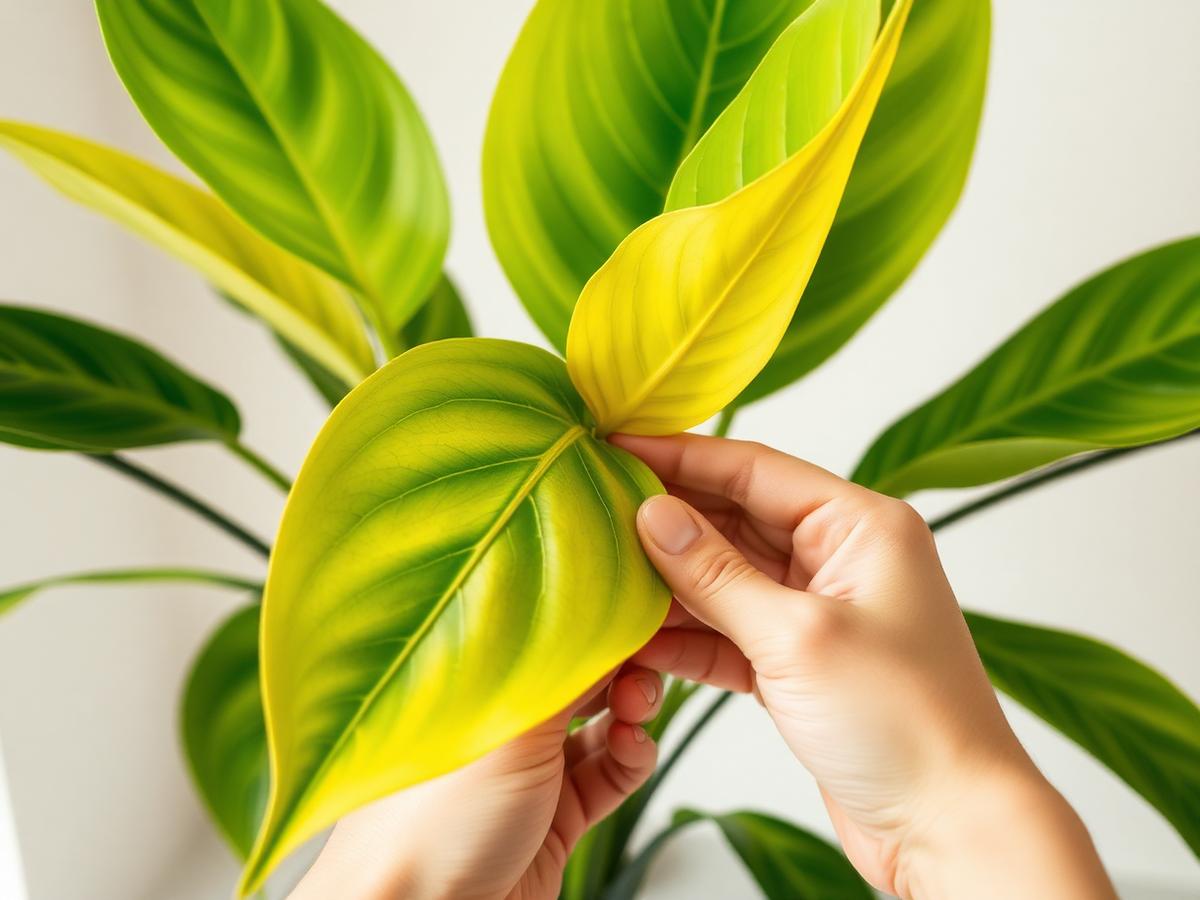
This shows up as leaves that yellow from the lower tier up, soft mushy stem bases, or a sour smell from the pot. The fix: stop watering, let the soil dry properly, inspect roots if symptoms continue for more than a week. Prevention is simply the gradual ramp — not skipping from every-14-days to every-5-days in one step.
Tying fertilising back in
Spring watering and spring feeding tend to resume at the same time, but feeding should lag 2–3 weeks behind watering. Start by watering more frequently first — once the plant is reliably pulling water on a 7–10 day cycle, add a dilute feed on the first watering of each fortnight. See the spring fertiliser reset for the full feeding restart protocol, and the how often to fertilise guide for the base schedule.
By early May, most houseplants should be on a full summer cadence: water roughly every 5–7 days for aroids and ficus, 10–14 days for snake and ZZ, quarter-strength feed every 2–4 weeks, and a monthly soil flush to clear accumulated salts. Hold that rhythm through September, then reverse the reset in October as growth slows.