
Identity & taxonomy
- Scientific name
- Phalaenopsis Blume
- Family
- Orchidaceae
- Genus
- Phalaenopsis
- Order
- Asparagales
- Wikidata
- Q134073
- Polychilos Breda (treated by some authors as a separate genus)
- Moth orchiden
- Phalen
- Butterfly orchiden
- Brudorkidésv
- Nattfjärilsorkidésv
- Sommerfuglorkidéno
- Sommerfugleorkidéda
- Yöperhoskideafi
- Nachtfalter-Orchideede
Philippines · Indonesia · Taiwan · Malaysia · Thailand · Northeast Australia (Queensland) · India (Northeast)
How to identify it
Growth habit. Epiphytic monopodial orchid with a very short stem and no pseudobulbs (water stored in the thick leaves instead). New leaves emerge from the central growing point; old leaves are shed from the bottom — a healthy plant holds 4–6 leaves at a time. Thick silvery-green aerial roots emerge from the stem at nearly every leaf node and anchor to bark in nature; indoors, they often hang over the pot rim and are entirely normal.
Leaves. Thick, waxy, dark green strap-shaped leaves 15–30 cm long, arranged in two opposite rows (distichous). Surface is glossy above and slightly paler beneath. New leaves emerge from the centre; each leaf lasts 2–4 years before being shed from the bottom of the rosette.
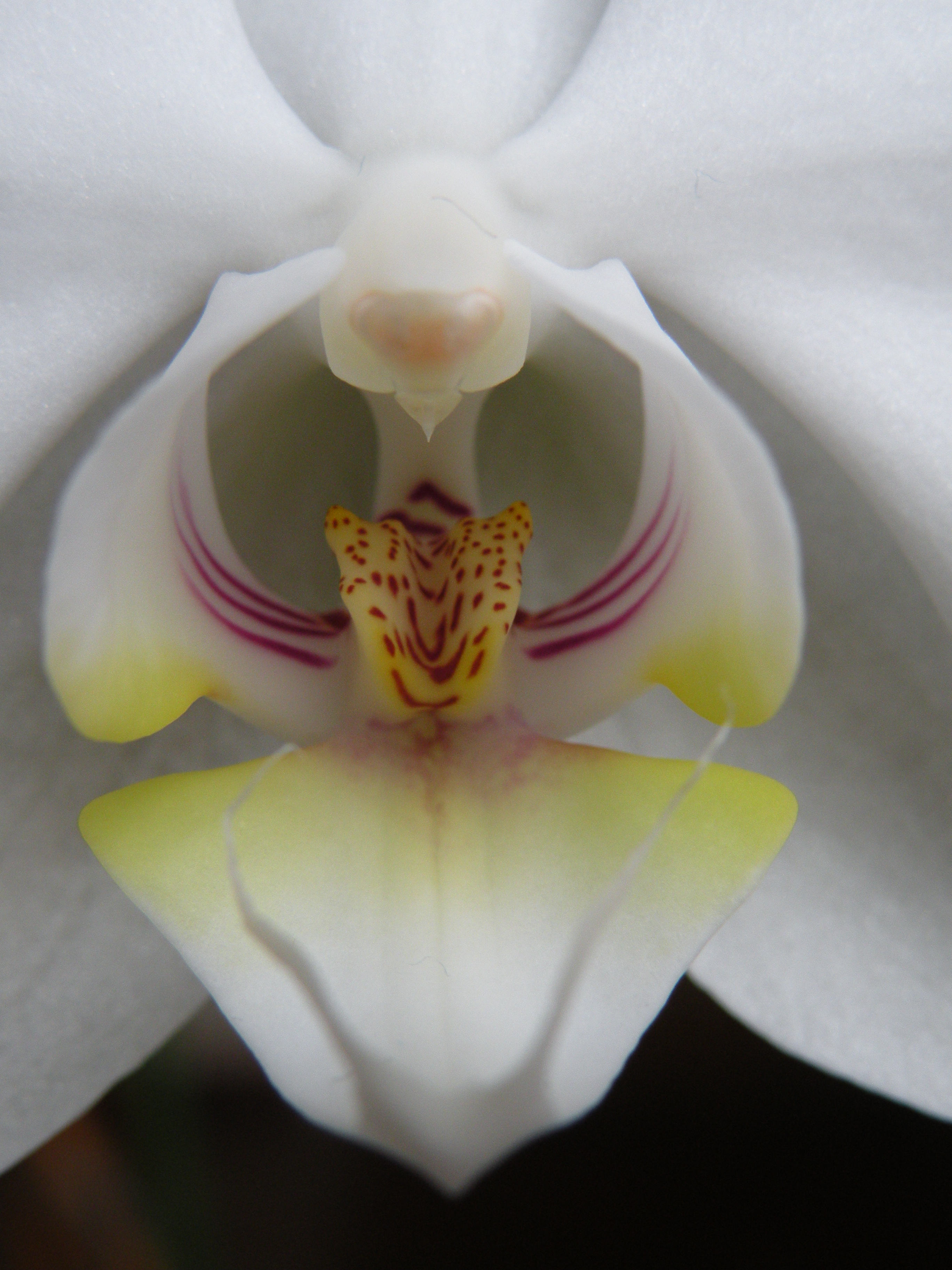
Flowers. Long-lasting flowers 3–10 cm across, carried in arching spikes of 5–15 blooms above the foliage. Each flower has three sepals, two petals (often larger and more colourful), and a central column with a distinctive lip (labellum). Colour range in hybrids covers white, pink, yellow, magenta, orange, green, and near-black burgundy, plus striped and spotted patterns. A single spike can remain in flower 6–12 weeks; a healthy plant produces at least one spike per year, sometimes two.
- Two rows of thick waxy strap leaves with no visible pseudobulb — monopodial growth habit.
- Silvery-green aerial roots emerging all around the stem and draping over the pot rim.
- Flattened, many-flowered spike (not a single bloom or a grass-like scape).
- Moth-shaped flowers with a distinct lip, three sepals, and two lateral petals.

Commonly confused with
Dendrobium
Sympodial growth from visible cane-like pseudobulbs; flowers emerge along the cane rather than from a single central spike. Different care — Dendrobium needs a cool dry winter rest.
Cattleya / corsage orchid
Thicker leaves from visible egg-shaped pseudobulbs, much larger and more ruffled flowers (10–15 cm), usually fragrant. Requires much brighter light than Phalaenopsis.
Dancing lady orchid
Sprays of many small flowers (2–5 cm) with a prominent 'skirt' lip. Pseudobulbs and multiple thin leaves; requires drier and brighter conditions than Phalaenopsis.
Boat orchid
Grass-like narrow leaves in tall clumps; long arching spikes of waxy flowers. Needs a cool winter rest to flower — not a Phalaenopsis replacement in a warm heated room.
Care
Light
Bright indirect light — east window ideal, never direct midday sun.
Phalaenopsis grow in the dim under-canopy of Southeast Asian rainforests where the light reaching them is bright but diffused. Indoors, an east window is near-perfect; south/west windows need a sheer curtain. A useful quick test: hold your hand 20 cm above the leaves and look at the shadow — a fuzzy-edged shadow is ideal, a sharp shadow means too much light. Leaves should be a medium olive green; dark emerald leaves indicate insufficient light (the plant won't rebloom), and yellowish leaves indicate too much light.
Seasonal: Nordic winters above ~55°N: a full-spectrum LED at 10,000 lux for 12 hours/day from October to March maintains flowering cycles that would otherwise stall.
Water
Soak weekly with filtered water; never let bark stay continuously wet.
The classic Phalaenopsis killer is too-frequent watering. Run the pot under a tepid-to-lukewarm tap for 30 seconds until water streams from the drainage holes, then let it drain completely before returning to any saucer. Water roughly weekly in summer and every 10–14 days in winter; adjust by checking the roots — plump emerald-green roots = wet, silvery-grey roots = dry and ready for water. Ignore the supermarket label advising '3 ice cubes per week': ice shocks tropical roots, and the volume is insufficient. Use filtered or rainwater if possible; Phalaenopsis is moderately fluoride-sensitive.
Seasonal: Reduce to every 10–14 days from November to February.
Soil
Coarse fir bark medium — NEVER regular potting soil.
Phalaenopsis roots are designed to cling to bark in airy conditions; planted in soil, they rot within weeks. Use coarse medium-grade fir bark (8–15 mm chunks), optionally mixed with sphagnum moss, charcoal, or perlite. Repot in fresh bark every 1.5–2 years — as bark breaks down, it holds more water and less air, and old plants decline rapidly in spent medium. Many orchid growers use clear plastic slotted orchid pots so they can watch root colour to judge watering.
Humidity
50–70 % preferred; tolerates 40 %.
Moderate humidity supports root health and spike development. Below 40 %, flower buds may 'blast' (shrivel and drop before opening). A nearby humidifier is far more effective than misting, which promotes crown rot if it settles in the centre of the plant. Pebble trays under the pot help marginally.
Temperature
18–27 °C day; 15–18 °C night drop triggers spikes.
The single most reliable trigger for a new flower spike is a sustained 5–7 °C drop between day and night temperatures for 2–4 weeks in autumn. Many homes in Nordic countries provide this automatically as heating cycles down overnight. Below 13 °C causes chilling damage (yellowing, leaf drop); above 30 °C slows growth and blocks spike initiation.
Fertilizer
'Weakly, weekly' with dilute orchid fertiliser.
A balanced orchid fertiliser (e.g. 20-20-20 or a dedicated 'MSU' formula) at quarter the label rate with every other watering in spring and summer. Switch to a bloom-boosting formula (10-30-20) in late summer to early autumn when spike initiation is likely. Flush the bark with plain water once a month to prevent salt build-up — bark holds salts and they damage roots invisibly until browning shows.
Seasonal: Reduce to once a month from November to February.
Pruning
After bloom, cut above a node on an old spike OR cut the spike off.
Once all flowers on a spike have dropped, you have two choices. (1) Cut the spike cleanly 1 cm above the second or third node from the base — a dormant bud often wakes up and produces a branch spike in 2–3 months. (2) Cut the spike off at the base — the plant redirects energy to roots and leaves and produces a stronger fresh spike in 4–6 months. Option 1 is faster; option 2 produces better flowers. Never cut a green spike still bearing flower buds.
Repotting
Every 1.5–2 years — when bark breaks down, not when roots fill the pot.
Phalaenopsis enjoy being tightly fit in their pots. Repot because the bark has broken down into mush, not because the roots are crowded. Best time is just after flowering finishes, when the plant switches to active growth. Use the same pot size or only 2 cm larger; wider pots hold too much water. Tease out dead brown roots, trim with sterile scissors, and repot into fresh moistened bark. Stake any long spikes gently to avoid root breakage.
Keiki (offshoot from a node)
moderate~6–12 months to a separable plantletA keiki is a baby plant that sometimes forms on an old flower spike from a dormant node. Leave it attached until it has 2–3 leaves and at least 3 roots of 5 cm. Cut the spike 2 cm on either side of the keiki and pot in fresh bark; treat as a young plant. Keiki paste (a cytokinin hormone) applied to a node can sometimes induce keiki formation deliberately.
Division
difficult~Not commonly practicalPhalaenopsis are monopodial and do not naturally divide — there is only one growing point. Very occasionally an older plant produces a basal shoot that can be separated once it has its own roots, but this is uncommon.
Seed
difficult~Requires sterile flasking; 3–5 years to flowering sizeOrchid seed is dust-fine and contains no endosperm — it needs sterile laboratory 'flasking' on nutrient agar with a symbiotic fungus substitute. Done only by commercial growers and hobbyists with lab equipment. Not practical for typical home propagation.
Cultivars
Standard white hybrids
Large-flowered whites (6–10 cm) descended mostly from Phalaenopsis amabilis and P. aphrodite. The default supermarket orchid; the easiest form to rebloom.
'Big Lip' / spotted hybrids
Large flowers with a contrasting lip — purple, pink, or red against white, yellow, or cream petals. Extensively bred in Taiwan since the 1980s.
Novelty / multifloras
Smaller flowers (2–5 cm) in spray-like arrangements, often branching, sometimes fragrant. Descended from smaller species like P. equestris and P. stuartiana.
Peloric forms
Mutations where the side petals take on the colour and lip-like shape of the central lip, producing symmetric 'three-lip' flowers. Unstable — not all blooms on the same plant are guaranteed to show the mutation.
Common problems
Bud blast — buds drop before opening
Symptom
Flower buds on a developing spike yellow and drop before they open.
Cause
A shock to the plant during bud development: a sudden move, a draft, ethylene exposure (ripening fruit in the same room), very dry air, or temperature swings above 27 °C.
Fix
Stabilise conditions: consistent temperature, humidity above 40 %, no proximity to fruit bowls or gas stoves (ethylene). Keep the plant away from heating vents and drafty doors during spike development. Existing dropped buds won't recover; the remaining buds usually open if conditions stabilise.
Won't rebloom
Symptom
Healthy leaves and roots but no new flower spike after the first flush drops.
Cause
No day/night temperature drop, insufficient light, or low phosphorus.
Fix
Give a sustained 5–7 °C day/night temperature difference for 2–4 weeks in autumn (moving the plant to a cooler bright room overnight works). Increase light to medium olive-green leaf colour. Switch to a bloom-boosting feed (10-30-20) at quarter strength every other watering in late summer and early autumn.
Yellowing leaves
Symptom
The oldest (lowest) leaf yellows and drops.
Cause
Usually natural — Phalaenopsis sheds its oldest leaf every 2–4 years as new ones emerge. If multiple leaves yellow at once, the cause is overwatering, compacted dead bark, or salt build-up.
Fix
If only the lowest leaf yellows, no action needed. If multiple leaves yellow, unpot and inspect roots — firm silver-green or plump green roots are healthy; mushy black roots are rot. Trim dead roots, flush salts, and repot in fresh bark.
Soft, mushy crown
Symptom
The centre of the plant (where new leaves emerge) goes brown and collapses.
Cause
Water trapped in the crown after overhead watering, especially in cool conditions.
Fix
Crown rot is usually fatal once the growing point is affected. Cut out as much brown tissue as possible with a sterile blade, dust the wound with cinnamon, and keep the plant extremely dry. Some plants produce a basal keiki that rescues the genetics; most do not. Always water at the bark line, not into the crown.
Wrinkled leaves
Symptom
Leaves lose plumpness and show fine longitudinal wrinkles.
Cause
Root damage — roots cannot deliver water to the leaves. Counterintuitively, this is more often from OVERwatering (roots rotted) than underwatering.
Fix
Unpot and inspect. Healthy roots are plump, silvery-grey-to-green, and firm; dead roots are brown, hollow, and papery. Trim dead roots, repot in fresh bark, water sparingly until new roots emerge. Leaves will re-plump over weeks as new roots grow.
- Scale (common on spikes and leaf undersides)
- Mealybugs
- Thrips (damage flower petals)
- Aphids (on flower buds)
- Crown rot (Phytophthora) from water in the centre
- Root rot from compacted old bark
- Botrytis petal spot
- Pseudomonas brown spot
Toxicity & safety
No documented toxicity. Phalaenopsis flowers are used as edible garnishes in some Southeast Asian cuisines, though commercial pesticides on ornamental plants mean home plants should not be eaten.
Phalaenopsis — Missouri Botanical Garden Plant FinderListed by ASPCA as non-toxic to cats. Ingestion of flowers or leaves may cause mild GI upset in sensitive animals but no systemic effects are recorded.
Moth Orchid — ASPCA Toxic and Non-Toxic PlantsListed by ASPCA as non-toxic to dogs. Mild GI upset possible with any non-food plant ingestion but no systemic effects are recorded.
Moth Orchid — ASPCA Toxic and Non-Toxic PlantsPhalaenopsis is the most produced potted flowering plant in the world — Dutch auction houses alone clear roughly 50 million stems a year, and Taiwan is the global epicentre of orchid breeding and tissue culture. Nearly every supermarket orchid sold today is a complex hybrid descended from a handful of wild species, produced by clonal tissue culture from mother plants selected decades ago. The flowers are pollinated in nature by male euglossine and carpenter bees that visit the lip mistakenly believing they are courting a rival male.
Frequently asked · 5
Are orchids safe for cats and dogs?+
Yes — ASPCA lists moth orchid (Phalaenopsis) as non-toxic to cats, dogs, and horses. Ingestion of flowers or leaves may cause mild GI upset in sensitive pets, but no systemic toxicity is recorded. Phalaenopsis is one of the few long-lasting flowering houseplants that is safe around pets.
How do I water an orchid — ice cubes or soak?+
Soak, not ice. Run the pot under a tepid-to-lukewarm tap for 30 seconds until water streams from the drainage holes, then let it drain completely. The popular '3 ice cubes per week' tag from supermarkets is a poor match: ice shocks tropical roots and the volume is insufficient. Water roughly weekly in summer and every 10–14 days in winter; check the root colour (silvery-grey = dry, bright green = wet) before reaching for water.
Why won't my orchid rebloom?+
The most reliable trigger is a sustained 5–7 °C day/night temperature drop for 2–4 weeks in autumn — orchids are cued by cool nights, not by calendar. Many Nordic homes provide this automatically as central heating cycles down overnight. If that doesn't work, increase light (leaves should be medium olive green, not dark emerald) and switch to a bloom-boosting feed (10-30-20 at quarter strength) every other watering in late summer.
Should I cut my orchid's flower spike after it finishes blooming?+
You have two good options. (1) Cut 1 cm above the second or third node on the old spike — a dormant bud often wakes up and produces a branch spike within 2–3 months. (2) Cut the spike off at the base — the plant redirects energy to roots and leaves and produces a stronger fresh spike in 4–6 months. Option 1 is faster; option 2 produces better flowers. Never cut a green spike still carrying buds.
Why are my orchid roots growing out of the pot?+
That's completely normal — aerial roots are the plant's natural way of life as an epiphyte clinging to tree bark. The thick silvery-green roots grab humidity and rainwater from the air in nature. Do not cut them off or try to stuff them into the pot: they are a sign of a healthy plant. Only trim roots that are dead (brown, hollow, papery).