The four light levels explained
Plant labels tend to use four categories. Here is what each one looks like in a normal home, with approximate lux values so you can calibrate against a phone light meter app. Lux is a measurement of visible light intensity — outdoor shade on a bright day is around 25,000 lux; a dim interior corner is under 1,000.
- ·Direct sunlight (20,000+ lux): Sun rays touch the leaves for 4+ hours a day. South-facing windows from mid-morning onward, unobstructed west windows in the afternoon, balconies. Too intense for tropicals, ideal for cacti, succulents, and citrus.
- ·Bright indirect (10,000–20,000 lux): A bright room with a window in view, but no direct rays on the plant. Within 1–2 m of an east or north window, or 1 m back from a sheer-curtained south window. This is the sweet spot for most tropicals.
- ·Medium light (2,500–10,000 lux): You can read a book comfortably during the day, but the room feels softly lit. Typically 2–3 m from a window, or next to a north-facing window in winter. Tolerated by pothos, philodendron, heartleaf, ZZ plants.
- ·Low light (under 2,500 lux): A dim corner where you would normally need a lamp during the day. Few plants genuinely thrive here — try snake plant, ZZ plant, cast iron plant (Aspidistra), Chinese evergreen, or pothos (growth will slow and variegation may fade). North-facing UK flats fall into this category for much of winter.
The shadow test: a 5-second lux estimate
Hold your hand 30 cm above the spot at noon on a clear day. The shadow it casts is a surprisingly reliable estimate of how much light a plant will receive there.
- ·Sharp, dark shadow with crisp edges = direct sun (20,000+ lux).
- ·Soft but defined shadow, outlines visible = bright indirect (10,000–20,000 lux).
- ·Blurry, faint shadow = medium light (2,500–10,000 lux).
- ·Almost no shadow = low light (under 2,500 lux).
Measuring light with your phone or a light meter
Phone apps (Lux Light Meter, Photone, Plant Light Meter) use the front-facing ambient light sensor. They are good to ±20% — useful for comparing spots in your home, less useful for absolute calibration. Hold the phone flat at the plant's leaf level, sensor facing the light source, and let the reading stabilise for 5 seconds.
A dedicated lux meter (about €20) is more accurate and worth it if you are running grow lights or trying to rank multiple spots for a fussy plant. Pro growers often use a PAR meter instead, which measures the wavelengths plants actually use for photosynthesis — overkill for most home setups unless you're growing orchids or carnivorous plants seriously.
Window direction by hemisphere
"South window" means very different things in the Northern and Southern hemispheres. The principle is the same: the window facing the equator gets the most direct sun, and the window facing the pole gets the least. In the Northern hemisphere, that's south. In the Southern hemisphere (Australia, South Africa, Argentina), it's north. Flip every reference below if you are south of the equator.
- ·South-facing (equator-facing): Brightest all day. Direct sun from late morning to mid-afternoon. Ideal for cacti, succulents, citrus, herbs, bougainvillea, hibiscus. Most tropicals need a sheer curtain here.
- ·East-facing: Gentle morning direct sun (2–4 hours), bright indirect the rest of the day. The ideal "default" window for most houseplants — Monstera, philodendron, pothos, calathea, peace lily, prayer plants.
- ·West-facing: Bright indirect through morning, strong direct sun in the afternoon. Hotter and more scorching than east. Suits plants that like intense light but tolerates some shade for tropicals placed 1 m back.
- ·North-facing (pole-facing): Consistent low-to-medium indirect light, no direct sun. Limits to shade-tolerant plants — ferns, calatheas, snake plants, ZZ plants, peace lilies, anthurium.
How far from the window changes everything
Light intensity falls off dramatically with distance — what looks like the same room is actually three or four different light environments. The inverse-square law applies loosely indoors: doubling the distance from a window cuts light roughly to a quarter.
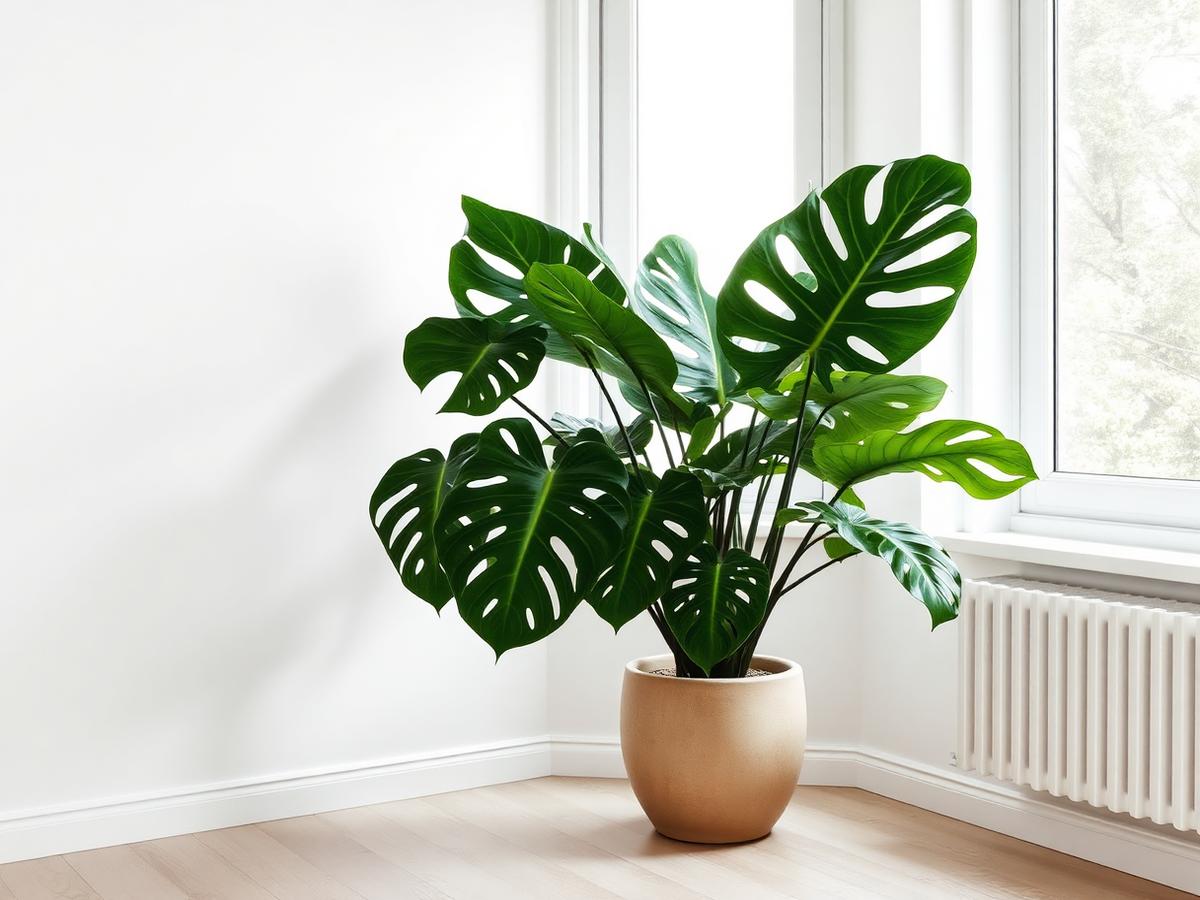
A Monstera 30 cm from an east window is in bright indirect light. The same Monstera 2 m into the room is in medium light and will grow half as fast with smaller, less fenestrated leaves. At 3–4 m, it is in low light and stops producing new growth. If you want a plant to thrive, the window is non-negotiable — move the plant closer, not the furniture.
Seasonal shifts in indoor light
Winter indoor light is not just shorter — it is dimmer. The sun sits lower in the sky, so it passes through more atmosphere, and shorter days mean fewer total photons reach your plants. At 50° latitude (Berlin, Vancouver, London), December light is roughly a third of June light at the same window.
Practical implication: a plant thriving on a north windowsill in June may be starving by December. Either move light-hungry plants closer to the brightest window of the home in autumn, or supplement with a grow light for the four darkest months. This is also why "winter dormancy" is real even for tropicals — they are responding to the drop in light, not the cold.
Signs a plant needs more light
Plants tell you they are under-lit before they die. The signs are consistent across species and easy to learn.
- ·Leggy, stretched growth with long gaps between leaves (etiolation).
- ·New leaves smaller than old ones, or paler in colour.
- ·Loss of variegation — white or yellow patches revert to plain green.
- ·Stems bending dramatically toward the window.
- ·No new growth for 2+ months in the growing season.
- ·Yellowing of leaves furthest from the light source.
- ·Monstera leaves failing to develop fenestrations.
Signs a plant is getting too much light
Too much direct sun is less common indoors but happens fast when it happens — usually from a south or west window without a curtain.
- ·Crispy brown or bleached patches on leaves facing the window (sun scorch).
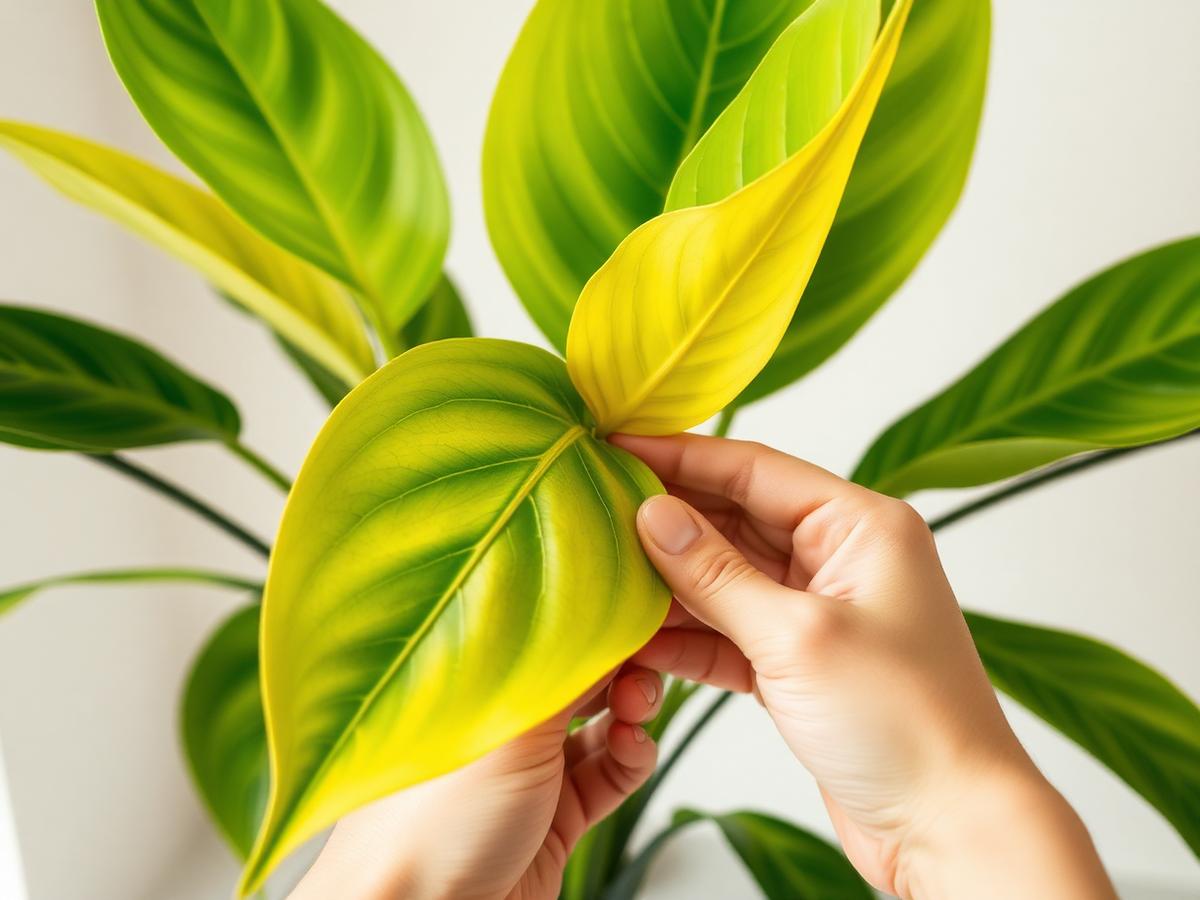
- ·Washed-out, pale yellow colour on upper leaves.
- ·Leaves curling inward or wilting mid-afternoon despite damp soil.
- ·Leaf edges turning crispy brown within days of a move.
- ·Calatheas and ferns reacting within hours, not days.
Acclimating a plant to new light
Plants that have been happy in medium light cannot go directly to a south window — leaves burnt within a day or two will not recover. Acclimate over 10–14 days: start with an hour of the brighter spot, add an hour every 2 days, and watch the leaves closely. If any pale or crispy, pull the plant back for a week before trying again.
The reverse move — sun-lover to a darker spot — is less dangerous but also triggers leaf drop as the plant sheds foliage it can no longer support photosynthetically. Expect yellow leaves and some loss for the first month.
Grow lights that actually work
A good grow light can replace a window for any houseplant. Ignore the purple "blurple" lights marketed for cannabis — full-spectrum white LEDs in the 4,000–6,500K range are better for general houseplant use and nicer to live with.
The three specs that matter: wattage (energy used), PPFD or lumens (light delivered), and colour temperature (spectrum). For a single plant shelf, a 20–30W full-spectrum LED at 20–30 cm above the plant, on a timer for 10–12 hours a day, is enough for most tropicals. Fussy plants (orchids, carnivorous, some aroids) want 40–60W or two panels.
- ·Wattage: 20–30W per standard plant shelf; 40–60W for high-light species.
- ·Colour temperature: 4,000–6,500K full-spectrum white. Avoid pure 2,700K "warm" bulbs.
- ·Distance: 20–30 cm above leaves for LED panels; too close causes bleaching.
- ·Duration: 10–14 hours/day on a timer. Plants need a dark period — 24/7 lighting stresses them.
- ·Good brands (as of 2026): Soltech Aspect, Sansi, Mars Hydro, GE Grow, Barrina. Avoid sub-€15 Amazon specials with inflated wattage claims.
Plant lists by light level
Starting plants that match the spot is the difference between thriving and dying. Use this as a shortlist when shopping.
- ·Direct sun: Cacti, echeveria, aloe, jade plant, citrus, most herbs, bougainvillea, pelargonium, string of pearls, crown of thorns.
- ·Bright indirect: Monstera deliciosa, Ficus lyrata (fiddle leaf fig), rubber plant, bird of paradise, hoya, most philodendrons, string of hearts, alocasia, anthurium.
- ·Medium light: Pothos (species profile), heartleaf philodendron, spider plant, peace lily, Chinese evergreen, dracaena, parlor palm, maidenhair fern.
- ·Low light: Snake plant (species profile), ZZ plant, cast iron plant (Aspidistra elatior), Chinese evergreen (darker varieties), pothos (tolerated, not preferred).
Rotating plants for even growth
Plants near a window will bend toward the light if left in the same orientation. A quarter turn every 1–2 weeks keeps growth symmetrical. For plants with a strong central leader — ficus, monstera — rotation is essential or they will lean permanently. For trailing plants like pothos, rotation matters less because the shape forgives asymmetry.