What the air above a radiator actually does
A working radiator creates a rising plume of warm air that can reach 40–60°C right at its surface and still be 30–35°C at the windowsill above. As air rises and warms, its relative humidity plunges — water vapour is physically held at a lower fraction in warmer air. The plume above a radiator often runs below 20% RH even in a room that otherwise measures 35–40%.
For a tropical houseplant, that plume is a desert that runs for months at a time. Leaves transpire faster than roots can replace water. Sensitive species (calatheas, ferns, anthuriums, marantas) show visible stress in days; hardy species (snake plants, cacti) shrug it off.
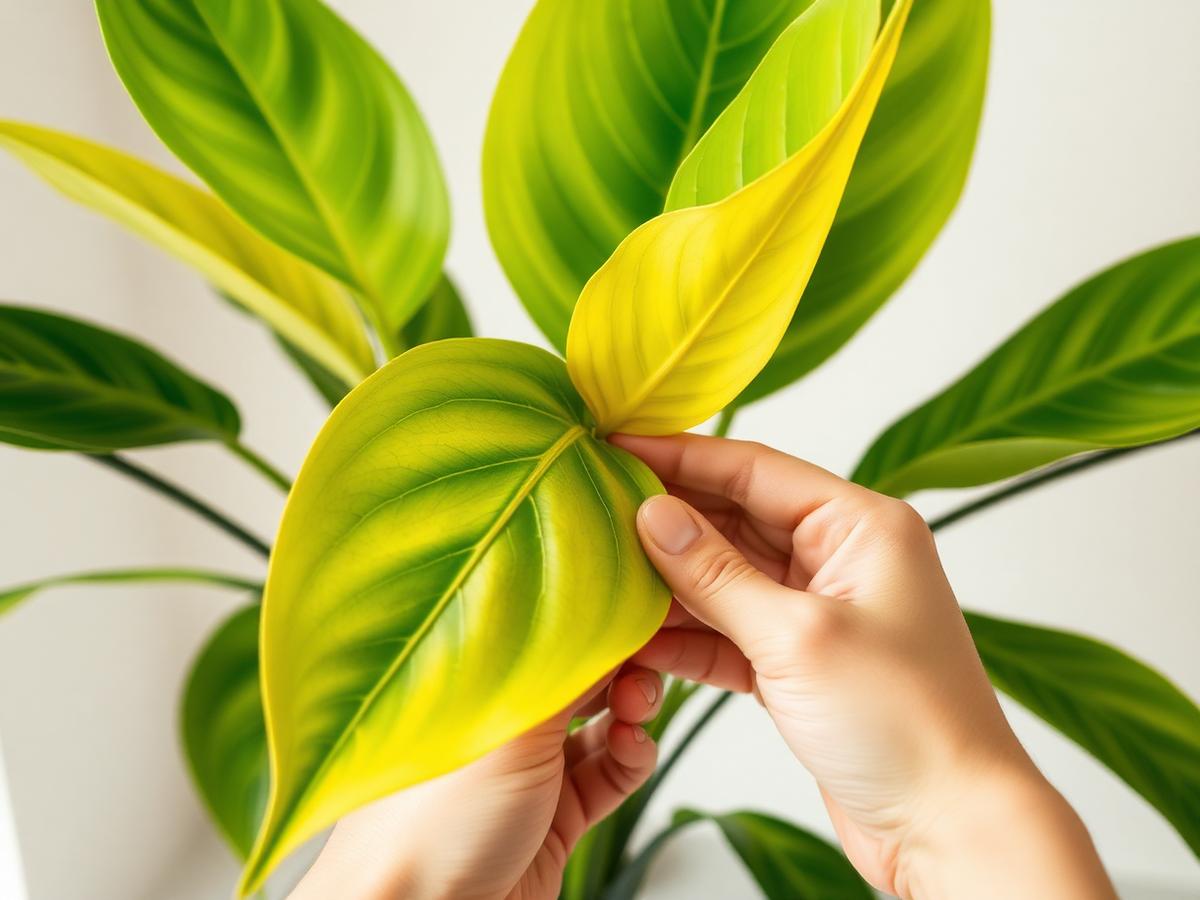
What radiator damage looks like
The damage pattern is distinctive once you know it. It affects the side of the plant facing the radiator first, and correlates with the heating being switched on — not with watering, light, or season.
- ·Browning tips and edges on leaves facing the radiator, with the other side of the same plant unaffected.
- ·Sudden crispy leaf drop — leaves falling green or with only tip browning, rather than the slow yellowing of a watering problem.
- ·Soil drying much faster than elsewhere in the room — a pot that used to go 10 days between waterings dries in 3–4.
- ·Curling or cupping of leaves trying to reduce surface area exposed to dry air.
- ·Papery texture on the radiator-facing surface of larger leaves (especially ficus, monstera).
The distance rule
Keep houseplants at least 30–60 cm away from any radiator, measured horizontally at plant-base level. Smaller radiators at 30 cm; larger or wall-length radiators at 60 cm. Measure from the pot, not the leaves — a trailing pothos draped over the top of a radiator is in the plume even if the pot is elsewhere.
Vertical distance also matters. The air directly above a radiator is hotter and drier than the air to the side — a plant on a shelf 40 cm directly above a radiator is often worse off than a plant at the same distance but to the side. If you have a windowsill above a radiator, either keep it plant-free, use heat-tolerant plants only (cacti, euphorbia, snake plant), or install a wider sill that projects 15 cm further into the room to deflect the plume.
Plants that do tolerate radiator proximity
A shorter list of plants tolerates proximity to heating — these share dry-climate origins or physiology that handles low humidity without stress.
- ·Snake plant (Dracaena trifasciata) — CAM photosynthesis, minimal transpiration.
- ·ZZ plant (Zamioculcas zamiifolia) — succulent leaves, drought-adapted.
- ·Cacti and euphorbias — built for heat and dryness.
- ·Jade plant (Crassula ovata) — tolerates warm dry air indefinitely.
- ·Ponytail palm (Beaucarnea recurvata) — caudex stores water, handles warmth.
- ·Hoya species — waxy leaves, epiphytes from seasonally dry habitats.
Plants that will not tolerate radiator proximity
The opposite list — species that should be kept as far as possible from any heating source. For these, the windowsill-above-radiator is a death sentence.
- ·All calathea, maranta, stromanthe, ctenanthe — crisp and drop leaves within days.
- ·Ferns — Boston, maidenhair, bird's nest all suffer fast.
- ·Alocasia — drops leaves in response to dry warm air.
- ·Anthurium — flower quality collapses, then leaves follow.
- ·Fiddle leaf fig (Ficus lyrata) — notorious for dropping leaves in response to temperature inconsistency.
- ·Peace lily (Spathiphyllum) — tolerates warmth but not the low humidity that comes with it.
Redesigning a Nordic living room around heating
If radiators are under every window — the most common Nordic layout — the standard solution is to move plants off windowsills to interior spots with supplemental grow lights, leaving only heat-tolerant species on sills. This sounds dramatic but solves the problem completely.
Alternative layouts that work:
- ·Tall plant stands 40–60 cm from the window wall, away from the radiator plume.
- ·Wall-mounted shelves on interior walls, with grow lights installed above.
- ·Trailing plants from ceiling hooks, keeping the foliage well above the radiator plume.
- ·A radiator cover (wooden or metal) with an extended top shelf projecting 15 cm into the room — deflects the plume and creates a plant shelf that isn't in the direct path.
- ·For bathroom radiators specifically: the humidity from showering often offsets the dry radiator air, and a bathroom with a radiator can become a surprisingly good spot for ferns.
When the damage is already done
If a plant has already been damaged by radiator proximity, move it first — then let it recover. Crispy tips and margins won't reheal, but new growth should be clean if the root system is still healthy. Most plants recover within 6–12 weeks of being relocated, assuming the damage wasn't severe.
Trim the worst-damaged leaves for appearance only. Don't prune more than a third of foliage at once — the plant needs every remaining leaf to photosynthesise back to health. See why is my new plant dropping leaves for the overlap between radiator and general cold/hot-air stress symptoms.