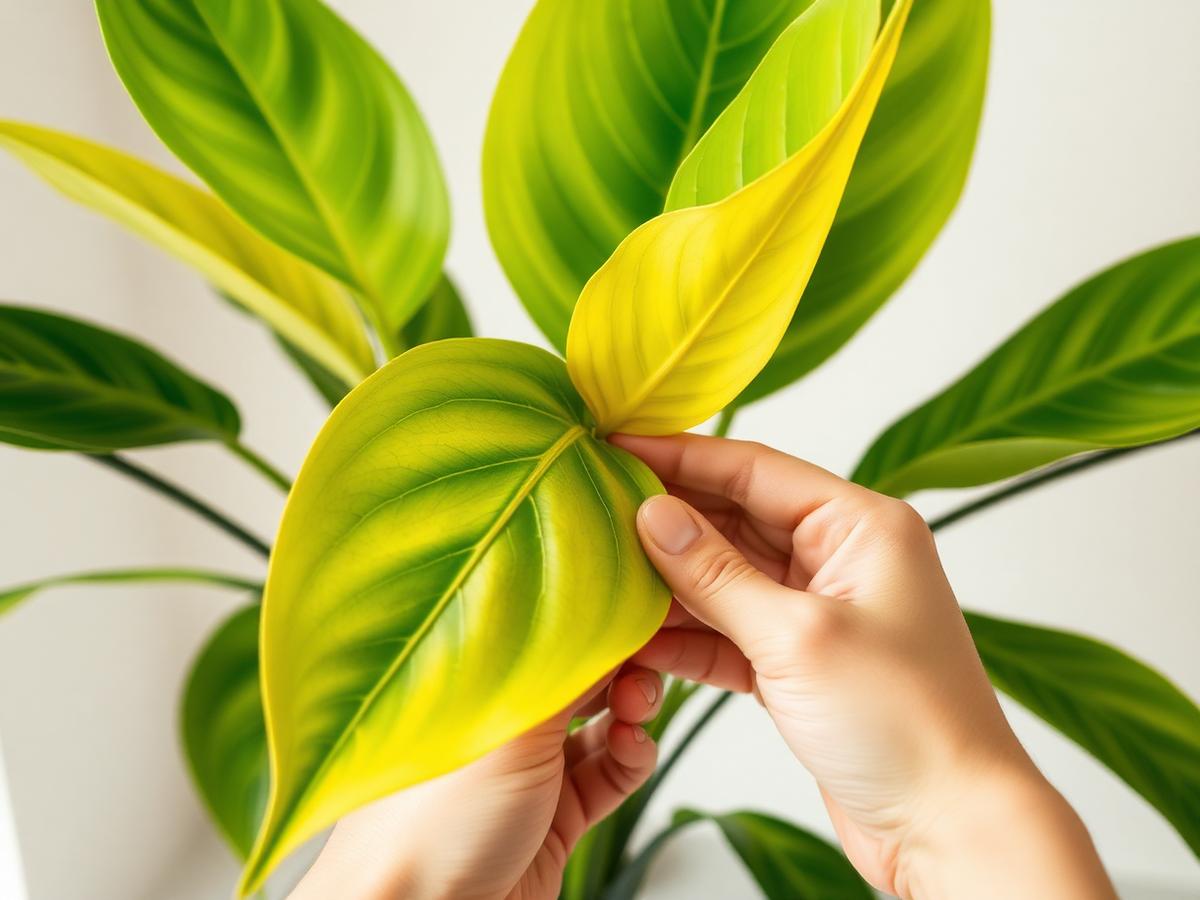
First, identify the pattern
Three quick visual checks tell you which of the ten causes below to read first. Spend 30 seconds on this before scrolling further.
- 1Where on the leaf? Tips and edges → environment (humidity, salt, sun). Whole leaf or random patches → watering or temperature. Discrete round spots with halos → disease.
- 2How does it feel? Crispy and dry → too little water or humidity. Soft and mushy → too much water or cold damage. Papery with a defined edge → fungal.
- 3Is it spreading? To new leaves only on the same plant → environment. To other plants → almost certainly fungal or bacterial — isolate the plant now.
- 4When did it start? Hours after a move or fertilizing → the move or fertilizing is the cause. Slow build over weeks → chronic environmental issue.
1. Low humidity (the most common cause)
Crispy brown tips on tropical plants — especially calatheas, ferns, marantas, spider plants, and dracaenas — are almost always a humidity problem. Indoor air below 40% relative humidity dehydrates leaf tips faster than the roots can replace water. The damage often starts at the tip and creeps inward as a thin brown band along the leaf edge.
Confirm: A cheap hygrometer reads under 40%, especially in winter with central heating running. The damage is on tropical species, never on succulents or cacti. New leaves emerge with crispy tips even when watering is correct.
Fix: A small humidifier near the plant is the only reliable solution. Aim for 50–60% for tropicals. Group plants together to create a microclimate. Pebble trays and misting are mostly theatre — they raise humidity for minutes and fall back. Trim damaged tips at an angle with clean scissors for a tidier look; they will not regrow.
Prevent: Run the humidifier preventatively from the day you turn on central heating. Cluster fussy plants like calatheas in the most humid room (often a bathroom with a window).
2. Fluoride, chlorine, or salt buildup from tap water
Brown tips on sensitive species (spider plants, dracaenas, calatheas, prayer plants, parlor palms, peace lilies) often come from minerals in tap water accumulating in leaf tissue over weeks. The plant is fine on the inside; tip cells just die from concentrated salts.
Confirm: White or pale crust on the soil surface or pot rim. You live in a hard-water region or use municipal water with chloramine. Damage worsens slowly over months. Sensitive species show it first; tougher plants stay clean.
Fix: Switch to filtered, distilled, or rainwater for sensitive plants. Flush the soil thoroughly every 2–3 months by watering until 3–4 times the pot's volume drains through — this washes accumulated salts. Damaged tips don't reverse; new leaves should grow in clean within a few weeks.
Prevent: Never use softened water (high sodium content damages roots). For known-sensitive species, plan filtered water from day one. Reverse osmosis water mixed 50/50 with tap is a budget compromise.
3. Underwatering or inconsistent watering
Crispy brown edges combined with bone-dry soil and limp leaves means the plant has been thirsty too long. Inconsistent watering — soaking, then forgetting for 3 weeks — produces the same damage even with similar long-term water totals.
Confirm: Soil is bone dry, pot feels light, soil may have pulled away from the pot edge. Leaves drop when touched or feel papery. The pattern is consistent across the whole plant rather than one side.
Fix: Bottom-water for 20–30 minutes to rehydrate hydrophobic soil, then top-water until runoff appears. If water repels off the surface, add a drop of castile soap to the watering can to break surface tension. Set a weekly soil-check reminder, not a watering reminder — only water when the soil tells you to.
Prevent: Move from calendar-based to finger-test watering. Plants near heat sources or in small terracotta pots need more frequent checking.
4. Overwatering and root rot
Soft brown patches that start near the leaf base or centre, on a plant whose soil stays wet, point to root rot. The roots can no longer transport water, so leaves rot from within. This is the most damaging brown-spot cause and the easiest to confuse with disease.
Confirm: Soil is wet days after watering. Pot smells musty or sour. Soft brown spots, sometimes with yellowing around them. Lower leaves usually go first. Unpot — black mushy roots confirm the diagnosis.
Fix: Unpot the plant, trim away every black mushy root with sterile scissors back to firm tissue, and let the root ball air-dry for 1–2 hours. Repot in fresh dry mix one size smaller, in a pot with drainage holes. Hold water for 5–7 days. Skip fertilizer for a month. Healthy growth resumes within 4–6 weeks if caught early.
Prevent: Pots with drainage. Empty the saucer 10 minutes after watering. Use the right soil mix for the species (chunky aroid mix for monstera, cactus mix for snake plants).
5. Sunburn and direct-sun scorch
Bleached, dry brown patches in the middle of leaves — only on the side facing a window — are sun scorch. Common after moving a plant from a shadier spot directly into bright sun, after a curtain comes down, or during a heat-wave with the window in direct mid-afternoon sun.
Confirm: Damage is asymmetric — only on the side of the plant facing the light source. Leaves on the far side are clean. Started within hours or days of a move or weather change. Pattern is bleached/pale brown rather than dark.
Fix: Move the plant 30–60 cm back from the window or add a sheer curtain. Acclimate plants to brighter spots gradually over 10–14 days when moving from low to bright light. Damaged leaves stay damaged; new growth comes in normal.
Prevent: Match the plant's light needs to the spot. Tropicals like calatheas and ferns scorch easily; cacti and succulents thrive in the same window.
6. Fungal leaf spot
Small circular brown spots, often with a yellow halo, that grow over days and may appear on multiple leaves and multiple plants are usually fungal. The spores spread through wet leaves, damp foliage, and stagnant air.
Confirm: Spots are discrete, roughly circular, and have a defined edge often surrounded by yellow halo. New spots appear within days. Multiple leaves on the plant — or multiple plants in the room — show similar damage. Conditions: high humidity with poor airflow, or recent overhead watering.
Fix: Remove and discard affected leaves (do not compost). Improve airflow with a small fan. Water at the soil, never on the leaves. Treat with a copper-based fungicide if spread continues. Isolate the plant from other houseplants until controlled.
Prevent: Avoid wetting leaves when watering. Don't crowd plants tightly together — air circulation matters as much as humidity. Quarantine new plants for 2–3 weeks before joining the collection.
7. Bacterial leaf spot
Bacterial leaf spot looks similar to fungal but is wetter and faster-spreading. Spots are often water-soaked or oily-looking, with a translucent edge that becomes brown then black. Common in fiddle leaf figs, peace lilies, and aglaonemas.
Confirm: Spots have a wet, water-soaked appearance rather than a dry papery one. Edges may be translucent or yellow. Spreads quickly — 1–3 new spots a day in active conditions. Often follows a period of constantly wet leaves or splashing.
Fix: Remove affected leaves immediately and discard. Reduce humidity briefly while controlling the outbreak. Apply a copper-based bactericide. Improve airflow with a fan. Isolate the plant. Bacterial leaf spot is harder to control than fungal — severe outbreaks may require disposing of the plant.
Prevent: Avoid wet foliage. Keep humidity from condensing on leaves. Sterilise pruning scissors between plants with isopropyl alcohol.
8. Cold damage or draft
Soft, water-soaked brown patches that appear suddenly after a cold night, or on the side of a plant nearest a window or AC vent, are cold damage. Tropical plants suffer below 10–12°C, with damage showing visibly within 24–48 hours.
Confirm: Damage appeared after a known cold night (open window, heating off, cold snap). Located on the side of the plant facing the cold source — drafty window, doorway, AC vent. Pattern is irregular blotches rather than discrete spots. Leaves may also droop.
Fix: Move the plant away from cold glass, drafty doorways, and air conditioning vents. A 30 cm pull-back from a single-glazed winter window often solves the problem. Damaged leaves will not recover; new growth should be normal once temperature is stable for 2 weeks.
Prevent: In winter, audit plant locations for cold drafts. Tropicals should never sit on bare windowsills with single-glazed windows. In summer, keep AC vents pointed away from plants.
9. Fertilizer burn
Brown, crispy tips that appear within days of fertilizing — sometimes with a white crust on the soil — mean the plant has been overfed. Salt accumulation in the root zone draws moisture out of leaf tips and burns the fine root hairs.
Confirm: Damage started within 1–2 weeks of a fertilizer application. White crystalline crust on soil surface or pot rim. The plant was healthy before feeding. Likely caused by full-strength rather than diluted fertilizer, or feeding too frequently.
Fix: Flush the soil with plain water until 3–4 times the pot volume drains through. Resume fertilizing at half-strength, every 4–6 weeks during growing season only. Skip fertilizer entirely in winter.
Prevent: Always dilute liquid fertilizers to half label strength for houseplants — the directions are typically written for outdoor garden plants that handle higher concentrations. Never feed a dry, stressed, or recently repotted plant.
10. Edema (water blisters)
Small raised brown bumps or corky patches on the underside of leaves, often appearing in cool damp conditions, are edema. The plant has taken up water faster than it can transpire, and the cells rupture under the leaf surface.
Confirm: Bumps or blisters mainly on the underside of leaves, often becoming corky brown patches over time. Appears in cool, damp, low-light conditions — common in winter when sun is weak and watering is unchanged. Common on succulents, peperomia, and some begonias.
Fix: Reduce watering frequency. Improve airflow with a small fan. Move the plant to brighter light if possible — increased transpiration prevents future edema. Damaged areas don't heal but new growth comes in normal.
Prevent: Adjust winter watering down by 30–50% for plants near windows. Better airflow around stored plants, and avoiding watering in cool evenings, both help.
Pest-related brown spots
Sap-sucking pests — spider mites, thrips, and scale — cause stippled or speckled brown damage rather than discrete spots. Spider mite damage looks like a fine pale-then-brown stippling, sometimes with webbing in leaf joints. Thrips leave silvery streaks with black dots. Scale appears as immobile brown bumps that can be scraped off with a fingernail.
Confirm by inspecting leaf undersides and stem joints with a phone light. Treat with insecticidal soap or neem oil weekly for 3 weeks. Severe infestations may require systemic insecticides. See yellow leaves diagnostic for the pest section.
Species-specific brown spot patterns
Some plants have characteristic brown spots that signal specific issues. Knowing the plant-specific pattern speeds diagnosis.
- ·Fiddle leaf fig: Dark spots from leaf centre = root rot. Crispy edges = humidity or hard water. Bacterial spot is also common in fiddles.
- ·Calathea: Crispy edges = hard water (the most common cause). Curling + crispy = low humidity.
- ·Monstera: Crispy tips = inconsistent watering. Yellow + brown together = root rot.
- ·Pothos: Brown tips on otherwise healthy plant = inconsistent watering. Black blotchy spots = bacterial leaf spot.
- ·Snake plant: Brown tips = under or overwatering. Soft mushy brown = rot.
- ·Spider plants: Brown tips = fluoride from tap water. Switch to filtered.
- ·Peace lily: Brown tips = inconsistent watering or hard water.
- ·Boston fern: Crispy fronds = humidity below 50% — chronic for ferns indoors.
- ·Dracaena: Brown tips = fluoride/chlorine. Use filtered water.
- ·Prayer plant (Maranta): Crispy edges = humidity. Brown patches = fluoride.
Should you cut off brown spots?
Yes, for cosmetic reasons — brown tissue is dead and will not regreen. Trim along the natural leaf shape with clean scissors so the cut blends into the leaf outline. Remove a whole leaf only if more than 50% is damaged, since even a partly-damaged leaf still photosynthesises usefully.
Wait until you've identified and fixed the cause before doing major trimming. If the underlying cause is unfixed, new damage will appear on more leaves and you'll be back to trimming again. For fungal or bacterial spots, remove and discard affected leaves immediately — these need to come off regardless of cosmetics, and don't compost them.