What's actually in London tap water
The mineral content of London tap water is driven by the geology it passes through. The Thames and the Lee feed Thames Water's surface reservoirs, but a large fraction of London's supply is pumped from the chalk aquifer underneath the city — the same chalk that forms the North Downs. Chalk is calcium carbonate. Water spends decades dissolving it on the way down, and arrives at the tap saturated with calcium and magnesium ions.
Thames Water's own published hardness figures for central and north London sit between 270 and 330 mg/L CaCO₃. Affinity Water, which supplies parts of outer London and the Home Counties, runs slightly higher — around 300–380 mg/L in places like Harrow, Watford, and Hertford. Both are firmly in the "very hard" category under UK classification (anything over 200 mg/L qualifies).
Two other things matter for plants: the disinfectant and the pH. Thames Water uses chloramine rather than free chlorine, which is relevant because chloramine does not evaporate if you leave a watering can out overnight. And London water leaves the treatment works at pH 7.5–8.0 — mildly alkaline, which matters for tropical plants that evolved at pH 5.5–6.5.
How hardness shows up in a houseplant pot
For the first few months after a repot, nothing happens. Fresh potting mix buffers the extra minerals and new roots are tolerant. The symptoms start appearing around month three for fast-growing plants, and by month six for slow ones.
The most common first sign is a white crust on the soil surface and around the pot rim — that's calcium carbonate left behind when water evaporates. The same deposit shows up on terracotta pots as a chalky white patina. Underneath the crust, soil pH is drifting upward, and some micronutrients (iron, manganese) begin locking out of solution as the root zone alkalinises.
- ·White or yellow crust on the soil surface or pot rim — the visible signature.
- ·Crispy brown leaf tips and margins, especially on sensitive species.
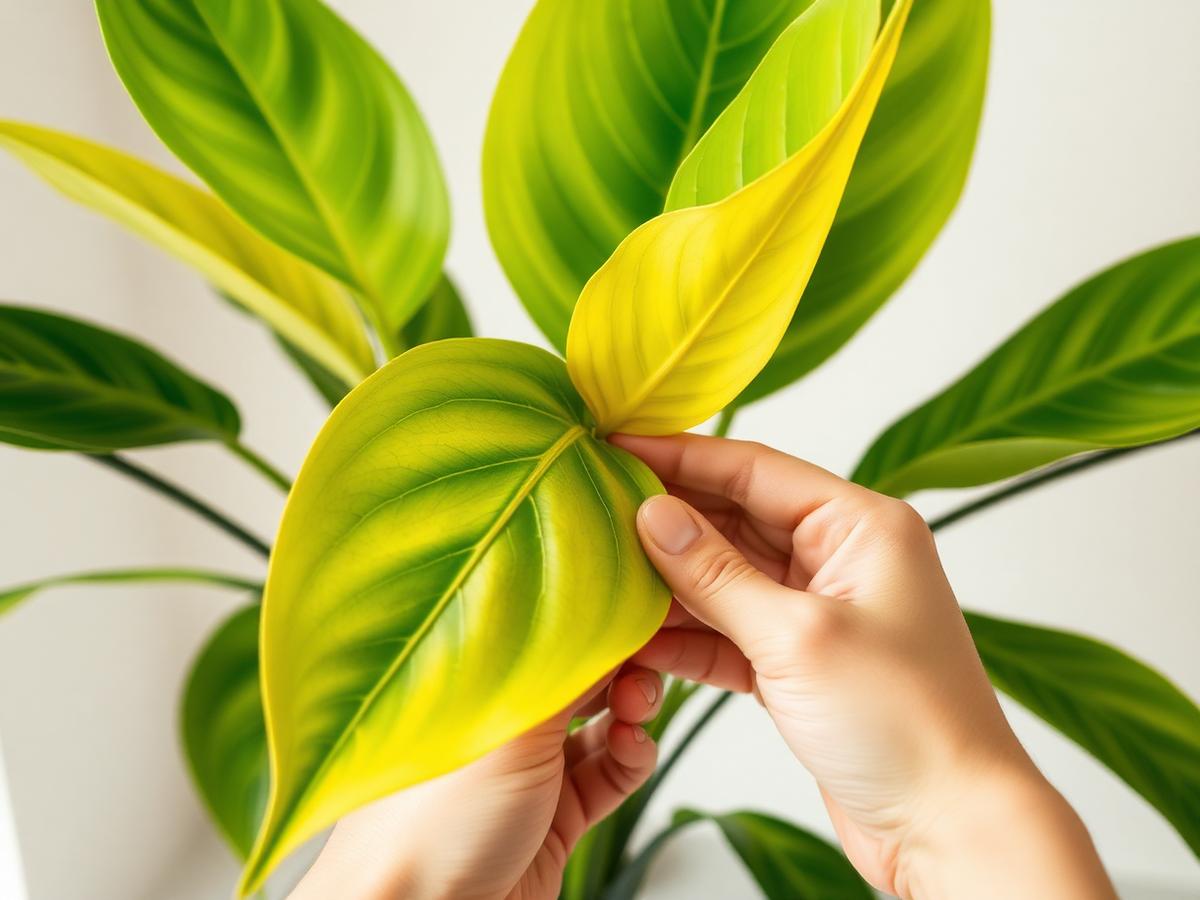
- ·Pale or yellowing new growth with green veins — iron chlorosis from elevated soil pH.
- ·Slow decline despite "good" watering — roots struggling in an alkaline root zone.
- ·White limescale film on leaves if you mist or wipe with tap water.
The chloramine factor
Most online advice about tap water assumes chlorine, and says to leave the watering can out overnight. That works in cities using free chlorine. London doesn't — the UK moved most of the Thames Valley supply to chloramine (a chlorine-ammonia compound) decades ago, because chloramine persists longer in the distribution network and limits bacterial regrowth in old pipes.
Chloramine is more stable than chlorine. It does not significantly off-gas overnight. Boiling removes some but not all. For most foliage houseplants the residual chloramine in London water is low enough (around 0.5–1.0 mg/L) that it doesn't visibly harm them. But it does suppress beneficial soil microbes — which is why adding a slow-release compost or mycorrhizal amendment to a pot watered with tap water is less effective than the package suggests.
If you want chloramine-free water, the options are activated carbon filters (with a specific chloramine-rated cartridge — standard Brita carbon only partially removes it), a reverse osmosis system, or rainwater. There is no "leave it out overnight" shortcut.
Which plants don't mind — and which do
The majority of common houseplants are genuinely fine on London tap water, provided you flush the pot occasionally. The problem species are a short, well-known list that comes up again and again in London plant groups — typically tropical plants from low-pH forest-floor environments.
- ·Fine on London tap: Pothos, monstera, philodendron, snake plant, ZZ plant, rubber plant, parlour palm, aglaonema, peperomia, most succulents and cacti (they get watered rarely anyway).
- ·Complain slowly: Fiddle leaf fig, peace lily, bird of paradise, anthurium, alocasia — tolerate hard water but grow better on softer.
- ·Genuinely cannot cope: Calatheas, marantas, stromanthes, ctenanthes (all prayer plants), spider plants (dracaenas more broadly), most ferns, azaleas, gardenias, and all carnivorous plants.
- ·Die fast on tap water: Venus flytraps, pitcher plants, sundews — carnivorous plants evolved on rainwater and cannot regulate mineral uptake. Tap water kills them in weeks.
Rainwater collection in a London flat
You do not need a garden to collect useful amounts of rainwater. London gets 600–700 mm of rain a year spread across 150+ rainy days, and even a small horizontal surface catches a surprising amount. A 40 × 40 cm tray on a flat windowsill collects around 1.6 litres in a 10 mm rain event — enough for a round of the sensitive plants.
Practical options for a flat without a balcony: a lidded 5-litre container on an external windowsill (opened when it rains, closed after), a cheap water-butt diverter if you have a downpipe on the balcony, or — the lowest-effort approach — a 10-litre bucket outside the back door whenever rain is forecast. London rain averages 5–15 mg/L of dissolved solids; it is functionally soft. Filter through a coffee filter if you catch it off a roof to remove particulates, and use it within 2–3 weeks before algae grows.
- 1Put out a clean container whenever heavy rain is forecast.
- 2After rain stops, filter through coffee filter or fine cloth to remove leaf bits.
- 3Store in a sealed bottle out of direct sun. Use within 2–3 weeks.
- 4Warm to room temperature (or mix 50/50 with tepid tap water) before watering.
- 5Use on the sensitive-plant list first; dilute with tap water for everything else if you're running low.
Filters, reverse osmosis, and distilled water — what each actually does
There is no single "water softener" that does everything. Each option removes a specific thing, and costs vary by two orders of magnitude.
- ·Standard Brita / activated carbon jug (~£20): Removes most chlorine and some organic compounds. Reduces chloramine partially if the cartridge is rated for it. Does not remove calcium or magnesium — the hardness stays. Fine for most houseplants; insufficient for calatheas.
- ·Ion-exchange softener (built-in or under-sink, £200–800): Swaps calcium and magnesium for sodium. Removes hardness but makes water high in sodium — which accumulates in soil and is actively worse for plants than the original hard water. Do not water plants with softened water.
- ·Reverse osmosis (RO) system (£150–500): Removes 95%+ of dissolved minerals, chloramine, and pollutants. The gold standard for sensitive plants. A small under-sink or countertop unit is overkill for cooking water but perfect for a plant collection.
- ·Distilled water (from a chemist, £2–3/litre): Mineral-free. Works perfectly but uneconomic for more than a handful of small pots.
- ·Rainwater (free): Naturally soft, mildly acidic (pH 5.5–6.5), trace minerals beneficial. The original solution and still the best one.
The monthly flush — a cost-nothing defence
For plants that are tolerant but still accumulate salts over time, the simplest fix is to flush the pot once a month. Pour plain tap water slowly through the soil until 3–4 times the pot's volume has drained out of the bottom. The excess water dissolves and carries away accumulated calcium, magnesium, and fertiliser salts.
This is not special treatment — it is just an unusually thorough watering, done once a month over a sink or bathtub. For a 15 cm pot, it takes about 3 litres of water and two minutes. Skip it for succulents, cacti, and snake plants (they don't want that much water at once), and skip it if the pot is showing signs of root rot.
Flushing does nothing for water you're *about* to add — it clears what's already there. So a monthly flush plus ongoing tap-water top-ups keeps the salt load stable, rather than climbing. For the sensitive-plant list, flushing is not enough; swap to rainwater or RO.
What to water with, by plant tier
You do not need to become a water snob for every plant. Match the water quality to the plant's actual tolerance.
- ·Tier 1 — tap water, no changes: Pothos, monstera, snake plant, ZZ, philodendron, aglaonema, peperomia, rubber plant, succulents, cacti. Flush monthly.
- ·Tier 2 — tap water, but attentive: Fiddle leaf fig, peace lily, bird of paradise, anthurium, alocasia, ficus. Flush monthly, consider rainwater in growing season.
- ·Tier 3 — rainwater or RO primary, tap for flushing only: Calatheas, marantas, stromanthes, spider plants, dracaenas, most ferns, azaleas, gardenias.
- ·Tier 4 — rainwater or distilled only, never tap: Venus flytraps, pitcher plants, sundews (carnivorous plants).
If the damage is already done
If you've been watering a calathea with tap water for months and the leaf tips are all crispy, the soil's mineral load is what needs fixing — not just the future watering regime. Run a thorough flush (3–4 pot volumes of rainwater or RO water), scrape off the white crust on the soil surface, and replace the top 2 cm of soil with fresh mix. Then switch to Tier 3 water going forward.
Existing crispy leaf tips do not reverse — the damaged tissue is dead. Trim the brown ends with clean scissors if it bothers you, or leave them; new leaves grown under the improved water regime will come in clean. Most prayer plants show visibly healthier growth within 6–10 weeks. See the full leaf-tip browning guide for the broader diagnostic.