Why both look the same — and why it matters
Wilting is the plant's response to a loss of cell turgor — the internal water pressure that holds leaves rigid. A plant loses turgor when it cannot move water from roots to leaves, regardless of whether the cause is no water at the roots (drought) or rotted roots that cannot move water that is there (overwatering).
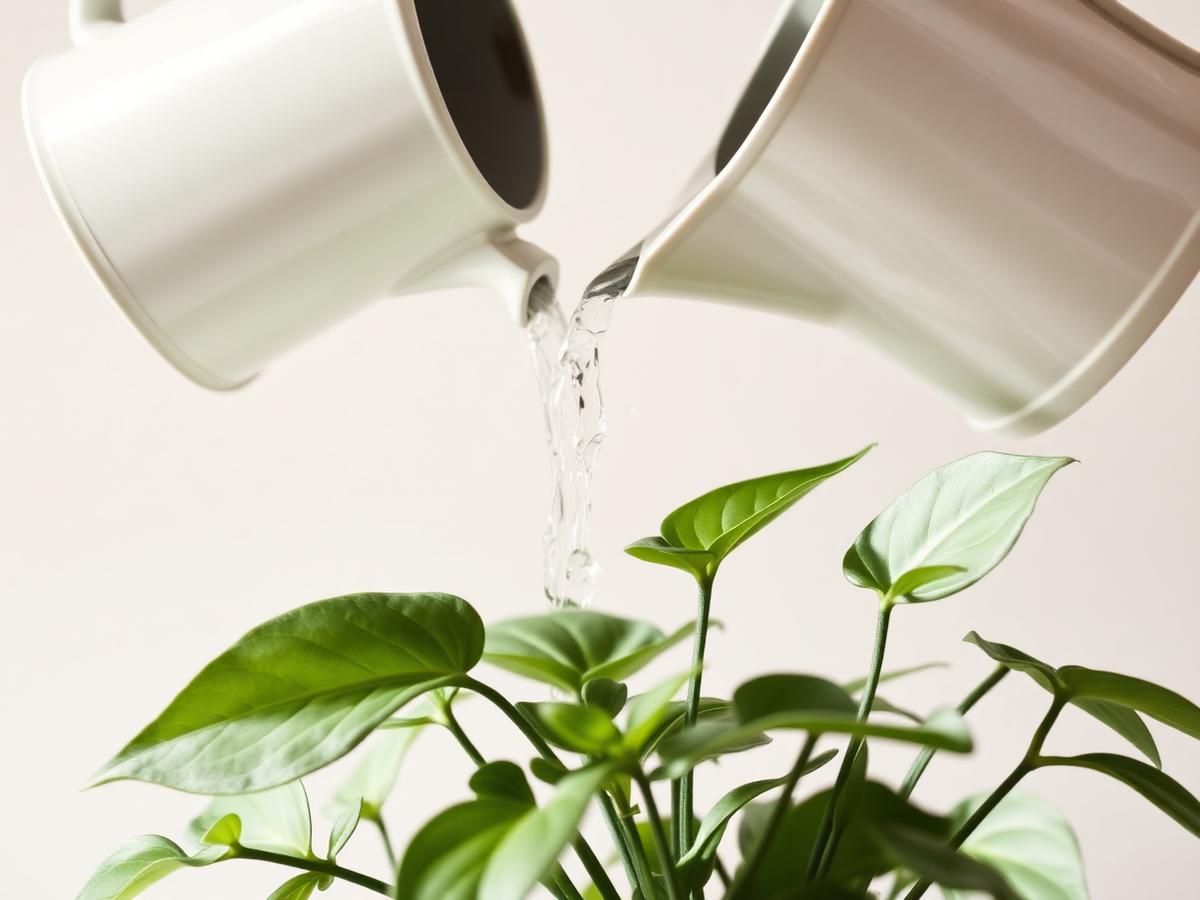
From outside the pot, the symptoms are identical: limp leaves, drooping stems, sad-looking plant. That is why 'water it more' is the most common wrong move when an already-overwatered plant is wilting — the user sees a sad plant and reaches for the watering can, accelerating the rot. The fix is to look at the soil before the leaves.
The 30-second decision tree
Run these four checks in order. Most plants are clearly one or the other after the first two.
- 1Lift the pot. Heavy = wet soil = overwatered. Light = dry soil = underwatered.
- 2Push a finger 2–3 cm into the soil. Wet or cool damp = overwatered. Bone dry, dusty, or pulled away from the pot edge = underwatered.
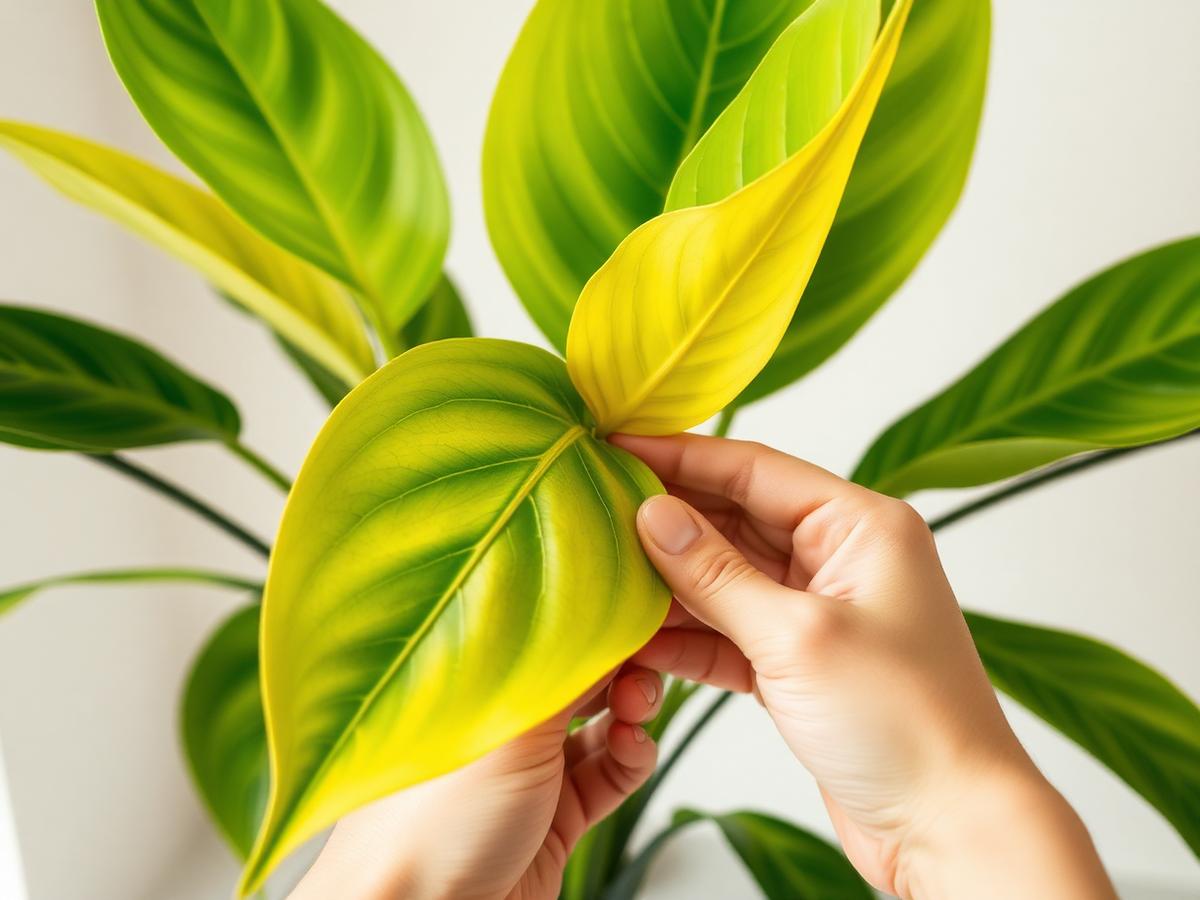
- 3Touch a wilting leaf. Soft, slightly yellow, limp like a wet cloth = overwatered. Crispy, curling, brown at the tips = underwatered.
- 4If still ambiguous, check the roots. Black, mushy, smelly = rot from overwatering. White or pale tan, firm = healthy but thirsty.
Overwatering — what to look for
Overwatered plants show a specific cluster of symptoms because the root zone is starving for oxygen. Roots need O₂ as much as they need water; saturated soil blocks gas exchange and roots begin to necrose within 48–72 hours.
- ·Lower leaves yellow first, then drop. The plant cannibalises older leaves to support new growth as roots fail.
- ·Leaves are soft and limp, not crispy. Texture is the giveaway — overwatering looks like 'wet wilt'.
- ·Soil is damp 5+ days after watering, especially in low-light conditions where transpiration is slow.
- ·The pot smells faintly sour, like wet compost or mildew, when held close.
- ·Mould or fungus gnats appear on the soil surface — a secondary indicator that soil has been wet too long.
- ·New growth stops despite spring or summer conditions.
Underwatering — what to look for
Underwatered plants have a different and easier-to-recognise symptom set, because the loss of moisture is mechanical — leaves visibly thin, soil visibly shrinks, the pot is visibly light.
- ·Crispy leaf tips and edges, especially on older leaves. Tropical species curl inward to reduce surface area.
- ·Leaves are thin, papery, and crumble when pinched gently — opposite to the soft wet wilt of overwatering.
- ·Soil has pulled away from the pot edge by 2–5 mm, leaving a visible gap. Water poured in this state runs straight down the gap and out the drain hole without rehydrating the root ball.
- ·Pot feels noticeably light — 30–50% lighter than after a thorough water.
- ·Whole plant droops uniformly — not just lower leaves. Recovery is fast (hours) once the root ball rehydrates, unlike overwatering recovery.
- ·Topsoil is dusty or hydrophobic — water beads on the surface rather than soaking in.
The root check — the definitive test
If the leaf and soil checks contradict each other, or the plant is valuable enough to be sure, pull the plant from its pot and look at the roots. This is the single definitive test.
Healthy thirsty roots are firm, white or pale tan, and smell of clean soil. Rotted roots are dark brown to black, mushy when pinched, slough off the root ball easily, and smell faintly of decay or rotten egg. A plant with 70% white roots can usually be saved by drying out and repotting; a plant with 90% black roots is more often a propagation candidate than a recovery one. Full step-by-step protocol in the root rot guide.
Why pot weight is the fastest test
Lifting the pot is the most reliable single check because it bypasses interpretation — a wet pot is heavy, a dry pot is light, and the difference is dramatic enough to feel without a scale. After watering thoroughly, a 15 cm pot with a typical aroid mix gains 200–400 g of water. A pot that has not been watered for a week loses most of that. The difference is unmistakable once you have lifted the same pot at both extremes.
Long-term, growers of valuable plants weigh pots on a kitchen scale and label the saturated weight on the pot base — see how often to water houseplants for the weight-lift method in detail. For diagnostic purposes, a single comparative lift is enough.
Recovering an overwatered plant
Recovery from overwatering is slow because the damage is to the root system, not the leaves. The faster you act, the higher the survival rate.
- 1Stop watering immediately. The most damaging move is to water again 'because the plant looks sad'.
- 2Move the plant to a brighter, warmer spot to accelerate transpiration and dry the root zone.
- 3If soil is severely waterlogged (visibly wet, sour smell), unpot the plant, gently tease away the wet soil, and rest the root ball on dry newspaper for 1–2 hours before repotting.
- 4Cut away any visibly black or mushy roots with sterilised scissors. Repot in fresh, drier mix in a pot one size smaller — a too-large pot holds excess water around small roots.
- 5Hold off watering for 5–10 days, then resume only when the top 3–5 cm of soil is dry.
- 6Do not fertilise for at least 4 weeks — damaged roots cannot tolerate salt loads.
Recovering an underwatered plant
Recovery from underwatering is fast because the plant tissue is intact — only the water column is missing. Within hours of rehydration, most plants visibly recover.
- 1Bottom-water for 20–30 minutes. Place the pot in a tray of room-temperature water deep enough to reach the drainage holes; the dry root ball will draw water up via capillary action and rehydrate evenly.
- 2After bottom-watering, top-water lightly to ensure the surface is also moist.
- 3Drain fully and return to the original spot.
- 4Check the plant in 4–6 hours — most underwatered plants are visibly turgid again by then.
- 5Crispy leaf tips will not recover — trim them off only after the plant is otherwise healthy. New growth replaces them within a few weeks.
Preventing both — the same single habit
Schedule-based watering causes both overwatering and underwatering, because pot drying speed varies with light, season, pot material, and plant size. Signal-based watering — finger test, pot weight, or both — solves both problems at once. The full method is in how often to water houseplants.
If you remember nothing else: water when the soil tells you to, and never on a fixed calendar. A plant that has been correctly diagnosed and watered when it needs it almost never wilts in either direction.