The 30-second test that decides it
Lift the pot and feel its weight. A pot whose soil is bone-dry weighs 30–50% less than one freshly watered. If the pot feels light and the top 2–3 cm of soil is dry to the touch, you are underwatered. If the pot feels heavy and the soil is still damp several days after the last watering, you are overwatered.
Add a finger check — push 2–3 cm into the soil. Cool and damp on a heavy pot is the overwatered signature; warm and dust-dry on a light pot is the underwatered signature. The combination of pot weight and finger test catches over 95% of cases without unpotting the plant. For the full set of soil-moisture tests beyond the finger and weight checks, see how to tell if your plant needs water.
- 1Lift the pot — note whether it feels light or heavy.
- 2Push a finger 2–3 cm into the soil — note dry or damp.
- 3Light + dry = underwatered. Heavy + damp = overwatered.
- 4Heavy + dry top, wet bottom = poor drainage; act as overwatered.
- 5Light + damp = small or shallow pot drying unevenly; bottom-water and recheck.
Underwatered: the leaf, soil, and root pattern
Underwatered leaves are dry to the touch, often crispy at the edges, and curled inward to reduce surface area for transpiration. The whole plant looks deflated rather than soft — petioles droop because they cannot maintain turgor pressure. The soil is dust-dry, often pulled away from the pot edge, and water poured on top runs straight down the gap (a classic hydrophobic-soil sign).
Roots, if you check, are firm and pale cream — they look healthy because they are. The plant is not damaged at the root zone; it is simply parched. This is why underwatered plants recover within hours of a thorough watering: there is nothing structurally wrong, only a missing input. See the drooping diagnostic for the species-by-species turgor signs.
- ·Leaves: thin, crispy edges, curled, sometimes papery brown at the tips.
- ·Whole plant: deflated, leaning, but no smell from the soil.
- ·Soil: cracked or pulled away from the pot, light-coloured, dust-dry on the surface.
- ·Pot: noticeably light when lifted; can be picked up with one finger if small.
- ·Roots: firm, pale, intact (you should rarely need to check).
Overwatered: the leaf, soil, and root pattern
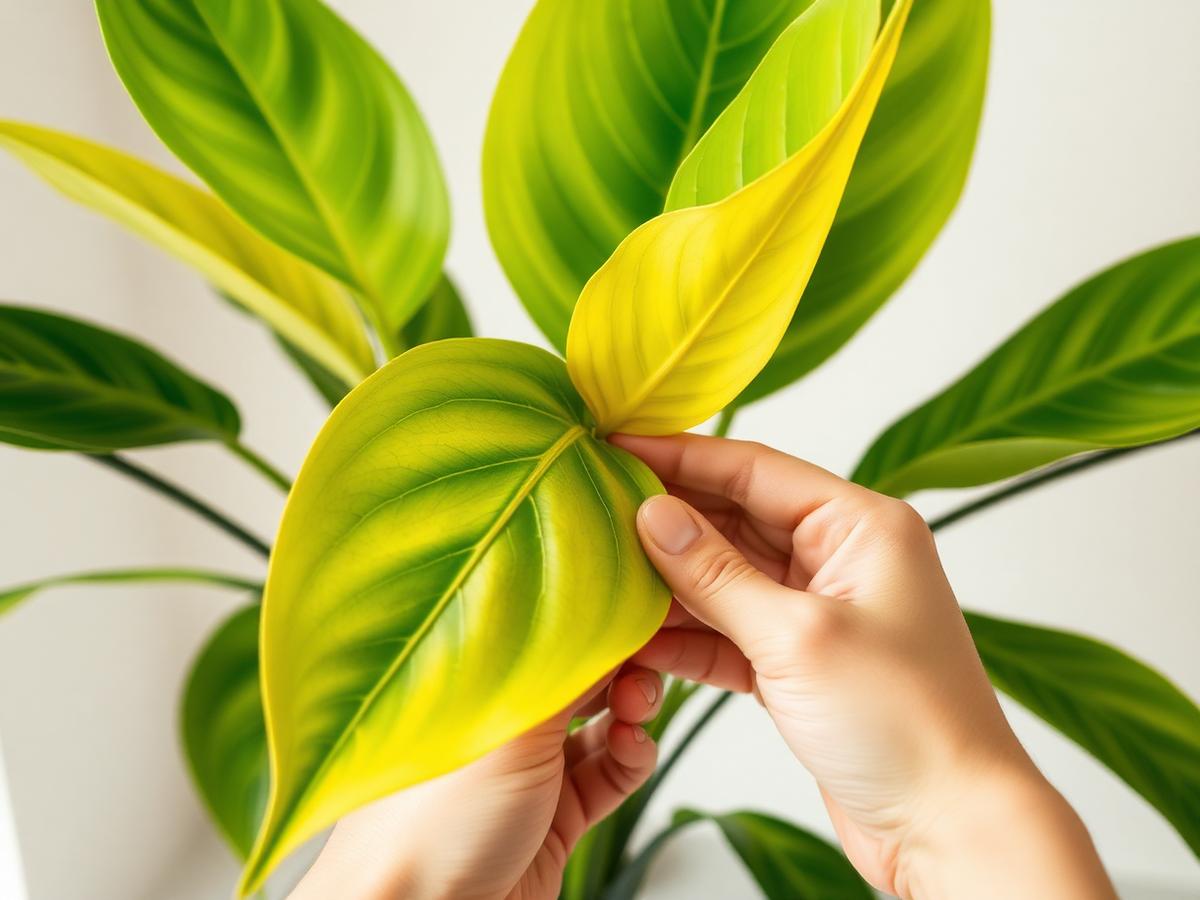
Overwatered leaves are soft and limp rather than crispy. Yellowing starts on the lower, oldest leaves first — the plant pulls nutrients from leaves it can no longer support — then progresses upward. Stems near the base may feel mushy or hollow. The soil is dark, dense, and stays damp for days; in advanced cases the surface develops a faintly sour or mushroom-like smell. An earlier — and more subtle — overwatering tell is heavy daily guttation (clear water droplets at leaf tips and edges in the morning); persistent guttation on a plant that did not previously do it is often the first signal that watering frequency has crept too high.
Roots are the giveaway. Healthy roots are firm and white-cream; rotting roots are brown or black, mushy, and slough off when you touch them. The plant looks "underwatered" because the rotted roots cannot deliver water — even saturated soil leaves the leaves drought-stressed. This is why "I watered it and it got worse" is the classic overwatering report. See the yellow leaves diagnostic for the full overwatering pattern.
- ·Leaves: soft, evenly yellow on lower leaves, sometimes with brown soggy spots.
- ·Stems: soft or hollow at the base; new growth browns before opening.
- ·Soil: dark, compact, slow to dry; faint sour smell after 5+ days damp.
- ·Pot: heavy when lifted; saucer often holds standing water.
- ·Roots: brown to black, mushy, peel off the white core when pulled.
Symptoms they share — and how to break the tie
Both extremes cause drooping leaves, yellowing, leaf drop, and stunted growth. The shared symptoms are why people misdiagnose — and why the response of watering more makes overwatering worse. The reliable tie-breakers are the three checks below; do them in order and stop at the first that gives a clear answer.
- 1Soil weight + finger test — solves most cases on its own.
- 2Smell the soil at the drainage hole. Sour or mushroomy = overwatered; neutral or earthy = underwatered.
- 3If still unclear, slide the plant out of its pot. Firm white roots in moist soil = fine or thirsty; black mushy roots = overwatered.
Fixing an underwatered plant
Recovery from drought is fast — often within 24 hours. The fix is a thorough watering, but bone-dry soil is hydrophobic, which means water poured on top runs down the inner pot wall and out the bottom without soaking the root ball. Bottom-water for 20–30 minutes (set the pot in 2–3 cm of room-temperature water) until the soil surface darkens. Then top-water once to flush salts that concentrated as the soil dried.
After the rehydration, ease back to normal cadence. If a plant goes bone-dry repeatedly, move it to a less light-intensive spot, upsize the pot one step, or repot into a more retentive mix. For chronic drought-prone plants like ferns and calatheas, the bottom-watering routine is more reliable than top-watering on a fixed schedule.
Fixing an overwatered plant
Overwatering recovery is slow — weeks at minimum, months for severe rot — and starts with stopping further damage. Pull the plant out of its pot, knock loose the wet soil, and inspect the roots. Trim every black or mushy root with sterilised scissors back to firm white tissue. If more than 70% of roots are gone, recovery odds drop sharply; trim foliage proportionally to reduce demand on what is left.
Repot into fresh, dry, well-draining mix in a pot one size smaller than before — a smaller pot dries faster, helping new roots grow. Hold water for a week, then resume sparingly: water only when the top 5 cm of soil is dry. The full root rot recovery protocol covers timing, hydrogen peroxide drench, and when to give up. A wilting plant on dry soil is thirsty; a wilting plant on wet soil that just got worse after watering needs an unpot now.
- 1Stop watering immediately and remove the saucer.
- 2Slide the plant from the pot; knock loose wet soil.
- 3Trim black/mushy roots back to firm white tissue.
- 4Repot in fresh dry mix in a pot one size smaller.
- 5Hold water 5–7 days; resume only when top 5 cm is dry.
Why overwatering is the more common mistake
Most houseplant deaths trace to overwatering, not drought. Modern flats are warmer and dimmer than the tropical understories most popular plants come from — the soil dries slowly, especially in winter, while attentive new owners water on a fixed schedule. Roots need oxygen as much as water; soggy soil suffocates them and rot follows within 48–72 hours.
The honest fix is signal-based watering, not schedule-based. The watering frequency guide explains why "once a week" fails for almost every plant, and why the finger test plus the lift test together is the only routine that adapts to season, light, and pot type without you having to think about it.
Plant-by-plant tendencies to keep in mind
Different species fail in different directions. Knowing which way your plant tends to fail gives you a head start on the diagnosis.
- ·Peace lilies, ferns, calatheas: fail dry first; dramatic wilt is the single most common signal.
- ·Snake plant, ZZ plant, succulents, jade: fail wet first; drought-tolerant for weeks but rot in days when soggy.
- ·Pothos, philodendron, monstera: middle-of-the-road; both are common but overwatering is more often fatal.
- ·Fiddle leaf fig, rubber plant: hate inconsistency more than either extreme — same cadence matters most.
- ·Orchids: more often killed by overwatering; bark mix dries fast and roots want air.
- ·Spider plants, Chinese evergreen: forgiving on both sides, recover fastest.