The 30-second pot-out check
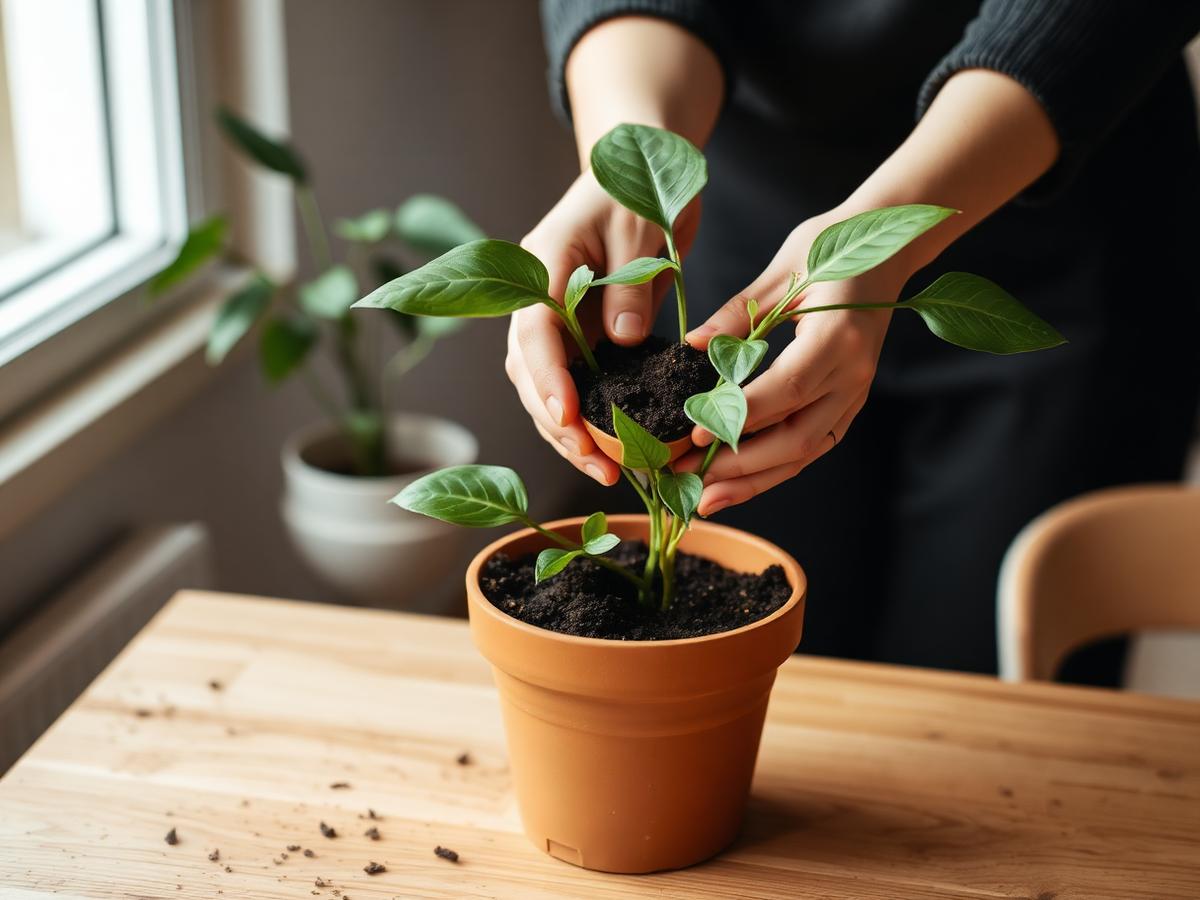
Tilt the plant on its side, support the base with one hand, and slide the pot off. A healthy plant comes out as a coherent root ball that holds its shape — soil bound together by visible roots threading through it. The whole inspection should take under a minute, and you can put the plant straight back in its pot if everything looks right.
What you are looking for, in order: colour (white, tan, or brown?), texture (firm or mushy?), distribution (roots through the whole soil mass or only at the edges?), growth tips (fresh white tips actively pushing into new soil?), smell (clean and earthy or sour and rotten?). Most root inspections reveal one of three states: healthy and ignorable, slightly pot-bound and a candidate for repotting in the next six months, or actively rotting and needing intervention today.
- 1Stop watering for 2–3 days so the root ball is firm and easier to handle.
- 2Tip the pot on its side and slide it off the root ball.
- 3Look at colour, texture, distribution, and tip growth.
- 4Smell the soil at the bottom of the root ball.
- 5Squeeze a few roots between thumb and forefinger.
- 6Put it straight back if it looks healthy — no need to disturb further.
What healthy roots actually look like
Healthy roots are some shade of white, off-white, or light tan — almost the colour of unbleached pasta. They are firm when squeezed, with a slight springiness, and they branch progressively from thicker structural roots into finer feeder roots, ending in fine white tips where active growth is happening. The whole system fills the pot evenly, threading through the soil rather than living entirely against the pot walls, and you can usually see a fresh white tip at every branching point.
Different species look different at rest. Aroids (monstera, philodendron, pothos, anthurium) have thick, white-to-tan roots, sometimes with green undertones — they evolved as climbers and their roots double as anchors. Succulents and cacti have thin, fibrous, almost wiry tan roots that branch heavily and look sparse compared to the foliage. Orchids have silvery-grey velamen roots that turn green when wet — the silver is the dry, oxygen-permeable outer layer, and is normal. Ficus and large foliage plants have woody structural roots that look brown and bark-like with white feeder roots branching from them.
- ·Aroids: Thick white-to-tan roots, white tips, soil bound but not packed. See aerial roots for the above-soil cousin.
- ·Succulents and cacti: Wiry, fibrous tan roots with a smaller root mass than you'd expect from the leaves.
- ·Orchids (phalaenopsis): Silvery-grey velamen roots that turn bright green when watered — silver is healthy, not dehydrated.
- ·Calatheas, marantas: Fine tan roots, very dense, easily damaged by rough handling. Strong preference for slightly acidic soil — see Calathea care.
- ·Ferns: Dense black, brown, or wiry roots — their natural colour is darker than aroids, do not confuse with rot.
- ·Snake plants (Dracaena trifasciata): Bright orange-tan thick rhizomes plus thinner fibrous roots — orange is normal here, not warning.
- ·Pothos and philodendron: White roots, often with visible aerial-root nubs along the stem. Vigorous growers with dense root systems.
The seven warning signs in a root ball
Each of these visual signs maps to a specific underlying problem. Most root balls show only one of them at a time, which makes the diagnosis straightforward.
- ·Black or dark brown roots that smell sour — root rot. The roots have died and bacteria have taken over. Cut to clean tissue and repot in fresh, well-draining mix. See root rot.
- ·Mushy roots that strip off in your fingers — also root rot, advanced stage. The cellular structure has collapsed entirely.
- ·Roots circling the pot in a tight spiral — pot-bound. The plant has run out of soil and the roots are wrapping. Repot one size up; tease the spiral gently apart before placing in fresh mix.
- ·Roots only at the edges, hollow centre — the soil core has compacted and the plant has retreated to the air-permeable margins. Remove the dead core, repot with chunkier substrate.
- ·Soil pulled away from pot edges, water runs around — hydrophobic root ball, often after long drought. Bottom-water for 20 minutes to rehydrate, or repot if the soil structure has fully broken down.
- ·No white tips anywhere — the plant has stopped active root growth. Either dormant (winter is normal), or chronically stressed (waterlogged, cold, or recently chemical-shocked).
- ·Pale, transparent, watery roots — early-stage rot, before they turn black. Catch this and the plant is much easier to save.
Colour key: white vs tan vs brown vs black
Root colour is the single most diagnostic visual signal, and the colour scale is more reliable than any care app. The rule is straightforward: lighter is healthier on most species, with the caveat that some species (ferns, snake-plant rhizomes) naturally run darker. If a plant's roots are noticeably darker than they were six months ago, the trend matters more than the absolute colour.
- ·Bright white — actively growing, freshly waterlogged or just-watered. The healthiest reading.
- ·Off-white or cream — normal mature roots, slightly dry. Healthy.
- ·Pale tan or beige — mature roots that have been in the soil a while. Normal for older plants.
- ·Light brown — ageing roots; structurally fine but not the youngest part of the system. Look for white tips elsewhere to confirm growth is still happening.
- ·Dark brown without smell — could be normal for darker-rooted species (ferns, some philodendrons) or could be early decline. Squeeze test: firm = fine, mushy = trouble.
- ·Black with sour smell — rot. Cut these off entirely.
- ·Slimy translucent — bacterial infection, often follows physical damage during repotting. Rare but serious; isolate the plant.
Texture: firm, mushy, brittle, or slimy
Pinch a few roots between thumb and forefinger and ask what they feel like. Healthy roots should feel firm with a slight springiness, like a fresh pasta strand or a thin twig — they bend rather than snap, hold their shape under light pressure, and resist coming apart. Anything else points at a specific failure.
Mushy roots, where the outer layer slides off and the inner core looks stringy, are advanced rot — those roots are dead and the surrounding ones are likely compromised. Brittle, dry, papery roots are dehydration damage, often from chronic underwatering or hydrophobic soil; the plant can recover if rehydrated and repotted, but those specific roots will not regrow function. Slimy roots indicate active bacterial decomposition and warrant immediate isolation. Loose, fibrous, easily-pulled-apart root balls in plants that should be densely rooted (mature aroids, ficus) suggest the soil has lost structure — repotting in a fresh mix usually fixes it within one season.
What it means: matching root state to plant problem
Once you have read colour, texture, and pattern, the diagnosis is usually unambiguous. The common patterns and what they mean:
- ·Healthy white roots, plant looks bad above ground — the problem is not in the pot. Look at light, humidity, pests, or recent shocks.
- ·Black mushy roots, plant looks bad — root rot. Treat by removing affected roots and repotting. See root rot.
- ·Healthy roots packed tight against pot walls, plant looks slightly limp — pot-bound. Time to repot up one size.
- ·Soil hollow at the centre, healthy roots only at edges — soil compaction. Repot in chunkier mix; aroids especially need a draining substrate.
- ·Soil bone-dry and pulled from edges, healthy-but-thin roots — chronic underwatering, hydrophobic soil. Bottom-water and adjust schedule.
- ·Healthy pale roots but no white tips anywhere — dormant. Normal in winter; concerning if the plant is supposed to be growing. Check temperature and light.
- ·Mix of healthy white and dead black roots — partial rot from inconsistent watering. Trim the dead ones; repot if more than ~30% are affected.
Should you trim healthy roots when you repot?
For most houseplants, no — there is no benefit to trimming healthy roots, and every cut is a potential infection site. The two genuine exceptions: a tightly pot-bound plant being moved to a slightly larger pot benefits from gentle teasing-apart of the circling spiral, which encourages roots to grow outward into the new soil rather than continue spiralling. And a plant with mixed healthy and rotted roots needs the rotted ones cleanly cut off — leave the rest alone.
Always sterilise your tool before cutting. Wipe scissors or a knife with isopropyl alcohol or pass them through a flame for two seconds. Bacterial pathogens spread between plants on shared tools more reliably than they spread through the air.
After the inspection: what to do next
Most root checks end with the plant going straight back into the same pot — and that is the correct outcome more often than people expect. Healthy roots that were not cause for concern do not need disturbing. The decision tree is simple: if everything looks normal, return the plant to its pot, water it, and put it back where it was. If it is pot-bound, repot one size up. If it is rotting, the plant needs surgery — see root rot for the full protocol. If symptoms above the soil persist after a clean root check, the problem is environmental — light, humidity, temperature, or pests — not the pot.
Build root inspection into your routine: every new plant gets one when it arrives, every existing plant gets one at repotting time, and any plant that is unexpectedly declining gets one before you do anything else. Compared to the time it takes to debug a struggling plant through symptom guessing, 30 seconds of pot-out is the highest-leverage move in houseplant care.