Why repotting is actually stressful
Repotting always damages some roots. Fine feeder roots break off when the plant is slid from its old pot; tight root balls lose more than loose ones. A healthy, unstressed plant regrows those roots quickly. A stressed plant — one that's just been on a delivery truck, sat under shop lighting, and been carried home in a cold bag — does not. Adding a second insult while the plant is still dealing with the first is why many first-month repots result in leaf drop and slow decline.
There's a second reason to wait: the plant's root-to-soil ratio in the shop pot is what its current water and nutrient uptake is calibrated for. Doubling the soil volume suddenly means the pot stays wet much longer between watering — a frequent trigger for root rot in freshly-repotted plants.
The three cases that force a day-one repot
Three specific situations override the default "wait":
- 1Severe root-bound: roots have formed a dense spiral around the entire pot, the root ball is almost solid with almost no visible soil, and water runs straight through without being absorbed. Root-bound plants dry out in 24–48 hours and will decline in days if left.
- 2Waterlogged rotting soil: the substrate is sodden, smells sour or sulphurous, and you can see black mushy roots when you slip the plant out. Leaving it in rotting soil guarantees further root death.
- 3No drainage hole: the pot (usually a decorative sleeve sold with the plant) has no drainage, so every watering pools at the bottom. Move to a pot with holes the same day.
What "root-bound" actually looks like
Most plants sold at supermarkets are pot-tight but not truly root-bound — commercial growers size pots deliberately tight because it encourages compact plants and saves space. Pot-tight is fine; the plant's root system matches its current pot and will thrive for months before needing more room.
Real root-bound is a different order of magnitude. You pull the plant out and the root ball comes cleanly with it, so solid you could bowl with it. Roots form a visible spiral around the outside. Water poured into the top runs straight out the bottom in seconds. That's when repotting is non-optional.
How to repot when it's needed
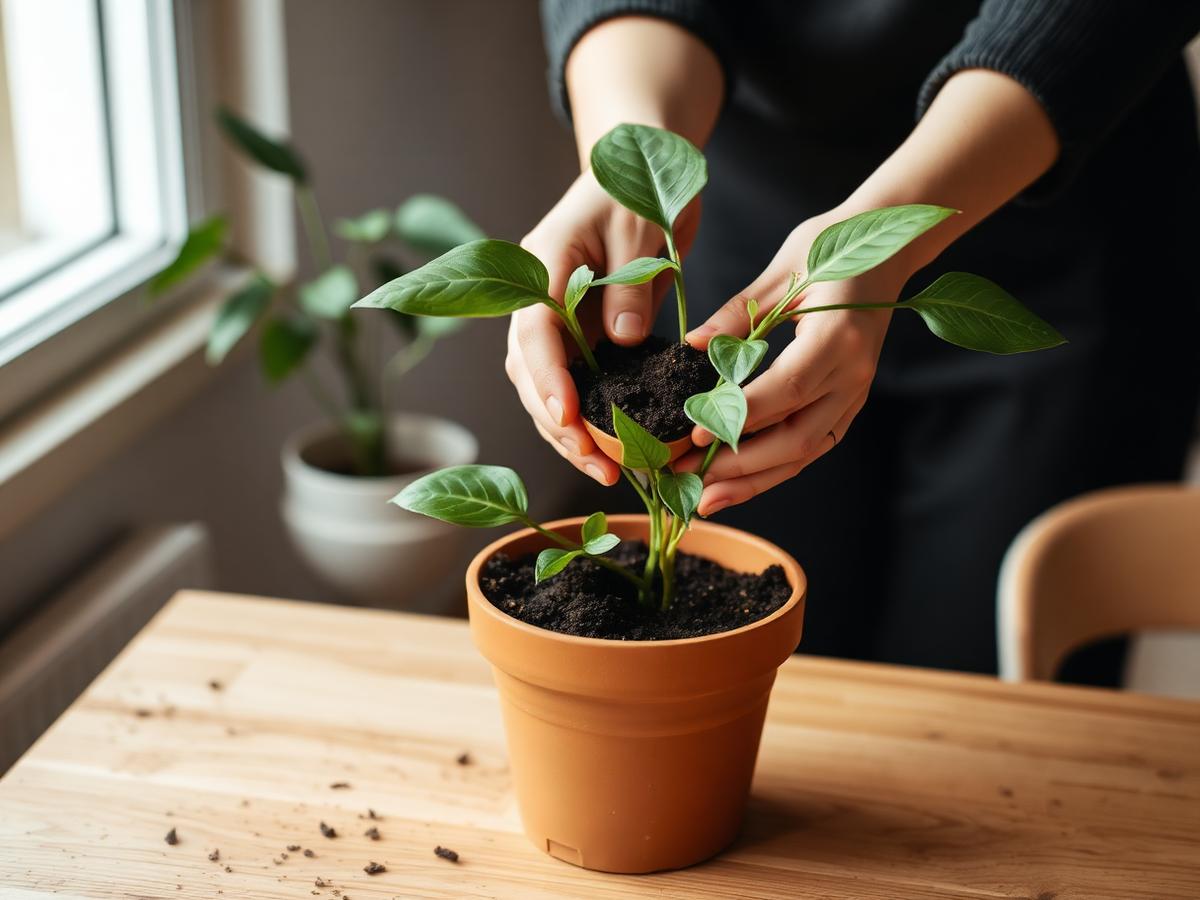
Assuming one of the three triggers is true, the repot itself is simple if you go slow.
- 1Water the plant lightly a few hours before — moist soil slides out cleanly; dry soil crumbles and damages roots.
- 2Choose a pot 5 cm (2 inches) wider in diameter than the current one. Not two sizes up. Extra soil holds extra water.
- 3Use an appropriate mix for the species — aroid mix (bark + perlite heavy) for pothos / monstera / philodendron; well-draining universal mix for most foliage plants; cactus mix for succulents.
- 4Gently loosen any tightly spiralled roots with your fingers. Don't tear.
- 5Prune black or hollow roots with sterilised scissors if present. Healthy roots are firm and cream to white.
- 6Place in the new pot at the same soil level. Burying the stem deeper causes rot.
- 7Water lightly — the pre-repot watering means the root zone is already damp. A full soak adds too much moisture.
The first two weeks after repotting
Expect some adjustment: a few leaves yellowing, some temporary wilting, slow new growth. Don't fertilise for at least 4 weeks — fresh substrate already has nutrients, and fertiliser on damaged roots causes burn.
Water only when the top 2–3 cm of soil is dry, and check drainage. If the pot is still damp after a week, the new pot-soil combination may be holding too much water and you need to shift to a chunkier mix.
Season matters: when to wait even longer
Autumn and winter are the worst time to repot most houseplants. Day length is short, growth is slow, and the plant's ability to regrow damaged roots is at its lowest point. If a plant arrives in November and isn't severely stressed, wait until March to repot unless one of the three triggers above is obviously true.
Spring is ideal: rising light levels drive new root growth fast, and the plant can absorb both the stress and the opportunity of fresh soil in the same move.