Why so many houseplants look alike
Indoor plant look-alikes cluster at three levels. Same family, different genera: pothos (Epipremnum), philodendron (Philodendron), and Scindapsus all belong to Araceae and share heart-shaped leaves and a trailing habit because they evolved as understorey climbers. Same genus, different species: hoyas, anthuriums, and calatheas all have dozens of species sold side-by-side at plant shops, and only a few visual traits separate them. Same species, different cultivars: variegated Monstera deliciosa is sold as 'Albo', 'Thai Constellation', 'Mint', and several other named cultivars — all the same species, but with patented breeding differences that command very different prices.
The practical consequence is that a single "is this a pothos?" question can have three different answers depending on which level you got confused at. The twelve groups below are organised by how often they actually trip people up, not by botanical relationship — the goal is faster ID, not taxonomy review.
The 12 look-alike groups (and the one ID trait for each)
Each entry below pairs the lookalike group with its single most diagnostic feature — the one trait that separates them in a glance once you know to look at it. Where a deeper guide exists, the title links to the pairwise comparison.
- 1[Pothos vs heartleaf philodendron](/articles/pothos-vs-philodendron) — the petiole. Pothos has a deeply grooved petiole; philodendron has a smooth, rounded one. Pothos new growth emerges from the previous leaf; philodendron emerges from a papery cataphyll.
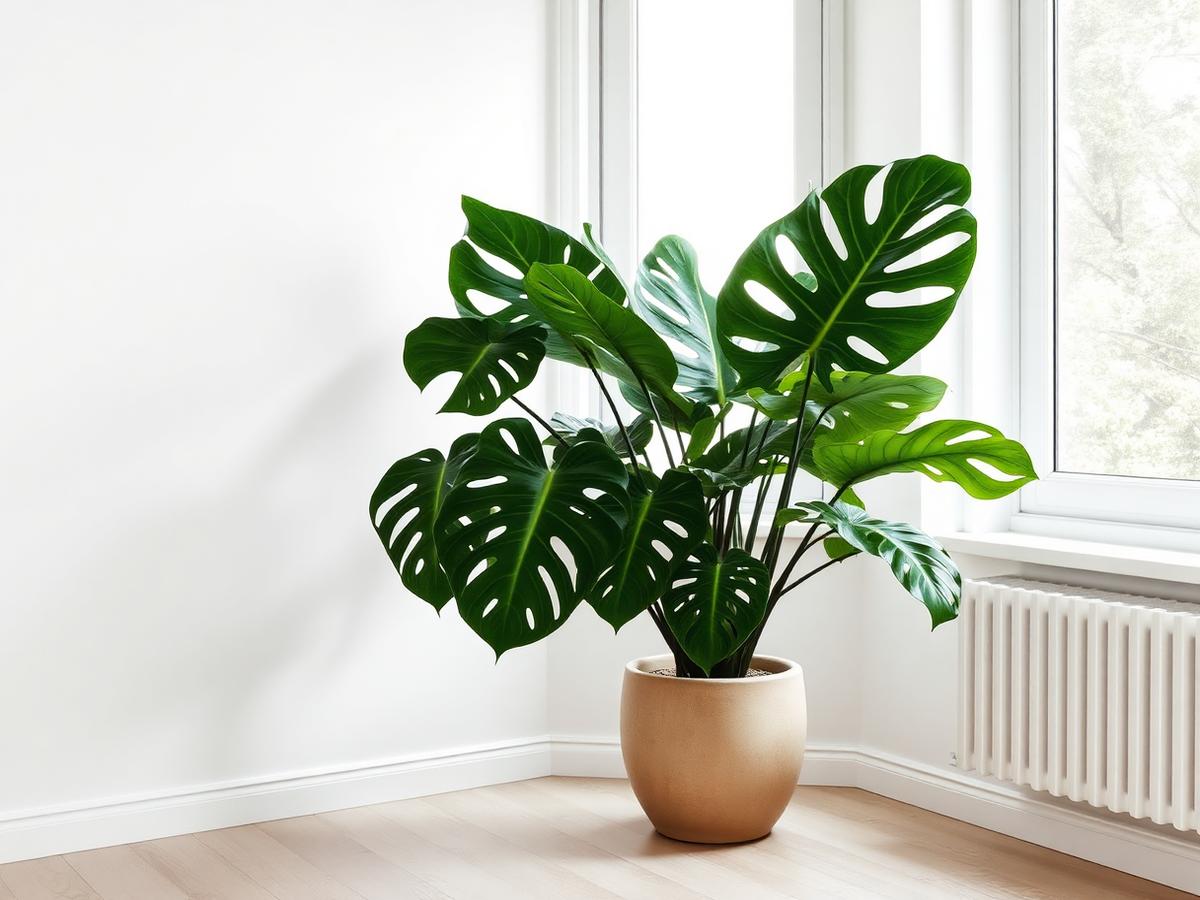
- 2[Monstera vs split-leaf philodendron vs mini-monstera](/articles/monstera-vs-philodendron-vs-mini-monstera) — leaf hole pattern. Monstera deliciosa has both splits AND oval holes; mini-monstera (Rhaphidophora tetrasperma) has only splits, no holes; split-leaf philodendron (Philodendron bipinnatifidum) has splits but a self-supporting trunk-forming habit.
- 3[Calathea vs maranta vs stromanthe vs ctenanthe](/articles/calathea-vs-maranta-vs-stromanthe-vs-ctenanthe) — vein pattern and leaf orientation at night. Calatheas fold straight up at night ("prayer plant" behaviour shared across the family) but each genus has a distinct vein pattern; marantas have round-ended leaves with red side veins; stromanthes flush burgundy on the underside.
- 4[Snake plant varieties](/articles/snake-plant-varieties-identification) — all are Dracaena trifasciata (formerly Sansevieria). Cultivar tells: edge colour ('Laurentii' has yellow margins), height ('Hahnii' is short bird's-nest form), leaf width ('Moonshine' is broad and silver), cylindrical shape ('Cylindrica' is round in cross-section).
- 5[Pilea vs peperomia raindrop vs Polybotrya](/articles/pilea-vs-peperomia-raindrop-vs-polybotrya) — leaf attachment. Pilea peperomioides has a peltate leaf (stem attaches in the middle of a coin-shaped leaf — the famous "UFO"); Peperomia polybotrya 'Raindrop' has a heart-shaped leaf with the stem at the base; Polybotrya cervina is a fern with completely different texture.
- 6[ZZ plant varieties](/articles/zz-plant-varieties-identification) — all Zamioculcas zamiifolia. The original is glossy bright green; 'Raven' is jet black; 'Zenzi' is a compact form with shorter stems and curlier leaflets; 'Variegata' has streaky white-on-green variegation.
- 7[Hoya carnosa vs kerrii vs pubicalyx](/articles/hoya-carnosa-vs-kerrii-vs-pubicalyx) — leaf shape. Hoya carnosa has thick oval leaves; kerrii (the "sweetheart hoya") has classic heart-shaped leaves; pubicalyx has narrow, lance-shaped leaves with silvery splashing.
- 8[Monstera albo vs Thai Constellation vs Mint](/articles/monstera-albo-vs-thai-constellation-vs-mint) — variegation pattern. Albo is unstable white sectors with hard borders; Thai Constellation is creamy speckled variegation that is genetically stable; Mint is mid-green sections rather than white. All three are Monstera deliciosa cultivars.
- 9[Philodendron varieties](/articles/philodendron-varieties-identification) — leaf shape narrows the genus quickly. Heartleaf, micans (velvety), Brasil (yellow-and-green heartleaf), Pink Princess (pink variegated), Birkin (white-pinstriped), and the larger arborescent kinds (selloum, bipinnatifidum) all have distinctive shapes.
- 10[Alocasia varieties](/articles/alocasia-varieties-identification) — leaf shape and vein contrast. Polly and Amazonica have arrow-shaped leaves with bright white veins; Frydek is velvety; Stingray has a tail-shaped leaf tip; Black Velvet is small and dark.
- 11[Anthurium clarinervium vs crystallinum vs magnificum vs regale](/articles/anthurium-clarinervium-vs-crystallinum-vs-magnificum-vs-regale) — vein contrast and leaf size. All are velvety heart-leaved anthuriums; clarinervium has the brightest white veins on a smallish leaf; crystallinum is similar but larger and longer; magnificum has a square petiole and pale veins; regale is the largest with rounded leaves.
- 12[Christmas vs Thanksgiving vs Easter cactus](/articles/christmas-cactus-vs-thanksgiving-vs-easter) — segment shape. Thanksgiving has pointed, claw-like segment edges (Schlumbergera truncata); Christmas has rounded scalloped edges (Schlumbergera bridgesii); Easter has small even-scalloped edges and bristles (Rhipsalidopsis gaertneri). The bloom timing follows the names but is unreliable indoors.
The four ID traits that work on almost any species
Outside the twelve groups above, almost every plant ID problem can be cracked by checking the same four traits in order. Train yourself to look at them in this sequence and the genus is usually obvious within ten seconds.
- 1Petiole (the stalk between leaf and stem) — grooved or smooth, round or square in cross-section, sheathed or exposed. The most under-used ID trait.
- 2Leaf attachment and venation — peltate (stem in the middle, like a Pilea coin) vs basally attached, palmate vs pinnate veining, vein colour vs leaf-blade colour.
- 3Texture and reflectivity — glossy, matte, velvety, silvery, papery. Same shape, different texture often means different species.
- 4Growth habit — climbing (with aerial roots), trailing (cascading), self-heading (rosette), upright (single trunk), clumping (multiple stems from soil). Habit is set genetically and resolves many cases that leaf-only inspection cannot.
Why plant ID apps still confuse look-alikes
Even the best plant ID apps misfire on cultivars within a species and on near-look-alikes that share the same family. The reason is structural: apps are trained on labelled photos, and labels online tend to fall back to the parent species. A photo of Monstera Thai Constellation captioned simply "Monstera deliciosa" trains the model to see the variegation as background noise on the parent, not as a distinct cultivar. The model then returns Monstera deliciosa for everything that looks like one — including the cultivar — and the user thinks the app is right but their plant is more specifically a Thai Constellation. The full breakdown is in the AI plant ID test — across 30 photos, no app reliably resolved cultivar-level identification.
The practical workaround is to use apps for genus-level ID and a botanical reference (Plants of the World Online from Kew is the canonical free source) for species- or cultivar-level. Or use the photo identification guide to walk the four-trait sequence above manually — it is faster than waiting for an app to be confidently wrong.
When to bother with botanical-key precision
For most houseplants, a confident genus-level ID is enough — care for a pothos and a heartleaf philodendron is so close that swapping the label costs nothing. The cases where exact-cultivar precision matters: when the plant cost more than €30 and you want to confirm you got what was advertised; when you are propagating to sell or trade and the buyer is paying for the cultivar name; when toxicity matters for a household with curious pets and the species' toxicity is genuinely different (most aroids are similarly mildly toxic — see pet-safe plants); and when you are tracking lineage in a collection.
If precision matters, photograph: the whole plant in habit, the leaf upper and lower surface, the petiole (especially in cross-section), any flower or fruit, and the new-growth tip. Cross-check against [Plants of the World Online](https://powo.science.kew.org/) (a free Kew database) and at least one specialist source — for aroids, the International Aroid Society; for hoyas, the Hoyas of the World database. Forum communities (r/houseplants, dedicated genus Facebook groups) tend to be more reliable than apps for cultivar-level ID because they include people who collect and photograph the cultivars themselves. See how to identify a houseplant from a photo for the full systematic flow.