Take the right photo first
The single biggest factor in a successful ID is the photo, not the tool. A blurry top-down shot of a plant in shadow defeats any method — app, reference, or expert. The five photos below cover almost every situation.
- 1One mature, undamaged leaf flat against a plain background (white wall, paper, or flat surface). Photograph the upper side first.
- 2The whole plant from a few steps back, showing growth habit (trailing, climbing, upright, rosette).
- 3Close-up of the leaf underside — many species are distinctive there (purple, silvery, fuzzy, ribbed).
- 4Close-up of where the leaf meets the stem (the petiole and node) — pothos vs philodendron, monstera vs adansonii, all tell apart here.
- 5Any flowers, fruit, or unusual structures — these narrow ID dramatically when present.
Lighting and angle for the best chance
Plant ID apps and human eyes both struggle with bad photos. Shoot in bright indirect daylight — near a window but not in direct sun. Avoid harsh shadows, yellow incandescent bulbs, and the cool blue cast of fluorescent lights. Hold the camera flat and parallel to the leaf, not at an angle. Most modern phone cameras handle this if you tap to focus on the leaf and avoid using digital zoom.
If the plant is too large to bring into good light, use a piece of plain white paper as a backdrop behind a representative leaf. The contrast helps both apps and humans pick out edge shape, venation, and texture.
Method 1: Plant identification apps (fastest)
Modern plant ID apps use computer vision trained on millions of photos. They return a likely species in seconds. The major free options each have strengths and limits worth knowing.
- ·Pl@ntNet: Citizen-science project run by CIRAD/INRA in France. Excellent for European species and most popular tropicals. Free, no account required. Best result with leaf-only photos.
- ·Google Lens: Built into the Google app and Pixel cameras. Strong on common houseplants and outdoor plants. Returns related image search results so you can cross-reference visually.
- ·iNaturalist Seek: Crowdsourced species database focused on biodiversity. Better for outdoor and native plants than ornamental cultivars; useful for confirming a Pl@ntNet result.
- ·PictureThis (paid after free trial): Often top of the app store charts. Convenient but the free tier is limited and accuracy is variable for rare cultivars.
- ·PlantNet, Pl@ntStory, NatureID, others: Commercial apps with subscription fees. Comparable accuracy to Pl@ntNet for popular species; check reviews before paying.
When to trust an app's result
Trust the result when: the app shows a single high-confidence match (typically 80%+); you can verify visible features against the suggested species (leaf shape, vein pattern, petiole structure); a quick reverse-image search of the species name returns plants that look like yours.
Be skeptical when: the top match has low confidence or several candidates look similar; the suggested species has wildly different growth habit (your plant trails, the suggestion is a tree); the suggestion is a temperate outdoor plant when you're identifying an indoor tropical. In these cases, move to the next method.
Method 2: Read the leaf shape
Botanists use leaf characteristics as the primary identification key. Memorising even a small visual vocabulary lets you narrow possibilities without any tool. Six shapes cover the majority of houseplants:
- ·Cordate (heart-shaped): Pointed tip, two rounded lobes at the base. Pothos, philodendron heartleaf, hoya kerrii, anthurium.
- ·Lanceolate (lance-shaped): Narrow, several times longer than wide, pointed at both ends. Dracaena, calathea lancifolia, spider plant, sansevieria/snake plant.
- ·Ovate (egg-shaped): Wider at the base, narrowing to a tip. Many ficus, pilea, peperomia.
- ·Palmate (hand-shaped): Multiple lobes radiating from a central point. Schefflera, fatsia, philodendron selloum.
- ·Pinnate (feather-like): Smaller leaflets along a central rib. Boston fern, kentia palm, dracaena marginata in clusters.
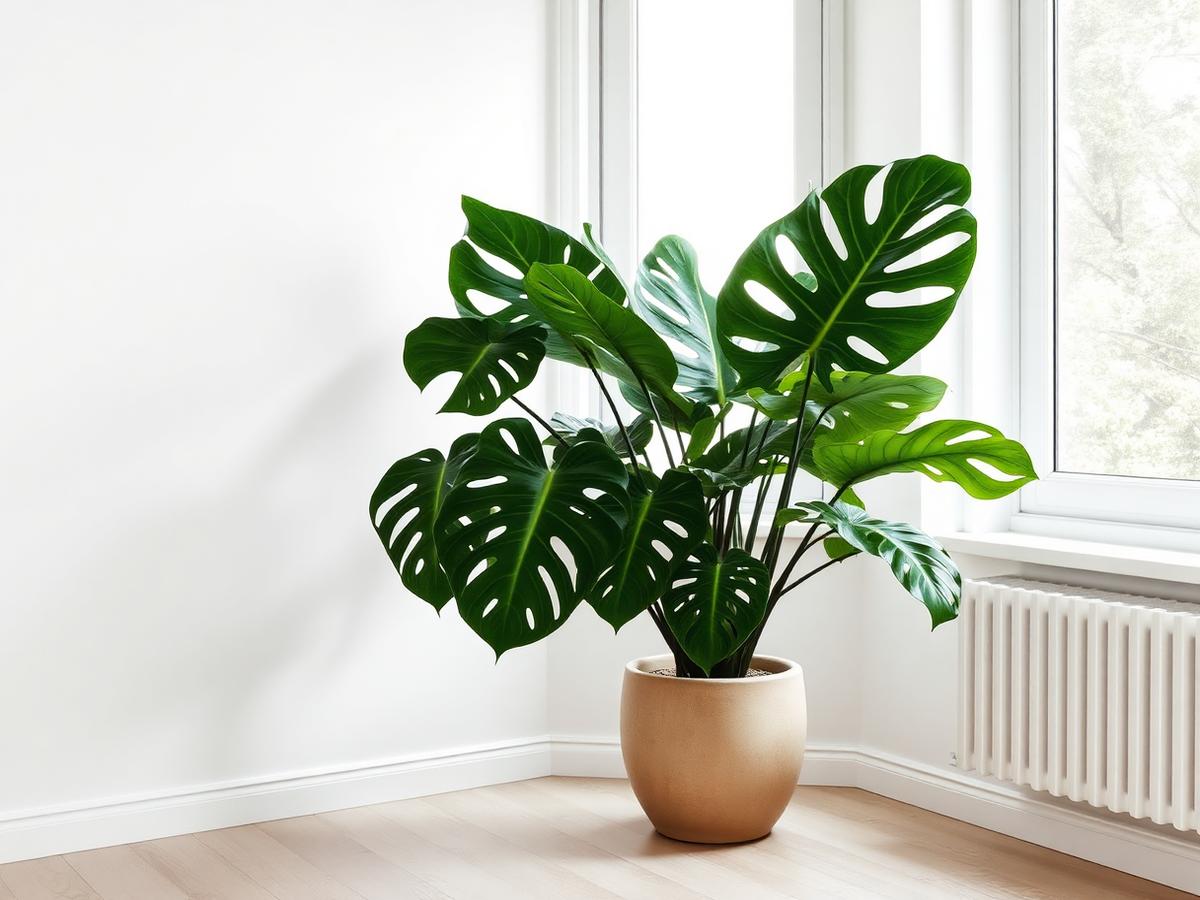
- ·Fenestrated (with holes/splits): Mature Monstera deliciosa, Rhaphidophora tetrasperma, Monstera adansonii. A unique enough feature to narrow possibilities to ~5 species.
- ·Asymmetric / wing-shaped: Two unequal halves on either side of the midrib — diagnostic for Begonia. The four houseplant groups (Rex, polka dot, angel wing, rhizomatous) are covered in begonia varieties identification.
- ·No leaves at all (or modified leaves): Air plants — Tillandsia — grow as soilless rosettes of silvery or green strap-like leaves. The species-by-species visual key is in air plants Tillandsia care and identification.
Method 3: Leaf arrangement
How leaves attach to the stem is one of the strongest ID signals — and one of the easiest to overlook. Three patterns cover almost everything.
- ·Alternate: One leaf per stem node, alternating sides. Most pothos, philodendron, ficus, monstera.
- ·Opposite: Two leaves per node, directly across from each other. Hoya, peperomia, many succulents.
- ·Whorled: Three or more leaves per node. Less common indoors — string of pearls, certain euphorbias.
- ·Basal rosette: All leaves emerging from a central crown at soil level. Aloe, echeveria, sansevieria, snake plant rosette types, calathea.
Method 4: Vein pattern (venation)
Leaf veins are highly conserved within plant families. Spotting the pattern often narrows identification to a single family.
- ·Pinnate venation: Single midrib with smaller veins branching off like a feather. Most ficus, fiddle leaf fig, rubber plant.
- ·Palmate venation: Several main veins radiating from a single point near the base. Monstera, philodendron, fatsia.
- ·Parallel venation: Veins running parallel along the leaf length. Dracaena, sansevieria, palms, grasses, spider plants — typical of monocots.
- ·Reticulate / netted: Fine net-like vein pattern visible across the leaf surface. Most dicots — maples, hibiscus, peperomia.
- ·Curving parallel: Parallel veins that curve toward the leaf tip. Calathea, maranta, prayer plants.
Method 5: Growth habit
Step back from the leaves. The plant's overall shape eliminates 80% of possibilities at a glance.
- ·Trailing/cascading: Pothos, philodendron heartleaf, string of pearls, hoya, tradescantia, ivy.
- ·Climbing with aerial roots: Monstera, philodendron, syngonium, scindapsus, pothos on a moss pole.
- ·Upright unbranched (single trunk): Dracaena, ficus elastica, young fiddle leaf fig, snake plant rosette.
- ·Rosette: All leaves from a central crown. Echeveria, aloe, calathea, bromeliads, peace lily, snake plant.
- ·Bushy/branching: Heavily branched from base. Pilea, peperomia, polka dot plant, basil.
- ·Tree-form: Single trunk with branching crown. Mature ficus, schefflera, dracaena marginata.
- ·Cushion/clumping: Dense low mass. Mosses, succulent rosette clusters, baby tears.
Method 6: Leaf texture and surface
Touch and visual texture distinguish species that look similar in photos. If you can examine the plant in person, this often confirms an uncertain ID.
- ·Glossy/waxy: Pothos, monstera, peperomia, anthurium, jade plant.
- ·Matte: Philodendron heartleaf, fiddle leaf fig (slightly), maranta.
- ·Velvety: Calathea warscewiczii, alocasia black velvet, anthurium clarinervium.
- ·Fuzzy/hairy: African violet, gynura, episcia, gloxinia.
- ·Succulent (thick water-storing): Most succulents, peperomia (some), hoya, sedums.
- ·Leathery: Rubber plant, ficus elastica, schefflera.
- ·Patterned/variegated: Many cultivars — silver streaks, white edges, cream patches, pink veins.
Method 7: Underside features
Many houseplants have distinctive undersides that confirm species when the upper surface could match three. Always check the underside before settling on an ID.
- ·Purple/burgundy underside: Tradescantia zebrina, calathea ornata, oxalis triangularis, syngonium burgundy.
- ·Silvery/silver-streaked underside: Begonia rex, scindapsus pictus.
- ·Fuzzy underside: African violet, gynura aurantiaca.
- ·Distinctive midrib colour: Calathea (often pale white), maranta (pink), anthurium clarinervium (silver veins).
- ·Spore patches (sori): Ferns — small brown dots in regular patterns. Confirms a fern over similar non-ferns.
- ·Latex/sap when scratched: Ficus, euphorbia. Use as a confirmation, not a frequent test.
Method 8: Petiole and stem details
The petiole (leaf stem) and the structure where it joins the main stem (the node) are some of the most diagnostic features in the houseplant world. Two famous example pairs:
Pothos vs Philodendron: pothos has a slightly grooved petiole and leaves emerge without a sheath. Philodendron has a smooth round petiole and new leaves emerge from a papery sheath (cataphyll) that drops off after a few days.
Monstera deliciosa vs Borsigiana: The deliciosa develops a pronounced wavy ridge (geniculum) on the petiole at maturity. The Borsigiana variant lacks the ridge — both are the same species but the distinction matters to collectors.
Method 9: Botanical references
Once you have a candidate species name, verify it against an authoritative reference rather than a random care blog. Kew's Plants of the World Online (powo.science.kew.org) is the global standard — it lists every accepted species with photos, scientific synonyms, and native range. Missouri Botanical Garden's Plant Finder is excellent for common ornamentals and includes care information.
These free databases prevent the most damaging error: chasing a misidentified species name down the wrong care guide. If the photos on the reference page don't match your plant, the ID was wrong — investigate further before committing to the care plan.
Method 10: Plant communities
When apps fail — most often on rare cultivars, variegated mutations, juvenile plants without adult features, and unusual hybrids — humans still win. r/houseplants and r/plantclinic on Reddit identify thousands of plants weekly, often within minutes. Facebook groups dedicated to specific plant families (Aroid Addicts, Hoya enthusiasts, Calathea Lovers) have specialists who can identify cultivar-level differences invisible to apps.
Bring the same photos as for an app: one leaf, the whole plant, the underside, and any flowers. Mention any details you know — where you got it, what was on the tag if anything, any distinctive behaviour like leaves folding at night (nyctinasty, characteristic of marantaceae). The more context, the faster the ID.
Commonly confused species — the cheat sheet
These are the look-alikes that trip up apps and beginners most often. Knowing the visual tells solves most uncertain IDs immediately.
- ·Pothos vs Philodendron heartleaf: Pothos = thicker glossy leaves, grooved petiole, no sheath. Philodendron = thin matte leaves, smooth petiole, papery sheath at new leaves.
- ·Monstera deliciosa vs Monstera adansonii: Deliciosa = larger leaves with splits to the edge AND holes. Adansonii = smaller oval leaves with holes only, no edge splits.
- ·Monstera deliciosa vs Philodendron bipinnatifidum (split-leaf philodendron): Monstera = vine with aerial roots, leaves with holes. Bipinnatifidum = self-standing trunk, deeply cut leaves but no holes.
- ·Pothos vs Scindapsus pictus (Satin Pothos): Pothos = green/yellow variegation, glossy. Scindapsus = silver markings on dark matte green leaves.
- ·Alocasia vs Colocasia (elephant ears): Alocasia leaves point upward, glossy, often patterned veins. Colocasia leaves droop downward, often matte.
- ·ZZ plant vs Zamia: ZZ = thick fleshy leaflets on arching stems, smooth petiole. Zamia = palm-like leaflets, often stiffer, woody trunk with age.
- ·Snake plant vs Aloe vera: Snake plant = upright sword leaves, mottled green. Aloe = thick fleshy leaves with serrated edges, gel inside.
- ·Spider plant vs Cast iron plant: Spider = arching grass-like leaves with white stripes, baby plants on runners. Cast iron = upright dark-green leaves, slow-growing, no runners.
- ·Hoya kerrii vs Hoya carnosa: Kerrii = single fleshy heart-shaped leaves. Carnosa = long vines with paired oval leaves.
- ·Fiddle leaf vs rubber plant vs weeping fig vs Audrey vs ginseng: see the dedicated ficus varieties ID guide — leaf shape and growth habit separate them in seconds.
- ·Christmas cactus vs Thanksgiving cactus vs Easter cactus: stem-segment shape is the only reliable tell, regardless of when the plant blooms in shops. See the holiday cactus ID guide.
Plant family quick reference
Identifying the family narrows the species universe dramatically. These are the families that produce the most popular houseplants — recognising their characteristic features is faster than memorising species.
- ·Araceae (aroids): Heart or arrow-shaped leaves, often with fenestrations or splits, climbing or trailing habit. Includes Monstera, Philodendron, Pothos, Anthurium, Alocasia, Spathiphyllum (peace lily).
- ·Marantaceae (prayer plant family): Striking patterned leaves, leaves fold up at night (nyctinasty). Includes Calathea (Goeppertia), Maranta, Stromanthe, Ctenanthe.
- ·Asparagaceae: Long strappy leaves, often parallel veined. Includes Dracaena (snake plant, dragon tree, corn plant), Chlorophytum (spider plant), Aspidistra (cast iron).
- ·Moraceae: Glossy leathery leaves with milky sap. Includes Ficus (rubber plant, fiddle leaf, weeping fig).
- ·Crassulaceae: Succulent leaves in rosettes or chains. Includes Crassula (jade), Echeveria, Sedum, Kalanchoe.
- ·Cactaceae: Spines (or vestigial), no true leaves on most species. Includes all true cacti.
- ·Gesneriaceae: Soft fuzzy leaves, often with dramatic flowers. Includes African violet, Streptocarpus, Gloxinia, Episcia.
- ·Bromeliaceae: Rosette form, often with central "tank" of water. Includes pineapple, neoregelia, tillandsia (air plants), guzmania.
- ·Apocynaceae (subfamily Asclepiadoideae): Vining or succulent, often waxy leaves with star-shaped flowers. Includes Hoya, Stapelia, string of hearts.
What to do once you have a confident name
Look up the accepted scientific name (genus and species, e.g. Epipremnum aureum, not just "pothos") and use that for any care research. Common names overlap — "swiss cheese plant" can refer to two different Monstera species with different growth habits, and "prayer plant" covers both Maranta and Calathea genera with different care needs. The scientific name is the unique key.
From the species name, the rest of care follows: light requirements, watering schedule, humidity, soil mix, propagation method, toxicity. Most reliable houseplant care guides organise by scientific name precisely because common names cause so much confusion. If you hit a question the care guide doesn't answer, the family-level information above usually fills the gap — aroids care for the same way, marantaceae the same way, ficus species similarly to each other.
When apps fail and you can't get a confident answer
Some plants are genuinely hard to identify from a photo, even by experts. Variegated cultivars, juvenile specimens, hybrids, and rare collector plants often defeat apps because they don't appear enough in training data. Tradescantias, succulents, and aglaonemas in particular are notoriously hard — many cultivars look similar and only confirm at flowering or close inspection.
If you can't get a confident ID after photo, app, reference, and community: care for the plant according to its visible family-level features (aroid, succulent, fern, etc.) and let it grow. Many plants reveal their species only at maturity — a mature monstera develops fenestrations a juvenile plant won't have, and an unknown succulent is far easier to ID once it flowers. Sometimes the right answer is to wait and try again in a few months.