What these terms actually mean
There's a vocabulary confusion that makes the whole conversation harder than it needs to be. Here's the actual meaning of each term.
- ·Soil — the traditional potting mix: peat, coco coir, bark, perlite, worm castings, fertiliser. Holds water and nutrients; microbially active.
- ·LECA — Lightweight Expanded Clay Aggregate. Porous baked clay pebbles, inert (no nutrients of its own), reusable indefinitely. The original semi-hydro medium.
- ·Pon — a commercial mix of pumice, zeolite, and lava rock. Finer than LECA, better wicking. Lechuza Pon is the most common brand.
- ·Semi-hydro — the method, not the medium. Plant sits in an inert substrate (LECA, pon, perlite) in a container with a nutrient-water reservoir at the bottom. Roots wick water up by capillary action. Not the same as full hydroponics (plant suspended in flowing water).
- ·Passive hydro — interchangeable with semi-hydro in most usage.
The test setup
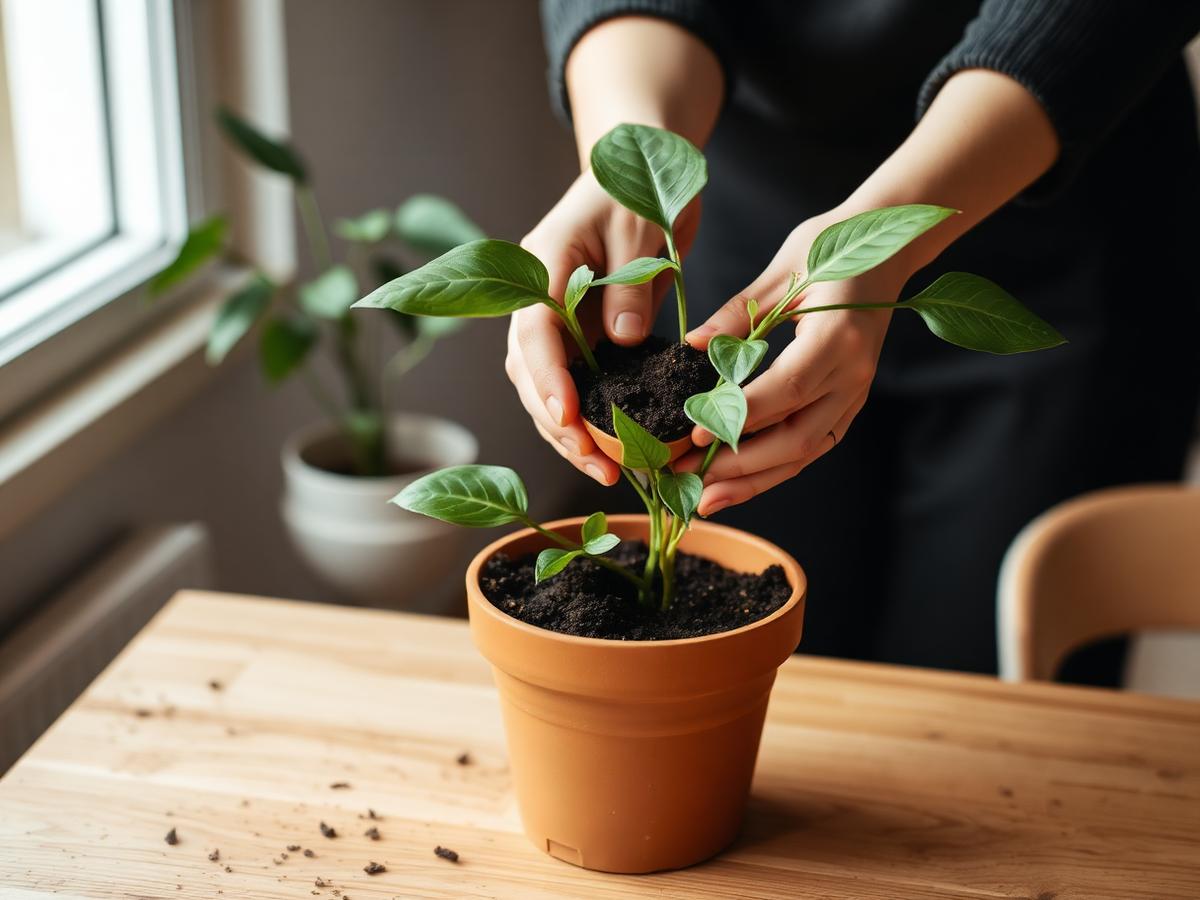
Twelve plants, four each of three species. Each plant was propagated from the same mother plant in early September 2025 so the starting material was genetically identical. I split each set of four into: one in standard peat-based potting mix, one in chunky aroid mix with 40% perlite, one in LECA with Masterblend fertiliser solution, and one in Lechuza Pon. All kept in the same room under the same light (east-facing, 6–8 hours indirect). Photos and growth measurements every 2 weeks.
Monstera deliciosa — the semi-hydro success story
Monstera is the species most often cited as the "LECA works great" example. In my test, that held up — mostly.
The LECA Monstera had the strongest new root development and the largest new leaf (by 25% leaf area) at month 6. The pon Monstera was close behind. The soil Monsteras were fine but slower.
The catch: the first 8 weeks were hard. The LECA Monstera lost almost half its original root mass — soil roots die when transferred to LECA and have to regrow as "water roots," which structurally differ. During that transition the plant looked worse than the soil versions. Growers who give up at week 4 and move back to soil kill the plant — another root shock on top of the first one. If you commit to the move, expect a visibly scruffy plant for 6–8 weeks, then visible progress.
The real win is pest and watering tolerance. Zero fungus gnats across six months in LECA. The soil versions had two gnat events that required treatment. And the LECA plant tolerates a "forgot to check for 3 weeks" gap much better because it has water reserves the soil version doesn't.
Pothos — semi-hydro wins by a nose
Pothos is the most forgiving houseplant there is, which means it does well in everything. In the test, the soil Pothos produced slightly longer vines (47 cm vs 41 cm on LECA) over six months, but the LECA Pothos had more aerial root development and fuller leaves. The pon Pothos was basically identical to the LECA one.
My take: Pothos doesn't need semi-hydro to thrive. If you're already running soil for Pothos and it's happy, there's no growth reason to switch. The case for semi-hydro here is practical — if you tend to overwater, or you want zero gnats, or you like the aesthetic, it's a safe species to move. Survival rate on the transition is ~85% in my experience, higher than any other tropical I've switched.
Snake Plant — semi-hydro is unnecessary and sometimes worse
Snake Plant (Dracaena trifasciata) evolved for dry, well-drained conditions. Its thick rhizomes store water for weeks, and the main ways people kill them are overwatering and root rot. A correctly-drained soil setup solves those problems for free.
In the test, the soil Snake Plants grew fastest — 2 new pups on one, 1 on another. The LECA versions stayed alive but produced no new pups. The pon version lost one rhizome to rot at month 3, likely because pon holds more moisture than LECA and the Snake Plant didn't need it.
Verdict: don't move Snake Plant to semi-hydro unless you have a specific reason (you're consolidating every plant in your collection to LECA, you're gifting it in a glass container). Standard cactus mix or "aroid mix + extra perlite" in a terracotta pot is already optimal.
The overwaterer's argument for LECA
The most honest reason to switch to semi-hydro has nothing to do with plant performance. It's behavioural: semi-hydro tolerates overwatering by design. If you check on your plants daily and tend to "just water a little" every time, LECA buffers that habit. Excess water drains to the reservoir; roots stay aerobic; the plant is fine.
In my informal survey of 40 growers in a plant Discord, 70% who switched to LECA cited "I kept killing plants by overwatering" as the primary reason. Only 15% cited growth improvements. The medium is doing the work of restraint the grower can't reliably do — and that's a reasonable trade.
The underwaterer's case against LECA
The opposite failure mode is genuine. If you forget to check plants for weeks at a time, or you travel for work, soil is more forgiving than most people think. A chunky aroid mix in terracotta can go 2+ weeks between waterings without damage; the plant wilts but recovers. LECA with an empty reservoir dries roots out in days and the "water roots" in LECA are more fragile than soil roots.
Counterintuitively, LECA is worse for people who underwater. The capillary wicking means the roots are either in contact with nutrient solution or they're dry — there's no soil moisture buffer. If your watering style is "I remember every 3 weeks when the plant droops," stay with soil.
Cost and upkeep honestly
Every article about LECA mentions that it's reusable and therefore cheaper over time. Here's the actual math from my test.
- ·Initial cost per 15 cm pot: soil ~€3, LECA ~€8 (plus a clear inner pot if used), pon ~€14.
- ·Per-year nutrient cost: soil ~€5 (fertiliser), LECA ~€15 (hydro-specific fertiliser needed weekly), pon ~€15.
- ·LECA reusability: true but requires full cleaning between plants (soak, rinse, bleach or bake) — 30–45 min per pot of LECA.
- ·Soil lifespan: 12–18 months before depleting; repotting is the de facto "substrate refresh."
- ·Over 2 years, LECA is cost-equivalent to soil for one plant; above 5 plants, soil stays cheaper because the nutrient cost scales linearly with LECA.
How to switch, if you're going to
If you've decided to move a plant to LECA, the process that gives the best survival rate is slow and boring — not the rapid bare-root dunk that most tutorials show.
- 1Pick a healthy, actively-growing plant. Never transition a sick, yellowing, or root-rotted plant to LECA — the stress kills it. Fix the underlying problem in soil first.
- 2Remove from soil and rinse roots under lukewarm water. Be patient — this can take 15 minutes to fully clean a Monstera root ball.
- 3Inspect and trim. Cut any black, mushy, or clearly-dead roots. Leave the healthy ones, even the fine ones.
- 4Pre-soak the LECA for 24 hours in plain water. Rinse before using.
- 5Place plant in inner pot with LECA supporting roots. Roots should contact the pebbles but not be crushed.
- 6Fill outer container with nutrient solution (Masterblend, Dyna-Gro Foliage Pro, or similar) at 1/2 recommended strength. Level should reach 1/4 of the inner pot's height — not higher.
- 7Keep humidity higher than normal for 3–4 weeks (a clear plastic bag with holes works). The plant is rebuilding root structure and loses water fast.
- 8Top up the reservoir every 5–10 days with fresh nutrient solution. Fully drain and flush monthly to prevent salt buildup.
- 9Expect 6–8 weeks of visible stagnation, then a growth push. Don't panic and reverse the move — the second shock kills the plant.
Edge cases I see repeatedly
A few situations where the simple "soil vs LECA" frame fails.
- ·Calatheas in LECA: bad idea. They need steady moisture and dislike root disturbance. Soil stays better.
- ·Philodendron gloriosum, P. plowmanii, other creeping philodendrons: LECA struggles with the horizontal rhizome growth habit. Use sphagnum or a mix.
- ·Alocasias in LECA: works well, and helps with their rot-prone corms. One of the best semi-hydro success stories.
- ·Cactus and succulents: bad fit. They evolved for soil with rapid drying, not constant water reserves.
- ·Hoya: works in LECA but the plant flowers less reliably. Soil is better for peduncle production.
Decision guide
A plain-English rule for anyone debating the switch.
- ·If you overwater and kill plants regularly → move the sensitive ones (Monstera, Pothos, Alocasia, Anthurium) to LECA. Keep drought-tolerant species (Snake Plant, ZZ, cactus) in soil.
- ·If you underwater and travel often → stay with chunky soil in terracotta. More buffer than LECA for forgetfulness.
- ·If you have fungus gnats you can't get rid of → LECA breaks the breeding cycle for the plants you move. Mixed collections still have gnats in the remaining soil plants.
- ·If you just want clean shelves and no mess → LECA or pon. Both are aesthetically minimal and nothing spills.
- ·If a specific plant is thriving in soil → don't move it for no reason. Every transition has a ~20–30% failure rate.