What variegation actually is
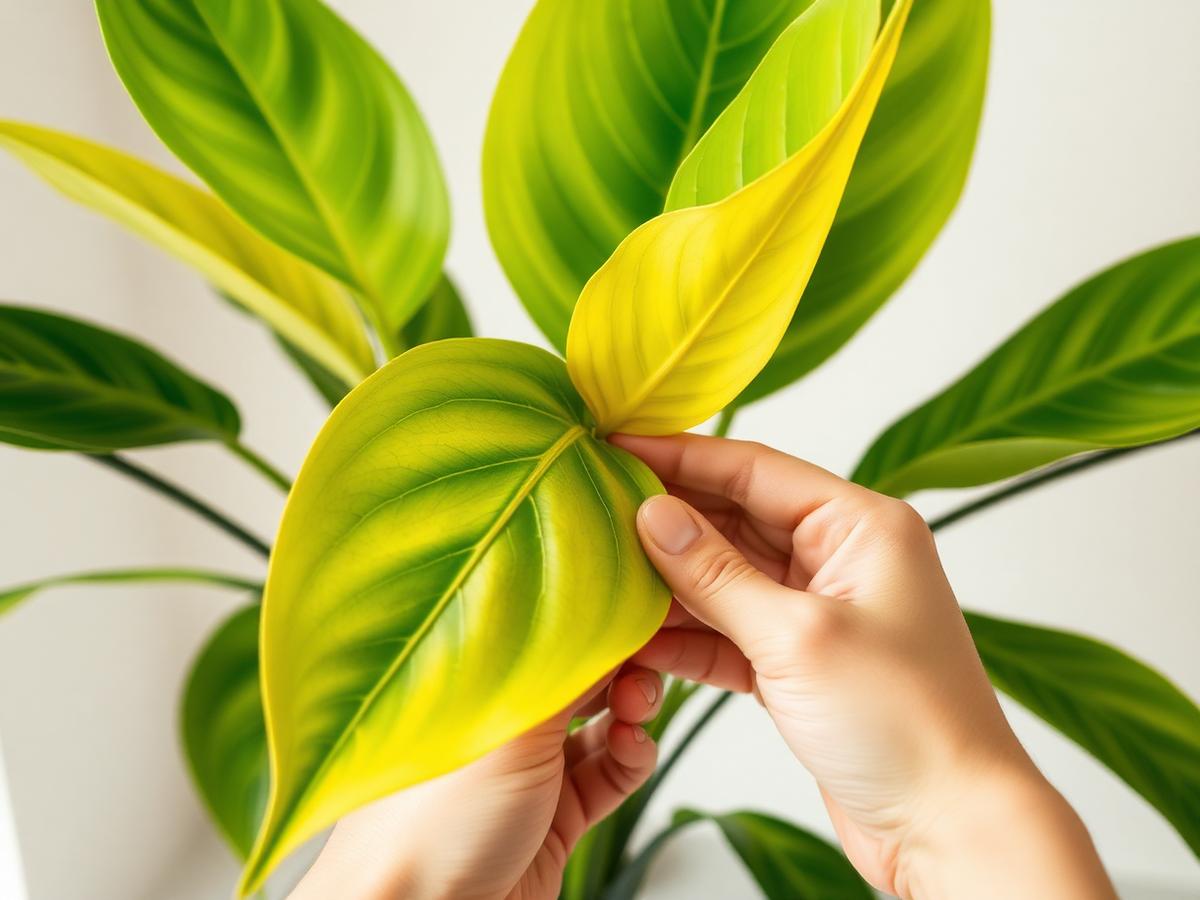
Most variegated houseplants — Marble Queen pothos, Philodendron 'Brasil', Pink Princess, Monstera deliciosa 'Albo Variegata', Hoya carnosa 'Albomarginata' — are chimeras. A chimera is a plant whose tissues come from two genetically distinct cell lines living side by side: one with normal chlorophyll-producing chloroplasts (green tissue), one with mutant chloroplasts that can't produce chlorophyll (white, cream, or pink tissue).
The two cell lines compete inside every meristem (growth-tip cell cluster). Whichever wins the competition at a given node decides how variegated the leaf produced from that node will be. The competition isn't fair: green tissue can photosynthesise; white tissue can't. Under low light, the plant has a survival incentive to favour green tissue, and the chimera drifts toward green.
This is why variegation is genetically unstable in a way that, say, leaf shape isn't. Leaf shape is encoded in the plant's DNA the same way in every cell. Variegation is a contest between cell lines, and the rules of the contest change with the conditions you grow the plant in.
Chimeric vs genetic variegation — and why it matters
Not all 'variegated' plants are true chimeras. Some plants — Aglaonema 'Silver Bay', Calathea ornata, Stromanthe 'Triostar', most Begonias — have variegated patterns encoded directly in the genome of every cell. The pattern is genetic, not chimeric, and it doesn't revert in the same way because there's no second cell line for the green to outcompete.
Three quick tells distinguish chimeric variegation from genetic.
- ·Pattern is unpredictable leaf-to-leaf (chimeric) vs identical leaf-to-leaf (genetic). A Marble Queen produces every leaf with different white-green proportions; a Calathea produces every leaf with the same pattern.
- ·Sectors and half-leaves appear (chimeric) vs even patterning across the leaf (genetic). Half-pink Pink Princess leaves are pure chimerism; you'll never see a half-pink Stromanthe.
- ·Sport-of-cuttings reproduces the pattern variably (chimeric) vs faithfully (genetic). Two cuttings from the same Marble Queen produce different proportions of variegation; two cuttings from the same Aglaonema produce identical plants.
Why low light triggers reversion
Every variegated leaf is a metabolic compromise. The white or cream parts of the leaf produce no sugar — they're a net cost to the plant — and the green parts have to feed both. Under bright light, the green tissue produces enough surplus that the plant can afford the white tissue without penalty. Under low light, the green tissue is barely producing enough sugar to stay alive, and the white tissue becomes a survival problem.
The plant's response is selection pressure at the meristem. Green-tissue cells outgrow white-tissue cells at a faster rate when light is limiting, and over time the green cell line dominates the growing tip. Once the white cell line is gone from a meristem, that growing tip will only ever produce green leaves — the variegation is permanent at that node.
This is why reversion looks gradual and then sudden. Each new leaf is slightly greener than the last for weeks, until one leaf comes in fully green and the white cell line is gone. From that point, no amount of light brings variegation back to that growth tip.
How to reverse the reversion
The technique is the same across every chimeric plant: walk the stem back from the growing tip to the most recent well-variegated leaf, and prune just above the node of that leaf. The plant will produce new growth from a dormant node below the cut, and that new growth will inherit the variegation of the surviving section.
- 1Identify the most recent leaf with the variegation pattern you want. This is your 'good' node.
- 2Find the node just above your good leaf — that's where you'll cut.
- 3Cut 1–2 cm above that node with sterile sharp scissors. The above-node section can be propagated as a separate plant if you want backup.
- 4Move the plant immediately to brighter light — the same low-light spot that caused reversion will cause it again.
- 5Wait 3–6 weeks. New growth will emerge from a dormant node below the cut, with the variegation of the surviving tissue.
Light targets that hold variegation
The general rule: chimeric variegated plants need 1.5–2× the light their plain-green counterparts tolerate. A plain green pothos thrives in 5,000 lux; Marble Queen needs 10,000+ to maintain heavy variegation. A plain green Philodendron hederaceum is happy in medium light; Pink Princess holds pink only above 12,000 lux.
Specific targets across common chimeric plants:
- ·Marble Queen pothos: 10,000–20,000 lux. Front of an east window or 1–2 m back from a south window.
- ·Manjula and Pearls and Jade pothos: same as Marble Queen — these are even more variegation-fragile and revert faster.
- ·Philodendron 'Brasil': 8,000–15,000 lux. More forgiving than Marble Queen but still needs bright indirect.
- ·Pink Princess Philodendron: 12,000–22,000 lux. Bright end of indirect — see the full Pink Princess care guide.
- ·Monstera deliciosa 'Albo Variegata' / 'Thai Constellation': 15,000–25,000 lux. The white sectors are extensive enough that low light reverts these fast.
- ·Hoya carnosa 'Albomarginata' / 'Krimson Princess' / 'Krimson Queen': 12,000–20,000 lux. Hoyas can also use 1–2 hours of direct morning sun.
- ·Ficus elastica 'Tineke' or 'Ruby': 10,000–18,000 lux. Tolerates a bit more direct sun than the aroids above.
How to spot reversion early
Reversion is much easier to fix when you catch it on the second or third drifting leaf, not the tenth. Three signs to watch for during weekly inspection.
- ·Each new leaf has noticeably less white/cream/pink than the previous one. Three consecutive 'less variegated than the last' leaves means the meristem is shifting — act now.
- ·New leaves come in plain green even though the rest of the plant is variegated. This is the diagnostic moment: one or two more cycles and the variegation is gone from that growth tip.
- ·The plant has been in the same spot for several months and the new growth is small or stretched (long internodes). This is light limitation — the same condition that drives reversion.
Plants that don't truly revert
Genetic (non-chimeric) variegated plants don't drift to green in the same way. The pattern is hard-coded in every cell, and low light may produce smaller or paler leaves, but the pattern itself remains. Common pet- and beginner-friendly variegates that hold their pattern reliably:
- ·Aglaonema cultivars — 'Silver Bay', 'Maria', 'Pink Dalmatian'. Patterns persist in low light. See the Chinese evergreen species profile.
- ·Calathea / Goeppertia species — 'Orbifolia', 'Lancifolia', 'Medallion'. The painted patterns are genetic; low light makes them paler but doesn't reduce the pattern.
- ·Stromanthe 'Triostar' — pink/cream/green stripes are genetic and don't drift to plain green.
- ·Begonia species — 'Maculata', 'Rex' types. Spots and patterns are genetic.
- ·Sansevieria 'Laurentii' — yellow leaf edges are genetic; the plant tolerates low light without losing them.
- ·Dieffenbachia and Dracaena fragrans 'Massangeana' — variegation is genetic in most popular cultivars.
Buying tip — what predicts a stable variegated plant
If you're buying a chimeric variegated plant, the variegation track record predicts the future. Look at the most recent 3–4 leaves on the plant; if they show stable or increasing variegation, the meristem is producing well. If the most recent leaves are noticeably greener than the older leaves, the plant is mid-reversion and you'll have to prune it back the moment you get it home.
Cuttings sold by reputable aroid nurseries usually come with photos of the parent plant — ask if they're not provided. Big-box-store variegated plants are often a coin-flip; they've usually been kept in low retail-display light for weeks before sale, and may have already started reverting.
For a fuller field guide to which cultivars are which, see the pothos vs philodendron guide (covers Marble Queen vs Brasil and many of their variegated cousins) and the houseplant look-alikes hub.