Light: genuinely tolerates low light
Most dracaenas grow in the understory of East African forests and woodlands, adapted to 500–1,500 lux of dappled shade. A north-facing room, a spot 3–4 m from a window, or the interior of an open-plan office — these are the conditions dracaenas were designed for. This makes them one of only a handful of popular houseplants that do not suffer in low-light interiors. See understanding light levels for indoor plants for how to measure your room's lux.
Variegated cultivars (Dracaena marginata 'Tricolor', Dracaena fragrans 'Lemon Lime') need slightly more light — around 800–1,500 lux — to maintain their stripe colours; in very low light, new leaves emerge more solidly green. Direct afternoon sun through glass scorches the leaf surface, producing white or brown bleached patches that do not heal. Morning sun (before 10 am) is fine for most species.
In practice, the low-light tolerance is real, but 'tolerates' is not the same as 'thrives'. In brighter indirect light (1,200–2,000 lux), dracaenas produce new leaves faster, grow taller, and colour more vividly. The common office dracaena that has not pushed a new leaf in three years is almost always in light below 500 lux.
Watering dracaena: the 10–14 day rule
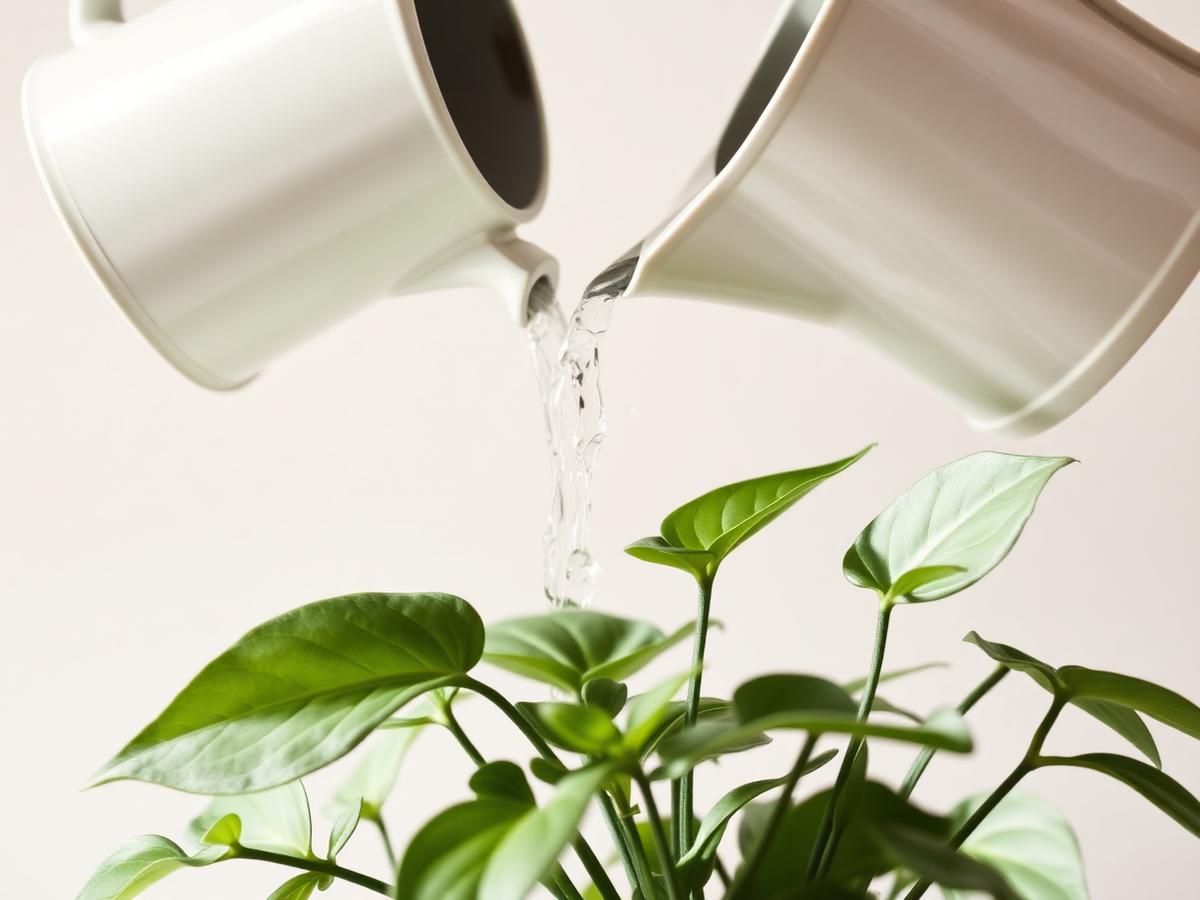
Water dracaena every 10–14 days in spring and summer, allowing the top 2–3 cm of soil to dry between sessions. In winter, extend this to every 14–21 days — the plant's growth slows and it requires less water. Push your finger into the soil before each watering: if the top layer is still moist, wait another 3–5 days.
Dracaena roots are thicker and more storage-like than most tropical plants, which means they hold some water reserve — but they are still susceptible to root rot if kept consistently wet. The most reliable warning sign of overwatering is yellowing lower leaves that are soft and limp rather than the dry browning you see with underwatering. If the lower canes develop soft spots, unpot and check the root system.
Underwatering in dracaena shows as drooping, dry leaf edges and soil that has visibly pulled away from the pot rim. It recovers quickly with a thorough watering — the plant usually rebounds within 48 hours. Overwatering damage is much harder to reverse once it has reached the roots.
Brown leaf tips: the fluoride problem
Brown, dry, necrotic leaf tips are the most common dracaena complaint, and in most cases the cause is fluoride toxicity from municipal tap water. Dracaena is among the most fluoride-sensitive houseplants, along with spider plant and peace lily. Fluoride accumulates in the leaf tips because that is where transpiration pulls water — the fluoride concentrates as water evaporates and eventually kills the cells.
The fix is simple: switch to filtered water, rainwater, or leave tap water standing overnight in an open container (this disperses chlorine but not fluoride — a filter-jug is better). Use water at room temperature — cold water shocks the roots slightly and can contribute to brown patches.
Fluoride is not the only cause of brown tips. Low humidity below 30% in a centrally heated Nordic winter also produces tip burn, as does salt build-up from fertiliser in the soil. If you have switched to filtered water but tips are still browning, flush the pot every 3–4 months with a litre of filtered water to dilute accumulated salts, and consider running a small humidifier near the plant from November to March.
Soil and repotting
Dracaenas are not demanding about soil, but they do benefit from a well-aerated mix that drains well and does not compact quickly. A combination of standard potting mix with 20–25% perlite works well. Avoid peat-heavy composts, which compact over 12–18 months and retain too much moisture around the root zone.
Repot every 2–3 years, or when roots are emerging from the drainage holes and the plant is drying out noticeably faster than before. Unlike some tropical plants, dracaenas do not need large pots — a pot 2–3 cm wider than the current one is enough. Going too large creates surplus soil volume that stays wet long after the surface appears dry.
Spring is the best time to repot. After repotting, water lightly once and then wait until the top 2–3 cm is dry again before the second watering — roots that are disturbed need oxygen, not saturation.
Species guide: which dracaena do you have?
The four dracaenas most commonly sold in Northern European garden centres are meaningfully different in appearance and care needs:
- ·Dracaena marginata (Dragon tree) — narrow, dark-green leaves with a red margin, on a woody cane that naturally bare-stems with age. The most drought-tolerant species; forgives missed waterings better than the others.
- ·Dracaena fragrans (Corn plant) — broad, strap-like mid-green leaves, often with a yellow central stripe ('Massangeana'). The most sensitive to fluoride of the group. Produces fragrant white flowers on mature plants.
- ·Dracaena reflexa (Song of India) — shorter, twisting leaves, usually variegated green-yellow. Slightly less tolerant of low light than marginata or fragrans.
- ·Dracaena trifasciata (formerly Sansevieria, snake plant) — now classified in the same genus but distinct in appearance; see the snake plant care guide for species-specific advice.
Feeding
Feed dracaenas every 4 weeks from March to September with a balanced liquid fertiliser diluted to half the label strength. Because dracaenas are sensitive to mineral accumulation — the same sensitivity that drives fluoride brown tips — avoid heavy feeding and never fertilise in winter.
If brown tips appear after starting a feeding regime, reduce fertiliser to quarter-strength or switch to a lower-fluoride formulation. Some commercial fertilisers contain fluoride as a trace element; look for fluoride-free or low-fluoride formulations for sensitive plants.
Propagation from cane cuttings
Dracaena propagates easily from stem (cane) cuttings. When a plant has become too tall or bare-stemmed, cut the cane into 10–15 cm sections, each containing at least one growth node (the ring-like marks on the cane where leaves once emerged). Lay sections horizontally on barely damp potting mix, or stand them upright with 3–5 cm buried.
In a warm bright spot (22–26 °C, above 1,000 lux), shoots and roots emerge in 4–8 weeks. This technique also allows you to shorten a tall plant while simultaneously producing new plants — the original rooted cane will usually push new growth from the cut point within 6–10 weeks. Remove the top cutting and root it in water for faster results.
Toxicity to cats and dogs
Dracaena species contain saponins — steroidal compounds that damage cell membranes in the digestive tract of cats and dogs. Clinical signs of ingestion include vomiting (sometimes with blood), hypersalivation, inappetence, and depression. Cats are more sensitive than dogs; the toxic dose is lower relative to body weight.
The toxic compounds are present throughout the plant — leaves, stems, and roots. Keep dracaenas in rooms the cat cannot access, or choose a non-toxic alternative. If ingestion is suspected, contact a veterinarian or the ASPCA Animal Poison Control Center immediately. Recovery is typical with supportive care, but prompt treatment reduces severity.
Common problems and quick diagnosis
Brown, dry leaf tips → fluoride in tap water or low humidity; switch to filtered water. Yellow lower leaves that are soft → overwatering; reduce frequency and check roots. Pale, washed-out leaf colour → not enough light; move 0.5–1 m closer to the window. Bare lower cane with leaves only at the top → normal for mature marginata; the bare cane is structurally interesting and does not indicate ill health.
Dracaena marginata is particularly prone to spider mites in a dry heated room in winter — check the undersides of leaves for fine webbing and tiny pale mites from November to March. A weekly fine mist on the leaf undersides during winter reduces both humidity stress and spider mite risk. If a spider mite infestation is established, treat with neem oil or insecticidal soap.