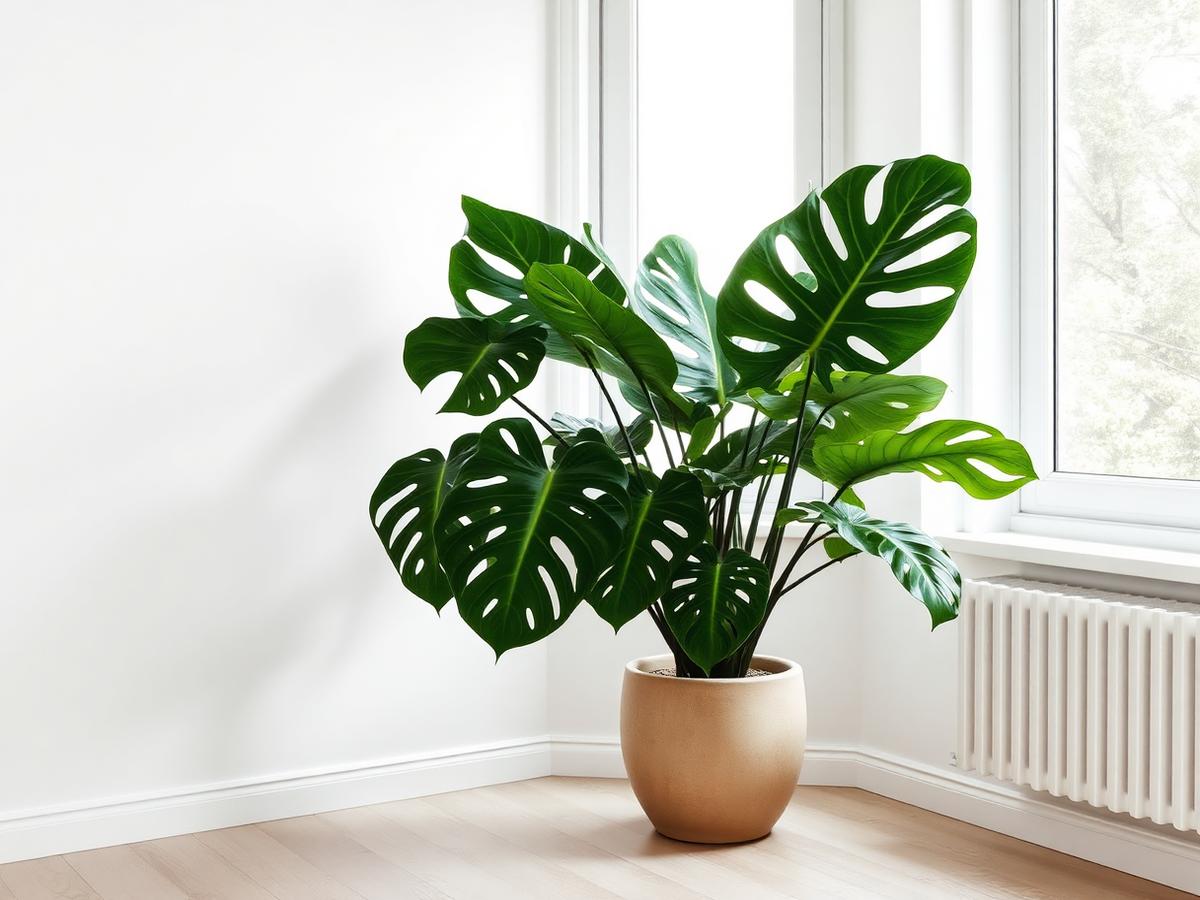
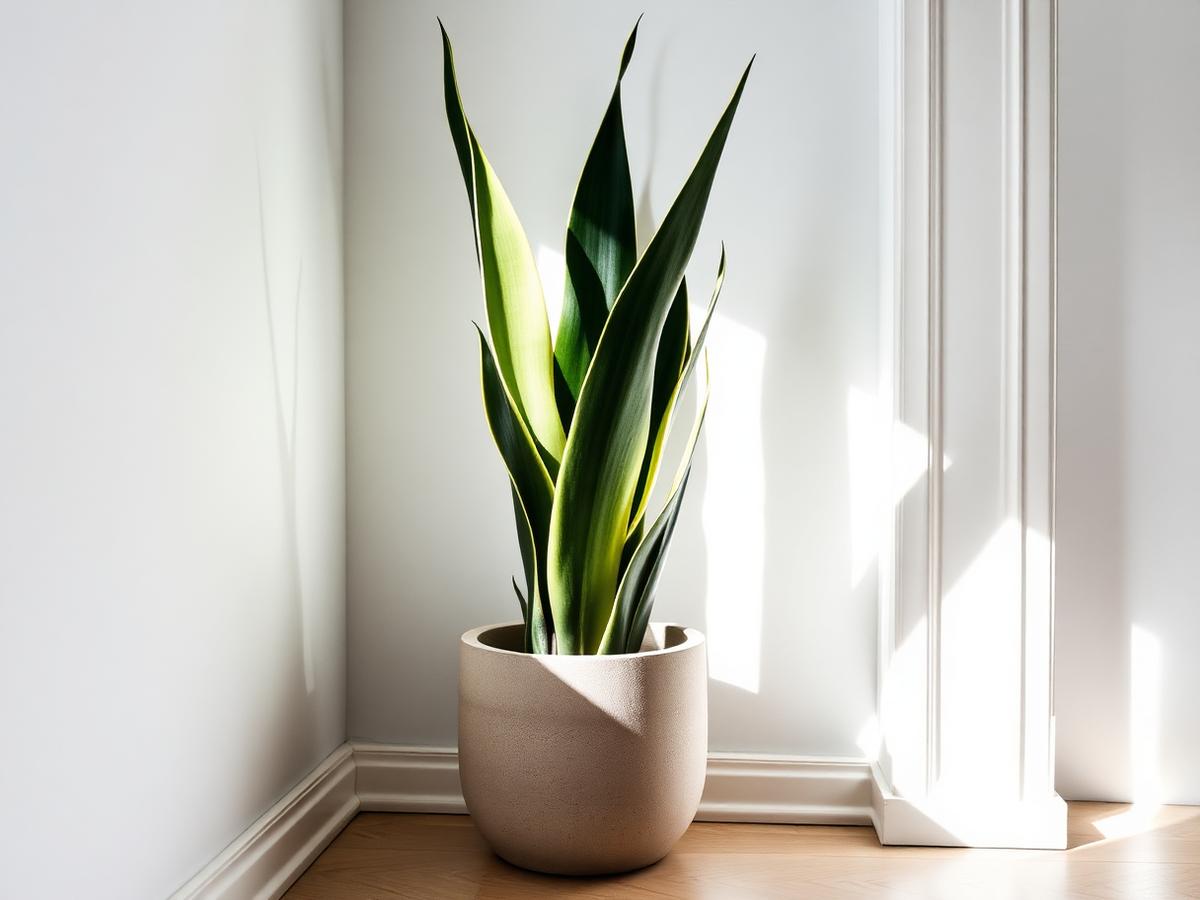
Light — the least demanding of any popular houseplant
Bright indirect light is ideal, producing fast growth and strong variegation. But pothos genuinely tolerates medium and even low light — few houseplants are so adaptable. In low light, growth slows, internodes stretch, and variegated varieties may revert to plain green (new leaves emerge without the white or yellow patches). In direct summer sun they will scorch; pull back 30–50 cm from a south or west window behind a sheer curtain.
For the most dramatic vines, bright indirect is the target. Golden and Neon pothos hold their colour even in medium light; Marble Queen and Manjula need good light to maintain their variegation. Rotate the pot every few weeks if you are growing for symmetry — pothos, like all vines, orient toward the light source.
Water — let it dry out
Pothos prefer the dry side of the moisture range. Let the top half of the soil dry out fully between waterings — typically every 7–14 days depending on pot size, light, and season. The plant tells you clearly when it is thirsty: leaves droop and curl slightly, then bounce back within hours of a thorough soak.
Overwatering is the only common way to kill a pothos. Soggy soil causes root rot, which appears as yellow lower leaves on damp soil and, if ignored, blackening stem bases. If this happens, propagate healthy top cuttings immediately — even if the original plant dies, the genetics are easy to save.
Water thoroughly until 10–20% runs from the drainage hole, then empty the saucer. Avoid small, frequent "splashes" — they wet only the top layer and leave the deeper roots dry.
Humidity and temperature
Pothos adapt to any household humidity from a dry 30% to a humid bathroom at 80%. Higher humidity speeds growth and produces larger leaves, but it is never required. This makes pothos one of the few plants that genuinely thrives in forced-air-heated apartments in winter, where most tropicals suffer.
Keep temperatures between 18–29°C. Pothos tolerates cool spells but sustained exposure below 10°C causes blackening of leaf edges and stem damage. Avoid drafts from air-conditioning vents, which can dry vines out quickly even when the plant is well-watered.
Soil, potting, and fertilizer
Any standard houseplant mix with added perlite (about 20–30% by volume) gives pothos the drainage it needs. The species is forgiving — it tolerates cheap potting mix better than most tropicals — but avoid dense peat-only mixes that stay waterlogged.
Feed with a balanced liquid fertilizer at half strength every 3–4 weeks during the growing season (March–September). Skip fertilizer in winter. Pothos are light feeders — overfertilizing shows up as crispy brown leaf tips and salt crust on the soil. Flush the pot thoroughly every few months by watering heavily to wash out built-up salts.
Repot every 1–2 years in spring. Pothos tolerate being mildly root-bound, but fully root-bound plants start yellowing fast. Go up one pot size when you do repot.
Varieties worth knowing
Pothos varieties look dramatically different from each other, enough that some are frequently misidentified as different species. Pricing varies wildly, and rare cultivars command collector premiums. These are the ones you will encounter most often. For a detailed visual identification guide to every cultivar — leaf shape, variegation pattern, and light needs per variety — see pothos varieties identification.
- ·Golden Pothos: The classic — green leaves with yellow-gold variegation. Vigorous, forgiving, and cheap.
- ·Marble Queen: Heavily variegated with cream-white patches. Slower growing because of reduced chlorophyll. Needs bright indirect light to keep variegation.
- ·Neon Pothos: Uniform chartreuse/lime green — no variegation but the colour is eye-catching. Thrives in medium light.
- ·Jade Pothos: Solid medium-green leaves, no variegation. Fastest-growing pothos; excellent for low-light offices.
- ·Satin Pothos (Scindapsus pictus): Technically a different genus but often sold as pothos. Silvery markings on dark green leaves; slightly fussier about watering.
- ·Silver Splash / Silvery Ann: A hybrid with silver splotches; sometimes sold under the name of its Scindapsus look-alike.
- ·N'Joy: Heavily green-and-white variegated with small rounded leaves. Slow, compact, popular for small pots.
- ·Pearls and Jade: Similar to N'Joy but with extra grey-green flecking. Slow-growing and often pricier.
- ·Manjula: Wavy-edged, heavily cream- and white-variegated leaves. Patented cultivar, harder to find cheaply.
- ·Cebu Blue: Technically Epipremnum pinnatum, but sold as pothos. Narrow blue-green leaves; fenestrates at maturity like a monstera.
- ·Hawaiian Pothos: Larger-leafed version of Golden with more yellow. Gets dramatic on a moss pole.
- ·Global Green: Deep and light-green patterning, no white. New cultivar, rising in popularity.
Pothos vs heartleaf philodendron — how to tell them apart
These two plants are the most commonly confused houseplants on the market — vines, heart-shaped green leaves, similar care. The quick tells: pothos leaves are thicker, glossier, and asymmetrical at the petiole (the leaf attaches slightly off-centre). Heartleaf philodendron leaves are thinner, matte, and symmetrical, with a papery texture. Philodendron also produces sheath-like cataphylls (a small papery structure) at each new leaf; pothos does not.
Care is broadly similar, but philodendron tends to prefer slightly more consistent watering and brighter light. If you can't tell which you have, a photo-based identification clears it up instantly.
Propagation — the easiest in the houseplant world
Pothos root in water so reliably that many growers have permanent pothos "propagation jars" in kitchens and windowsills. Take a cutting that includes at least one node — the bump on the stem where a leaf and aerial root emerge. Remove the lower leaf so the node is bare, and place the cutting in a glass of room-temperature water with the node submerged. The full step-by-step is in how to propagate pothos in water, including the three mistakes that fail almost every cutting.
Change the water weekly. Roots appear within 7–14 days and become robust within 3 weeks. Once roots are at least 5 cm long, pot into standard houseplant mix and water well. Keep the newly potted cutting evenly moist for the first 2–3 weeks — it has switched from water to soil and needs to rebuild the different root structures.
Alternative methods: sphagnum moss propagation (wrap the node in damp moss, keep humid) and direct-to-soil propagation both work. Direct-to-soil skips the water-to-soil transition shock; water-to-soil is more satisfying to watch. Both succeed 95%+ of the time with pothos.
Training, trailing, and climbing
Pothos is a vine — it climbs tree trunks in the wild using aerial roots, and will do the same indoors if given support. A trailing pothos keeps juvenile-sized small leaves indefinitely; a climbing pothos on a moss pole will develop leaves 2–3 times larger, and cultivars like Cebu Blue and Hawaiian will fenestrate.
For cascading display, train vines along a shelf, window frame, or use simple Command hooks on the ceiling. For climbing, add a moss pole, bamboo stake, or coir-wrapped support; aerial roots grip within a few weeks. Pinch back the growth tips every few months to encourage branching — unpruned pothos produces long single vines with sparse leaves.
Pruning for a fuller plant
The most common complaint about pothos is that it becomes "leggy" with long bare vines and sparse leaves. The fix is regular pruning: cut stems back to just above a node, and the plant responds by branching and producing two new growth points at the cut. Every cutting you make can be rooted and planted back into the mother pot to thicken it up further.
Prune actively for a full, bushy look — tip each major vine once every 2–3 months in growing season. Keep the cuttings; root them; replant them in the same pot. Within a year this turns any leggy hanging pothos into a dense, cascading mass.
Common problems
Pothos are famously tough, but a handful of issues still show up. Most trace back to overwatering or inadequate light.
- ·Yellow leaves on damp soil = overwatering. Scale back watering; check for root rot.
- ·Brown crispy leaf tips = chronic underwatering, low humidity, or fertilizer/salt buildup. Flush the pot and maintain consistent watering.
- ·Leggy stems with long gaps between leaves = light starvation. Move closer to a window or prune hard to reset.
- ·Variegation fading = light starvation for variegated cultivars. Bright indirect light restores it on new growth.
- ·Black spots on leaves = bacterial leaf spot, typically from wet foliage + cold. Improve airflow and avoid misting.
- ·White cottony clumps at stem nodes = mealybugs. Wipe with 70% isopropyl alcohol on a cotton swab.
- ·Sticky residue under leaves = aphids or scale. Rinse under water and treat with insecticidal soap.
- ·Curling leaves with webbing = spider mites. Isolate the plant, wipe leaves, and treat with neem oil every 7 days for 3 weeks.
- ·Vines rotting in the propagation jar = water too cold or too old. Change more frequently and use room-temp water.
Toxicity
Pothos is toxic to cats, dogs, and humans if chewed or swallowed. All parts contain insoluble calcium oxalate crystals — the same compound found in monstera and philodendron. Chewing causes immediate oral irritation, drooling, pawing at the mouth, and occasionally vomiting in pets. The reaction is unpleasant but rarely life-threatening.
If you have cats or small children, place trailing pothos out of reach — on high shelves, hanging baskets, or tall plant stands. Contact a vet or poison control if a pet swallows a significant quantity. The ASPCA lists pothos (Epipremnum aureum) as toxic to both cats and dogs.
Outdoor and tropical growth
In USDA zones 10–12 and similar Mediterranean / subtropical climates, pothos grows outdoors as a ground cover or tree-climber, with leaves reaching 30–60 cm wide — nothing like the 5–10 cm leaves on an indoor plant. In Florida, Hawaii, and parts of Australia, it is classified as an invasive species because of this aggressive growth.
If you live in a warm climate and want to grow pothos outside, keep it contained — in pots or a controlled area — and avoid letting it escape into woodland. Outdoors it can smother native tree canopies over a few seasons.
Seasonal care
Pothos doesn't have strict dormancy but slows in winter. Adjust water and fertilizer to match light levels rather than dates.
- ·Spring (Mar–May): Resume fertilizer. Increase watering frequency as new growth starts. Best time to repot and take cuttings.
- ·Summer (Jun–Aug): Peak growth. Water when top half of soil dries; feed every 3–4 weeks. Rotate pot monthly.
- ·Autumn (Sep–Oct): Ease back on fertilizer as light drops. Watch for overwatering as conditions cool.
- ·Winter (Nov–Feb): Skip fertilizer. Water only every 14–21 days for plants in low light. Move away from cold glass.