Chilling injury: why 8 °C kills a tropical plant
Tropical houseplants — the group that includes almost every popular species, from Monstera deliciosa to Pothos to Calathea — evolved where temperatures rarely drop below 18 °C. Their cell membranes, built for warmth, become rigid and leaky below about 10 °C. Water and nutrients start to escape the cells, and enzymes stop working. This is chilling injury, and it happens long before anything freezes.
The damage is invisible at first. A plant moved from a warm shop into a 4 °C car and then back indoors will look fine that evening and even the next morning. Black patches or soft, water-soaked leaves typically appear 24–72 hours later, as the damaged cells collapse. By the time you see symptoms, the exposure is over — which is why cold damage is so often blamed on overwatering or pests.
Species from higher elevations (aspidistra, clivia, some succulents) or from drier biomes (sansevieria, ZZ plant) have stiffer, more cold-tolerant membranes. They shrug off conditions that would kill a Monstera within hours.
Minimum temperatures by species
The temperatures below are the sustained minimums a healthy, dry plant can survive for a few hours without visible damage. Prolonged exposure, wet soil, or cold drafts concentrate the damage and shift the threshold upwards by 2–4 °C. Every figure assumes a plant kept on the dry side — a waterlogged plant suffers chilling injury 5–8 °C warmer than a dry one.
- ·Monstera deliciosa (Swiss cheese plant): 13 °C minimum; chilling injury below 10 °C.
- ·Epipremnum aureum (Golden Pothos): 10 °C minimum; one of the more cold-tolerant aroids.
- ·Philodendron (all popular species): 13 °C; leaves blacken fast below 10 °C.
- ·Ficus lyrata (fiddle leaf fig): 15 °C; notoriously intolerant — drops leaves at 12 °C.
- ·Ficus elastica (rubber tree): 10 °C if kept dry.
- ·Calathea / Goeppertia: 15 °C minimum; leaf edges curl and brown within a day.
- ·Spathiphyllum (peace lily): 12 °C; wilts dramatically but recovers from brief exposure.
- ·Sansevieria / Dracaena trifasciata (snake plant): 5 °C; the hardiest popular houseplant.
- ·Zamioculcas zamiifolia (ZZ plant): 5 °C; tolerates cold better than most aroids.
- ·Aspidistra elatior (cast-iron plant): 5 °C; the only plant on this list that survives a light frost in a sheltered porch.
- ·Crassula ovata (jade plant): brief frost to -1 °C if dry; the outlier among houseplants.
- ·Succulents (echeveria, haworthia): 5 °C if bone dry; 10 °C if wet.
- ·Ferns (Boston, maidenhair, bird's nest): 12–15 °C; fronds crisp at the margins first.
- ·Orchids (Phalaenopsis): 15 °C; bud drop starts at 13 °C.
- ·Strelitzia nicolai / reginae (Bird of Paradise): 10 °C; leaves tear in cold wind.
What cold damage actually looks like
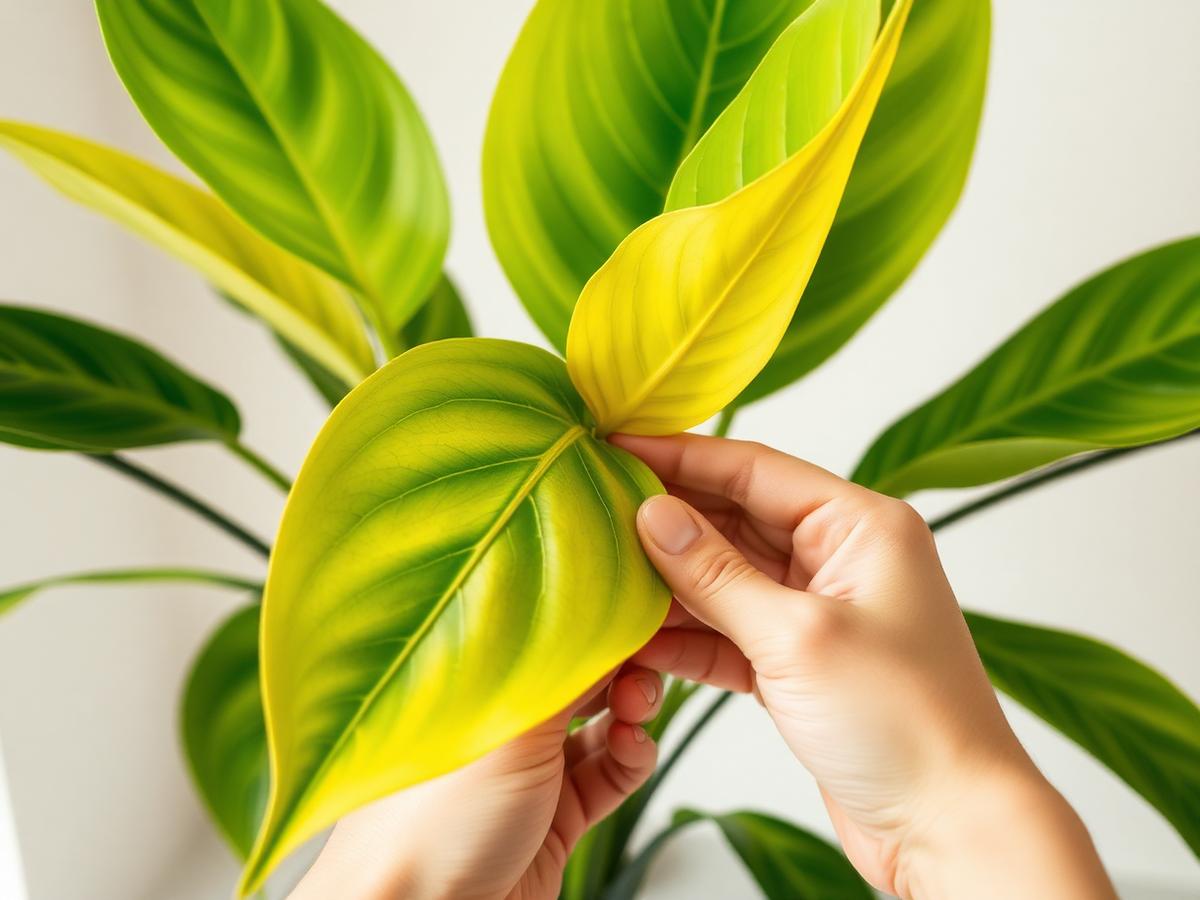
Chilling injury and frost damage produce distinctive symptoms. Unlike overwatering, which yellows older leaves slowly over weeks, cold damage tends to appear suddenly and often affects the side of the plant facing the cold surface.
The classic pattern on a tropical: a 2–5 cm band of soft, water-soaked brown or black tissue along the leaf margin, usually on leaves closest to the window. On lighter-leaved plants (calathea, peace lily) the tissue can turn almost translucent before collapsing. On woody species (ficus, rubber tree) whole leaves drop within a week with little other warning.
- ·Soft, dark brown or black patches (not crispy brown like underwatering).
- ·Leaves that look water-soaked or translucent in patches.
- ·Sudden leaf drop 3–7 days after an unseasonal cold night.
- ·Damage concentrated on the window-facing side of the plant.
- ·A sour or rotten smell from stems at the soil line (severe cases).
- ·Wilting that does not recover within 24 hours of watering.
Cold drafts: the silent Nordic winter killer
In well-insulated modern flats, the cold problem is rarely the room temperature itself. It is the microclimate within 10 cm of a single-glazed or old double-glazed window. On a -5 °C night, the glass surface can sit at 2–4 °C. A leaf touching or resting against it experiences hours of chilling injury, even though the room thermometer reads 20 °C two metres away.
The same dynamic plays out next to exterior doors, draughty stairwells, and on the floor under a radiator's cold return pipe. Measure the actual temperature where the plant lives — not the room — with a cheap probe thermometer left in place overnight. Most Nordic apartments have at least one spot that drops below the comfort threshold for tropicals.
The fix is usually spatial: pull pots 10–15 cm back from the glass, lift them off cold floors onto a small riser, or move them to an internal wall for the coldest weeks. A sheet of styrofoam under the saucer breaks the thermal bridge from a cold windowsill.
Unheated rooms, porches, and storage
A 5 °C unheated room — the temperature of a Scottish hallway or a Scandinavian glazed balcony in March — is below the chilling threshold for every tropical except sansevieria, ZZ, and aspidistra. Two strategies exist: relocate for winter, or choose species that tolerate the conditions.
If you want a plant in an unheated porch, entryway, or bathroom that drops below 13 °C overnight, the reliable options are: sansevieria, ZZ plant, aspidistra, clivia (actively wants 8–12 °C for bud set), jade, and most succulents kept bone dry. Everything else needs relocating or a small space heater to hold 15 °C.
The garage trick — overwintering plants in an attached garage that stays at 4–10 °C — only works for true dormant species like clivia, amaryllis bulbs, and desert succulents held totally dry. Moving a monstera to the garage for winter will kill it within two weeks.
The worst combination: cold plus wet
Cold soil and waterlogged roots amplify each other catastrophically. Cold water moves more slowly through root tissue, oxygen solubility actually rises (temporarily), but root metabolism crashes — the plant cannot use the extra oxygen because its enzymes are offline. What follows is classic root rot, except it sets in within 48 hours instead of weeks.
This is the reason winter overwatering is so much more dangerous than summer overwatering. The same volume of water sits in cold soil for three times as long, and the roots cannot tolerate it. In practical terms: a plant in a 16 °C room needs roughly half the water a plant in a 22 °C room needs, and the finger test becomes mandatory — never water on a schedule in winter.
How to rescue a plant after cold exposure
If you catch the exposure within hours, the plant may still be salvageable. Move it immediately into a warm, draught-free spot around 18–22 °C. Do not turn on a radiator or a hot lamp directly — a sudden jump from 8 °C to 30 °C causes its own cellular damage. Ambient warming, not localised heat, is what you want.
- 1Move the plant to a stable, draught-free room at 18–22 °C. Avoid direct heat sources.
- 2Do not water. Check the soil — if it is wet, let it dry noticeably before the next watering.
- 3Wait 3–5 days before pruning anything. Damage that looks terminal on day one sometimes stabilises.
- 4After day 5, trim visibly blackened leaves and any soft, water-soaked tissue with clean scissors.
- 5Inspect the roots if the stem near the soil feels soft or smells sour. Unpot, trim any black roots, repot in dry mix, and withhold water for a week.
- 6Keep the plant at 20 °C and out of direct sun for 2–3 weeks. It is not the moment to fertilise.
Moving plants home from the shop in winter
The 200-metre walk from the plant shop to a parked car at -3 °C is enough to injure most tropicals. "Winter wrap" is not marketing — it is a real protection. Have the shop sleeve the plant in paper or plastic, minimise time outdoors, and warm the car to 16 °C before loading. A plant that sits in a 2 °C trunk for twenty minutes will often show damage four days later, long after the connection has faded from memory.
If you must transport a tropical in winter, a second sleeve of bubble wrap over the paper is a cheap insurance policy. The goal is not airtight insulation — it is slowing the rate of heat loss so the plant's own thermal mass carries it to the car. Dense-leaved plants (ficus, succulents) tolerate short exposures better than thin-leaved ones (calathea, ferns, spathiphyllum).
Signs the cold has won
Some cold damage is not recoverable. If the main stem has turned black and soft from the soil line upwards, the vascular system is gone and the plant will not rebuild from the root. If more than 70% of leaves have dropped and there are no visible nodes or growth points on the remaining stem, survival is unlikely. Severe root rot from cold-and-wet is often fatal within two weeks.
The one common exception: succulents that have had their leaves frozen but whose stem is still firm can often be headed back to the last firm tissue and will resprout. A jade plant chopped back to a 10 cm trunk is the classic Nordic winter rescue story.
Prevention: the winter temperature plan
The safest strategy is to treat November–February as a different climate in the flat. Pull tropicals 15 cm back from any single-glazed glass. Lift pots off cold floors. Keep rooms above 16 °C even when you are away for the weekend — a 10 °C dip in an empty flat is enough to set damage in motion. Halve watering frequency, and never water a tropical with cold tap water in a cold room. See the full Nordic winter apartment guide for the seasonal protocol.
If an unheated room is unavoidable — a guest bedroom, a stairwell, a hallway — restrict it to the cold-hardy list (sansevieria, ZZ, aspidistra, clivia, jade) and hold watering to a minimum. The combination of dry and cool is tolerable for these species; dry alone is always safer than damp in low temperatures.