When to actually move: the three weather gates
Ignore the calendar and watch three numbers: nighttime low, wind, and sunshine. A plant moved too early will sulk for a month; a plant moved at the right time doubles in size by August. The rule in the Nordics is the same across latitudes, just shifted: five consecutive nights above 12–13°C, no frost in the 10-day forecast, and wind gusts forecast under 40 km/h.
Practically this gives you: Copenhagen and Malmö around 15 May; Oslo, Stockholm, and Gothenburg around 25 May; Helsinki, Tampere, and Bergen roughly 1–5 June; anywhere north of 64° latitude — Tromsø, Umeå, Rovaniemi — not before 10 June and often later. A frost-killed Monstera is the same outcome whether it happens 20 April or 25 May; the species doesn't care about the month, only the temperature.
- ·Check the 10-day forecast on yr.no or DMI — you want no single night below 8°C in the window ahead.
- ·Temperatures under glass on a balcony can lag outdoor temps by 3–5°C — a shaded north balcony warms up later than its city.
- ·If a late cold snap is forecast after you've moved plants, bring them back inside for the 2–3 cold nights. Don't gamble.
- ·Most Nordic tropicals tolerate a single 8°C night. Repeated nights below 10°C stall growth for weeks.
Which plants love it outside
Not every houseplant benefits equally from a summer outside. The ones that transform — doubling in size, pushing multiple new leaves per month, fixing variegation that was fading indoors — are the high-light species that have spent months mildly starved on a Nordic windowsill. Move these first and give them priority real estate.
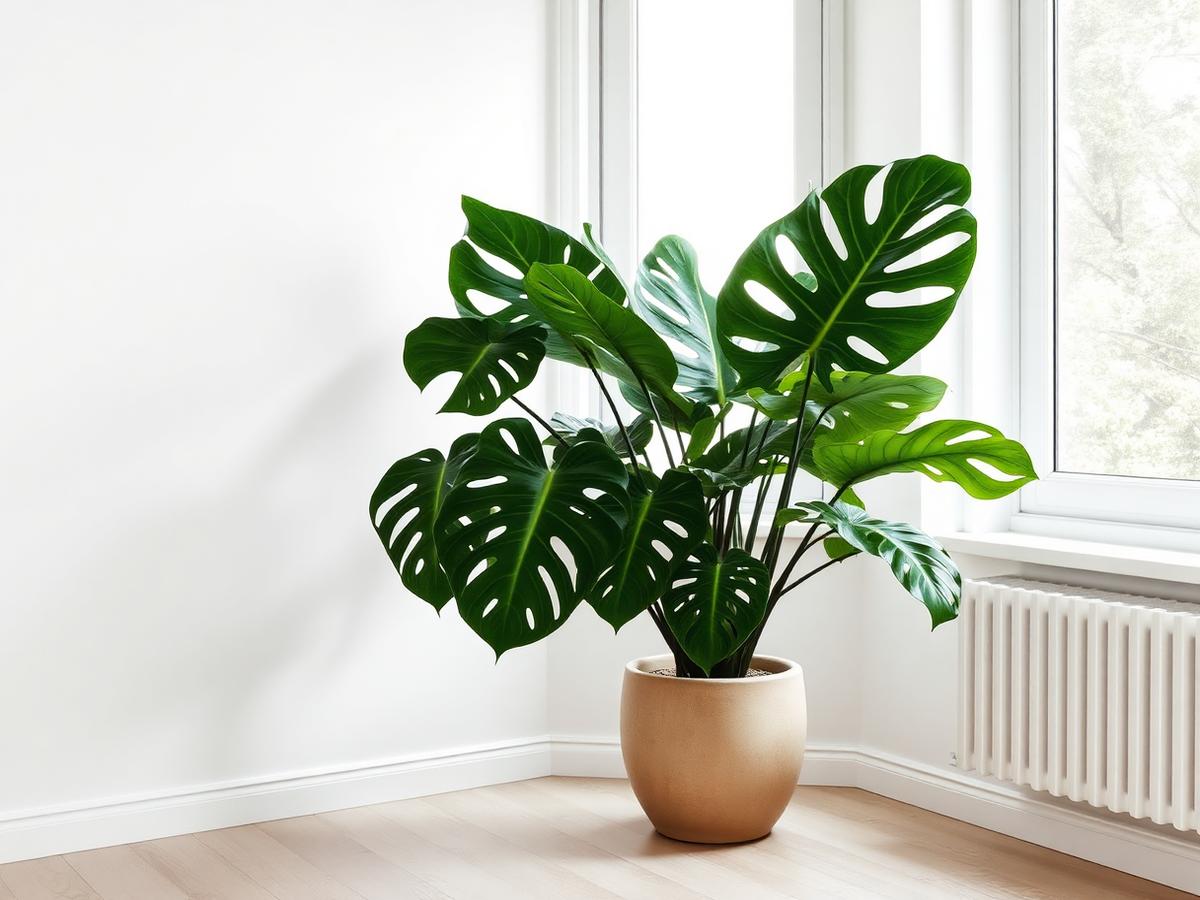
- ·Monstera deliciosa — fenestration increases dramatically outdoors; new leaves come in twice the size. Shelter from direct midday sun until week 3.
- ·Pothos and philodendron — explode in growth in partial shade, trail metres over a summer.
- ·Fiddle leaf fig — the one species that genuinely needs outdoor summers above 55° latitude to stay healthy long-term. Partial sun, not full south.
- ·Citrus, olive trees, and Mediterranean herbs — full sun tolerant immediately after hardening off. Rosemary, basil, and mint thrive.
- ·Hoya, Dischidia, and other epiphytes — flower readily outdoors thanks to the day-night temperature swing that indoor Nordic apartments flatten out.
- ·ZZ plant and snake plant — tolerate the move but don't gain much. Keep indoors if space is tight.
Which plants to leave indoors
A handful of species actively prefer your flat to your balcony — mostly because they evolved under continuous low-to-medium light with stable humidity and no wind.
- ·Calatheas, Marantas, Stromanthes — leaves scorch in any direct sun and rip in any breeze. A shaded, enclosed terrace works; an open balcony does not.
- ·Anthurium clarinervium, A. crystallinum, and other velvet-leaf aroids — same reasons; direct sun etches silver onto the leaf permanently.
- ·Begonia maculata and other angel-wing begonias — fungal issues spike in Nordic summer rain; stay drier indoors.
- ·Syngonium and Epipremnum pinnatum — happier outdoors, but only in deep shade. Full sun bleaches them to cream in a week.
- ·Seedlings under 6 months old of any species — move outside only in their second year.
The 14-day hardening-off schedule
Hardening off is the process of letting a plant's leaves rebuild the wax cuticle and chlorophyll balance they shed during low-light indoor months. Rush it and leaves burn or bleach; skip it entirely and you lose the plant's entire leaf set in a week. The schedule below works for the full list of outdoor-eligible species above.
- 1Day 1–2: 1 hour in full shade (no direct sun), windless corner, bring inside at sunset.
- 2Day 3–4: 2–3 hours in shade. If wind picks up, bring back in.
- 3Day 5–6: Half day in deep shade or dappled light. Watch leaves for any paling — that's the first sunburn warning.
- 4Day 7–8: Full day in shade, first overnight outside if forecast is ≥ 13°C.
- 5Day 9–10: Add 1 hour of morning sun (pre-10:00). Morning sun is half the intensity of midday.
- 6Day 11–12: 2–3 hours of morning sun + shade for the rest of the day.
- 7Day 13–14: Full position. Most plants are now adapted. High-light species can take some midday sun; anything in the calathea family still needs shade.
Sunburn and wind shock: what you're actually seeing
Two specific kinds of damage make up 90% of post-move casualties. Knowing them on sight means catching the problem before the plant drops every leaf.
Sunburn shows up as bleached beige or bone-white patches on the leaf surface, usually on the side facing the sun. Unlike brown spots from underwatering, sunburned tissue is dry and papery on day one, not progressive. The damage itself doesn't heal — the leaf stays spotted — but the plant will fix itself by pushing new, wax-coated leaves that handle sun fine. Move the plant into shade for 5 days and resume hardening off more slowly.
Wind shock shows up differently: torn leaf edges, snapped petioles on large-leaved species (Monstera, fiddle leaf fig), and the whole plant "looking limp" after a gusty day. Nordic summer weather can swing from 25°C still to 30 km/h gusts within hours. Shelter tall plants behind a wall or planter wall; stake anything over 60 cm tall. A wind-torn Monstera leaf will keep functioning but never look the same — prevention is the only fix.
Watering changes outdoors — a lot
Outdoor watering frequency is 2–4× higher than indoors for the same plant. A pot that took 10 days to dry on a windowsill can dry in 24 hours on an exposed balcony on a hot, windy July day. Most outdoor houseplant losses in Nordic summers are from drying out, not from rain.
Check soil daily once plants are outside. A reliable rule: if the forecast shows sun + wind, water preemptively in the morning, not when the plant wilts. Terracotta pots are brutal outside in August — a 15 cm terracotta pot can dry completely between lunch and dinner on a windy day. See how often to water houseplants for the weight-lift method, which works even better outside because the moisture swing is larger.
The Nordic exception: July and August bring multi-day rain periods that can waterlog pots. Tip pots onto their side during heavy rain, or move under shelter. A plant drowning in a saucer during a 3-day rainstorm is the other common summer kill.
Pests you will bring home: the September protocol
Every plant that spends summer outdoors picks up passengers. The common ones in Nordic climates are spider mites, aphids, thrips, and the occasional slug or earwig hiding under the pot. Bringing a plant back inside in September without inspection spreads all of these across your indoor collection within a month.
- 1Inspect each plant in bright light. Check leaf undersides, leaf joints, and the crown. Use a 10× loupe if you have one — mites are 0.3 mm and hard to see otherwise.
- 2Rinse the foliage with a firm spray of water in the shower. This dislodges 80–90% of mites and aphids before they come inside.
- 3Lift the pot and inspect the drainage hole and saucer for slugs or earwigs.
- 4Quarantine for 2 weeks in a room separate from your indoor plants. New pest hatches become visible during this window.
- 5For any plant with visible pests, treat — see the pest-specific guides — and extend quarantine to 4 weeks.
When to bring plants back inside
The signal to bring plants back is the inverse of the spring move: two consecutive nights forecast below 10°C. In most of the Nordic region this hits between mid-September (Bergen, Helsinki) and early October (Copenhagen, Malmö). Don't wait for the first frost — a pre-frost night at 4°C already damages tropicals.
Plants that stayed outside through early cold will drop leaves when moved back. This is normal acclimation shock to indoor dry air and low light, and reverses within 4–6 weeks. The leaves the plant grew outside were optimised for bright light and will be replaced with lower-light indoor leaves anyway. Accept a month of slight scruffiness and resist the urge to fertilise — the plant is adjusting, not starving.
Common mistakes
The moves that lose plants every Nordic summer:
- ·Moving too early "because the sun is out." April sun lies — nights are still 4°C.
- ·Going straight to full sun on day one. Sunburn on day 1 is by far the most common damage pattern.
- ·Leaving terracotta pots in full sun in August without checking daily — these dry out between morning and evening.
- ·Forgetting to move plants during 3-day rain periods in July — pots waterlog, roots rot.
- ·Bringing plants back in without inspection — spider mites hitchhike onto your other plants and by December the whole collection has them.