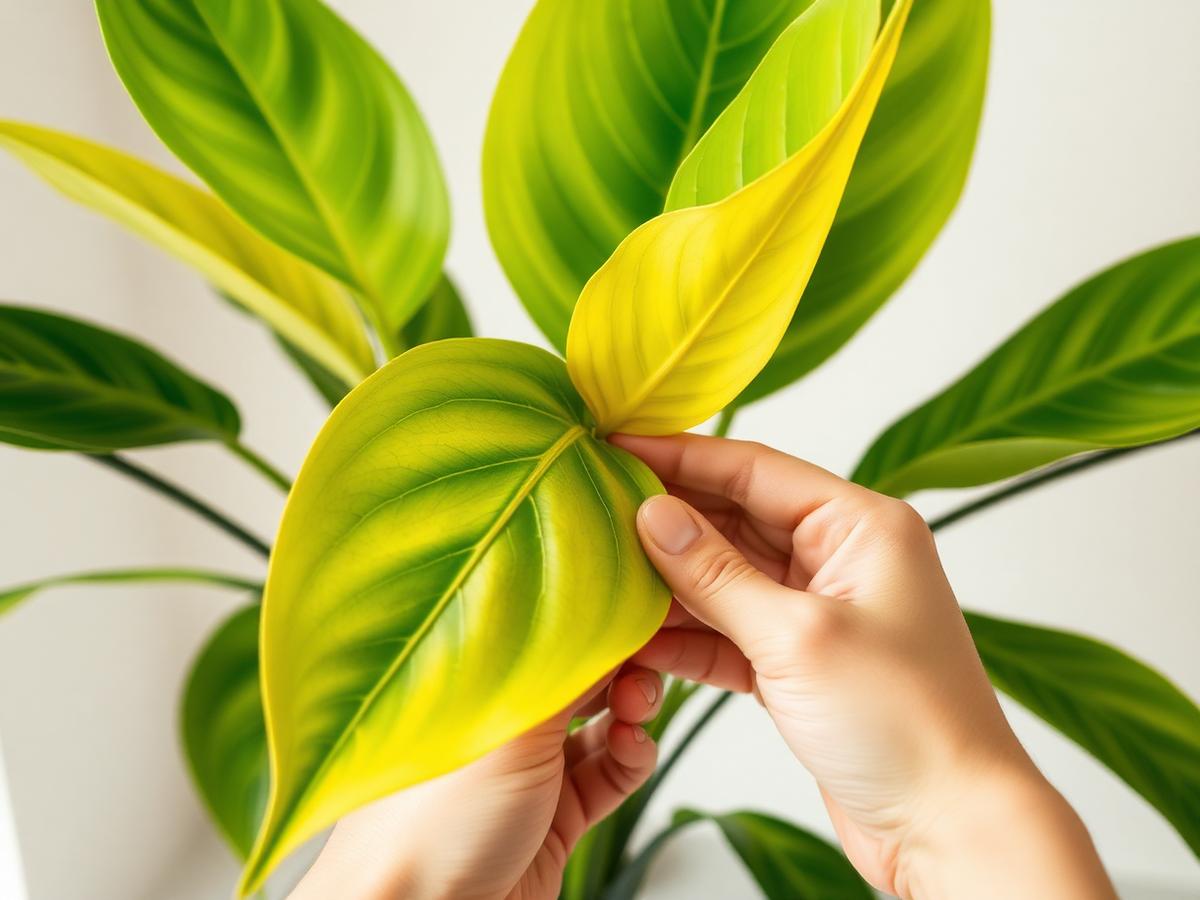
What etiolation actually is
Plants respond to light shortage with a specific, evolved behavior: they stretch. In the wild, a seedling in the shadow of a larger plant extends rapidly upward to break through the canopy above it. The same mechanism runs indoors when light is inadequate — the plant grows the length of stem it thinks it needs to reach the light, even if the light is a window 4 metres away.
The physiology is driven by the hormone auxin, which concentrates in the darker side of the stem and triggers cell elongation there. In normal light, auxin distributes evenly and stems grow thick, short, and compact. In low light, auxin concentrates and stems stretch. At the same time, the plant prioritises stem extension over leaf-building, so leaves come in smaller and paler — the biochemistry of "keep reaching, deal with leaves later".
The full term is etiolation, from the French verb for "to make pale". It's a normal plant response, not a disease. The fix is to give the plant what it's reaching for: more light.
Why it shows up after winter specifically
Two things happen simultaneously in late winter that produce the classic etiolated spring growth. First, the plant has stored enough carbohydrate reserves over the autumn and mild winter to push new growth. Second, light levels in a UK or Nordic flat in January and February are genuinely inadequate for that growth to form properly — indoor winter light at 51–60°N is a small fraction of what the plant needs.
The result: the plant puts out new stems because metabolism is resuming, but the stems are etiolated because light hasn't caught up yet. You notice this typically in March and April, when the new growth is large enough to compare with older leaves. The older leaves (grown in previous summer's good light) are compact and richly coloured; the new leaves (grown in late winter's poor light) are pale, small, and spaced far apart on long stems.
The pattern is especially common in plants that were moved or that had their light conditions change over winter — a plant relocated mid-winter to a darker corner often puts out a visible step-change in stem spacing right at the point of the move.
The internode spacing test
The objective diagnostic for etiolation is internode spacing — the distance between successive leaf nodes along a stem. Compare the new growth to older growth on the same plant. Significantly longer gaps in new growth, together with smaller and paler leaves, confirms etiolation.
- ·Healthy pothos: 2–5 cm between leaf nodes on a vine in bright indirect light.
- ·Etiolated pothos: 8–15 cm between nodes, paler leaves half the size of older ones.
- ·Healthy succulent rosette: tightly packed, no visible stem between leaves.
- ·Etiolated succulent rosette: visible bare stem between leaves; leaves spread out, pale.
- ·Healthy philodendron: 3–6 cm between leaves on a vine.
- ·Etiolated philodendron: 10–20 cm between leaves on a thin stem.
- ·Healthy monstera: 8–15 cm between leaves on a climbing stem (it is a larger plant).
- ·Etiolated monstera: 25–40 cm between leaves with smaller, less-fenestrated leaves.
Fix the light budget first
Pruning doesn't solve anything if the underlying light problem isn't fixed — the plant will just push out more leggy growth from wherever you cut. Light changes come first. Options in order of impact:
- 1Move the plant closer to the window: Distance matters enormously — see the distance-from-window analysis. Moving from 2 m to 50 cm from the window quadruples the light the plant receives.
- 2Upgrade to a brighter window: If you have a south or east window unused by plants, move the etiolated plant there (after a week of acclimation to avoid spring sun scorch).
- 3Remove light-blocking obstacles: Net curtains cut 20–40% of incoming light; heavy voiles more. Clean the window — grime on a London sash cuts another 10–20%.
- 4Add a grow light: A 20–40 W full-spectrum LED 30 cm above the plant on a 10–12 hour timer adds 400–1,000 lux and is the single biggest intervention for a dark-corner plant. See do houseplants need a grow light for the cost-benefit.
- 5Rotate plants 90° weekly: Prevents one-sided growth and lets each side receive the brightest light in turn.
Prune and redirect — making the plant look right again
Once the light budget is improved, the plant will start producing normal, short-internode growth — but the existing leggy stems will remain leggy forever. Stem cells that were etiolated don't retroactively fill in. The visible fix is to cut the leggy sections back and let fresh growth replace them.
The safe technique: identify where on each stem the etiolated growth starts (usually a clear visual step from old compact growth to new stretched growth) and cut about 1 cm above a healthy node below that transition. Fresh growth will emerge from the node, and under better light, it will come in at normal internode spacing. You can propagate the cut-off leggy pieces in water — they still root fine.
- 1Identify the transition point between compact and etiolated growth on each stem.
- 2Cut 1 cm above a healthy leaf node below the transition, using clean scissors.
- 3For vining plants (pothos, philodendron, scindapsus): you can root the cut piece in water and replant it in the same pot as a bushier result.
- 4For upright plants (succulents, rubber tree): let the cut tip callus for a day, then root in dry soil.
- 5Keep the plant in the improved light position while it regrows. New growth typically appears in 2–4 weeks.
Plants most prone to etiolation
All plants can etiolate, but some are much more visible and dramatic than others. In a UK or Nordic flat, these are the most common offenders:
- ·Succulents and cacti: Bad at tolerating low light. Etiolate quickly and severely — a rosette can double in height within a month in inadequate light.
- ·Pothos and philodendron: Vining aroids etiolate by producing long stems with tiny leaves far apart. New growth looks fine for a week then starts stretching.
- ·Pilea peperomioides (Chinese money plant): Develops a tall bare stem with leaves only at the top. The classic "palm tree pilea" shape is etiolation.
- ·Begonias: Soft-stemmed species stretch toward the nearest light source; leaf angle also changes visibly.
- ·Young aroids in general: Anthurium, alocasia, colocasia juvenile growth etiolates if light drops.
- ·Tradescantia: A common indicator species — if your tradescantia is leggy, everything else in the room is probably also etiolating.
- ·Seedlings of any kind: Etiolate very rapidly. Seedlings grown on a dim windowsill in winter almost always show it.
When etiolation is normal (and not a problem)
Not all long internodes are pathological. Some plants — climbing vines in their natural environment, seedlings reaching for their first bright light — are supposed to stretch. A monstera vine climbing a moss pole in bright light will have longer internodes than a trailing pothos on a shelf. If the leaves are coming in a healthy size and a rich colour, and the stems are sturdy, the plant is fine.
The concerning version is short leaves plus long stems plus pale colour — the three together. One or two of those can be normal; all three are always etiolation. When in doubt, compare new growth against older growth on the same plant: if they look like they came from different plants, the newer growth is etiolated.