Do you need one? The honest answer
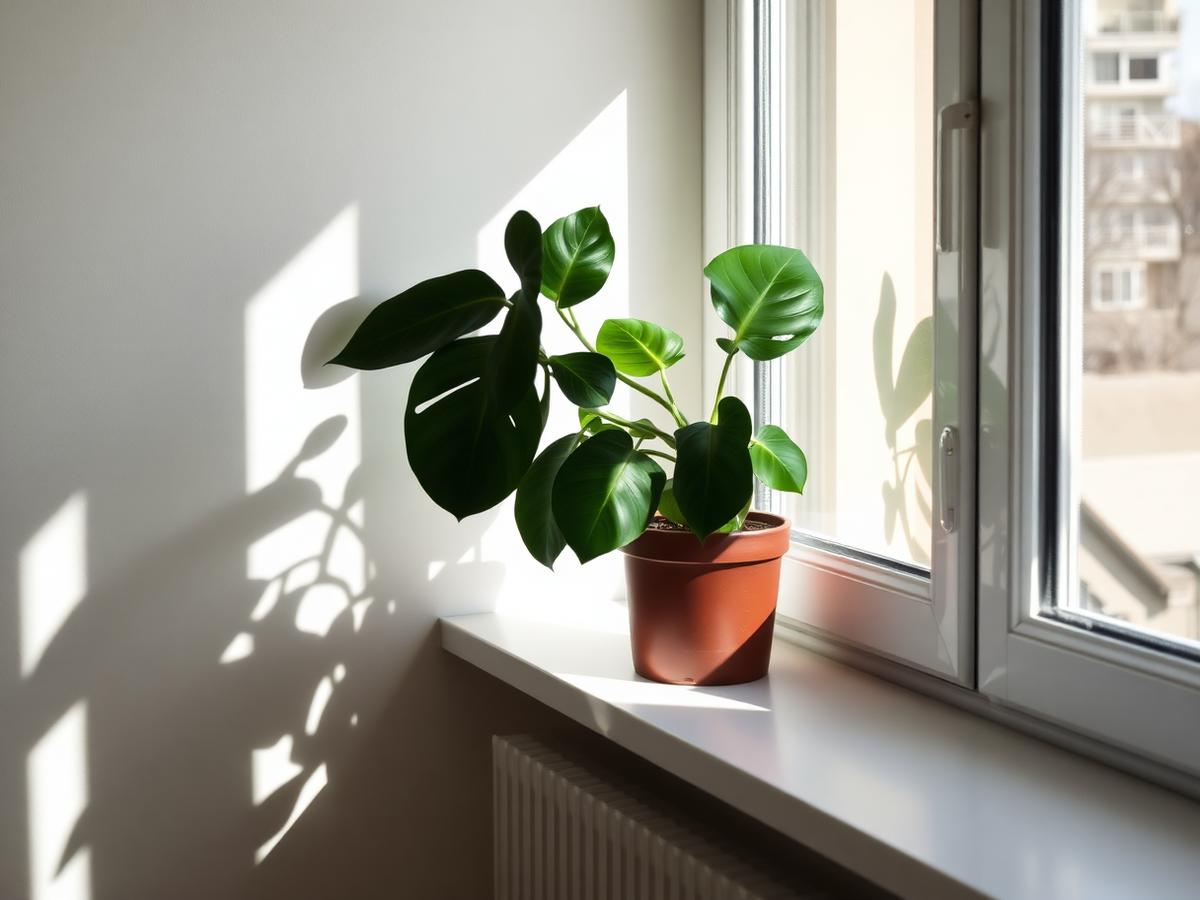
Most plant owners don't need a grow light and fine. If you have an east or south window with at least 4 hours of bright light per day (spring through autumn, your hemisphere's equator-facing window), and you grow the standard tolerant tropicals — pothos, philodendron, snake plant, ZZ plant, monstera — natural light is enough. You'll see growth slow down in winter, but plants won't decline.
A grow light moves from luxury to essential when one of three things is true: your apartment has no window brighter than north-facing; you live above roughly 50° latitude and want plants to keep growing through December and January; or you specifically want to keep high-light species (fiddle leaf figs, alocasia, anthuriums, indoor herbs, citrus) in a room that doesn't receive direct sun. In any of those cases, a €30 LED solves the problem for years. It also fixes leggy, pale new growth after winter — the classic symptom of a plant whose light budget can't keep up with resumed metabolism. See the light levels guide to check what you actually have before buying anything.
The Nordic winter case
At 60° latitude — Copenhagen, Stockholm, Oslo, Helsinki — the sun rises at 09:00 and sets before 15:30 in December. Usable light at a typical living-room window drops to roughly 20% of its June value. Even south-facing windows in winter deliver less to a plant than a medium-bright east window in June. This is why plants that looked happy all summer start yellowing and dropping leaves between November and February.
A single 20–40 W LED over a cluster of plants, on a timer running from 07:00 to 19:00, roughly restores summer-equivalent light for the plant. Over a winter this is the difference between a calathea that limps into spring versus one that pushes new leaves in January. See the Nordic winter care guide for how light fits alongside humidity, watering, and radiator management.
What a grow light actually does
Plants photosynthesise using light in the 400–700 nm wavelength range (called photosynthetically active radiation, or PAR). Leaves use red (620–700 nm) and blue (400–500 nm) most efficiently — which is why dedicated "plant bulbs" often look pink or purple, because they skip green light that plants use less. Modern white LEDs emit across the whole visible spectrum including red and blue, making them almost as good for plants and much easier to live with visually.
The honest truth: for foliage plants (pothos, monstera, calathea, snake plant), a plain 6500 K "daylight" white LED at 20–40 W is functionally equivalent to a purple "full-spectrum plant light" at the same wattage. For flowering or fruiting plants — indoor citrus, chili peppers, orchids — the more even red/blue balance of a dedicated fixture can help bloom production, but the difference is small.
What specs actually matter
Most grow-light marketing obsesses over the wrong numbers. Here is what's real.
- ·Wattage at the wall (real W, not "equivalent W"). A proper 20 W LED is small and useful; a "1000 W equivalent" bulb that draws 15 W is the same thing, renamed.
- ·PPFD (photosynthetic photon flux density) at the plant — measured in µmol/m²/s. 100–300 is fine for foliage plants; 300–600 for flowering plants. If a product doesn't publish PPFD at a given distance, it's usually below 100.
- ·Spectrum — any LED labelled "full spectrum" covers the necessary wavelengths. Don't pay extra for "enhanced spectrum" marketing.
- ·Colour temperature (white LEDs) — 5000–6500 K looks neutral and works well. 3000 K (warm) also works but tints the room orange.
- ·Heat output — LEDs are cool; you can leave them 20 cm above a plant safely. Avoid any incandescent or halogen "grow bulbs" — they burn leaves and are a fire risk.
- ·Lifetime — decent LEDs are rated for 30,000–50,000 hours (8–15 years at 10 hrs/day). Dollar-store LEDs fail in 6 months.
What to buy: three price points
Three setups that cover the vast majority of home situations. All three are LED-based, low-heat, and will last years.
- ·€15–25: A standard IKEA or hardware-store clamp lamp + a 9 W E27 full-spectrum LED bulb. Clamps to a shelf, points at a single plant. Unbeatable price-to-function for one plant. Looks like a regular desk lamp.
- ·€30–60: A 20–40 W purpose-made LED panel or bar, hanging from a shelf or mounted under a cabinet. Covers a cluster of 3–6 plants. Most Spider Farmer, Mars Hydro, or Niello panels in this range perform well — anything priced much higher is marketing.
- ·€150+: A 2×1 m fixture for a dedicated grow shelf or plant wall. Sense-checking: you only need this if you want 10+ plants under one fixture, or if you're growing cannabis, citrus indoors, or a rare aroid collection. For normal houseplants this is overkill.
How to position it
Most installation mistakes are about distance and duration. The right answers are simple.
- 1Hang the light 20–40 cm above the plant's leaves. Too close (<15 cm) bleaches leaves; too far (>50 cm) loses half the output to inverse-square falloff.
- 2Leave a 20–30 cm radius of coverage per 20 W of fixture — larger plants or groups need wider or multiple fixtures.
- 3Run 10–12 hours per day on a mechanical timer — not 24/7. Plants need a dark period to respire properly.
- 4Pair with the sun, not against it: run the light from sunrise onward, so natural and artificial light align. This lets the plant set a stable circadian cycle.
- 5Raise the fixture as plants grow upward (or they start touching the bulb). Most panels come with height-adjustable cables exactly for this.
Purple vs white: which to buy
Purple-pink "blurple" lights use narrow-band red + blue LEDs and skip most green — they're more energy-efficient for plant growth per watt. They also turn a living room into a shop window. White full-spectrum LEDs (6500 K) include green and look like daylight; they're 10–20% less efficient per watt but pleasant to live with.
For a grow shelf in a utility room or basement — where nobody sees it — purple is the right call. For a living room, bedroom, or anywhere people spend time, white is worth the slightly lower efficiency. The difference in actual growth is small enough that it won't change your life.
Common mistakes
I see the same four mistakes repeatedly when people first try grow lights.
- ·Buying too low a wattage. A 5 W USB grow light is a decoration, not a light source. Minimum useful wattage is ~20 W drawn from the wall.
- ·Running the light 24/7. Plants need dark to respire — always use a timer.
- ·Placing the light so high it's almost useless. Inverse square law: 50 cm away delivers one-quarter the light of 25 cm away.
- ·Ignoring natural light. If the plant also gets a few hours of natural light per day, the grow light is supplemental, not a full replacement — you need less wattage than you'd think.
Will a grow light fix a dying plant?
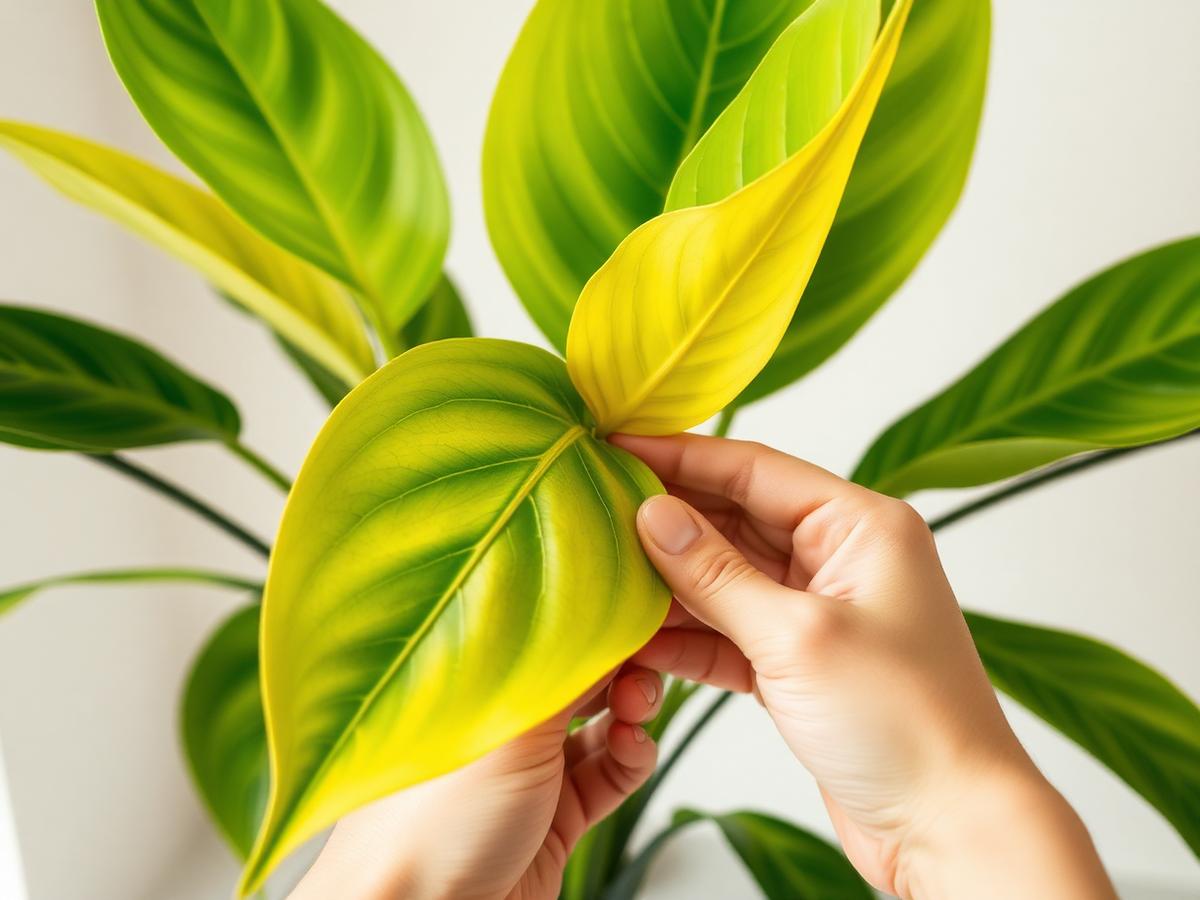
If the plant is dying specifically from light deprivation — leggy stems, shrinking new leaves, faded variegation — yes, a grow light fixes it. Expect to see healthier new growth within 3–6 weeks. If the plant is dying from overwatering, pests, or root rot, a grow light won't help and may stress the plant further. Diagnose the actual cause before committing. The yellow leaves guide or the plant drooping guide are the right starting point if you're not sure.
Edge cases
Two situations that come up repeatedly:
- ·Growing indoor herbs (basil, mint, parsley, coriander) — these need 6+ hours of direct sun to stay compact. A single 20 W LED on a 12-hour timer produces usable kitchen herbs year-round, and it's the easiest grow-light win. Worth it even in a bright apartment.
- ·Starting seedlings indoors — almost any seedling will stretch under a windowsill alone. A small LED bar 10 cm above the seed tray, on a 14-hour timer, keeps seedlings compact and ready to transplant. See the winter apartment guide for the late-winter seedling setup.