Light: medium and stable
Most peperomia species evolved under the forest canopy of tropical Central and South America, where light filters through multiple leaf layers to reach the forest floor. The result is a genus adapted to 500–2,000 lux of medium indirect light — the level you would find 1.5–2.5 m back from a north or east-facing window, or 2–3 m from a large south-facing window. See understanding light levels for indoor plants for a practical guide to measuring this.
Peperomias are more tolerant of lower light than many popular tropicals — in 400–600 lux (a dim room) growth slows and colours may fade, but the plant typically survives. Direct summer sun through glass bleaches and scorches the often-distinctive leaf patterning, particularly in variegated species like Peperomia obtusifolia Variegata.
Variegated cultivars and species with strongly coloured leaves (Peperomia caperata Rosso, Peperomia clusiifolia Jelly) need the upper end of this range — 1,500–2,000 lux — to maintain their pigmentation. In lower light, they revert toward plainer green and the growth becomes more leggy.
Watering: the semi-succulent advantage
Peperomia stores water in its semi-succulent stems and leaves — visible in the firm, somewhat thick feel of the foliage. This reserve means peperomias tolerate 2–3 weeks without water far better than thin-leaved tropicals like pothos or calathea. Water every 10–14 days in spring and summer, and every 14–21 days in winter, but check the soil rather than the calendar. Let the top 2–3 cm dry between sessions.
Overwatering is the primary cause of peperomia death. Symptoms: the stem near the soil becomes dark and soft (stem rot), lower leaves yellow and feel squishy rather than firm, and in rosette species the crown of the plant collapses. The sequence is fast once stem rot sets in — a peperomia can go from fine to unsalvageable in under a week if the stem is already compromised.
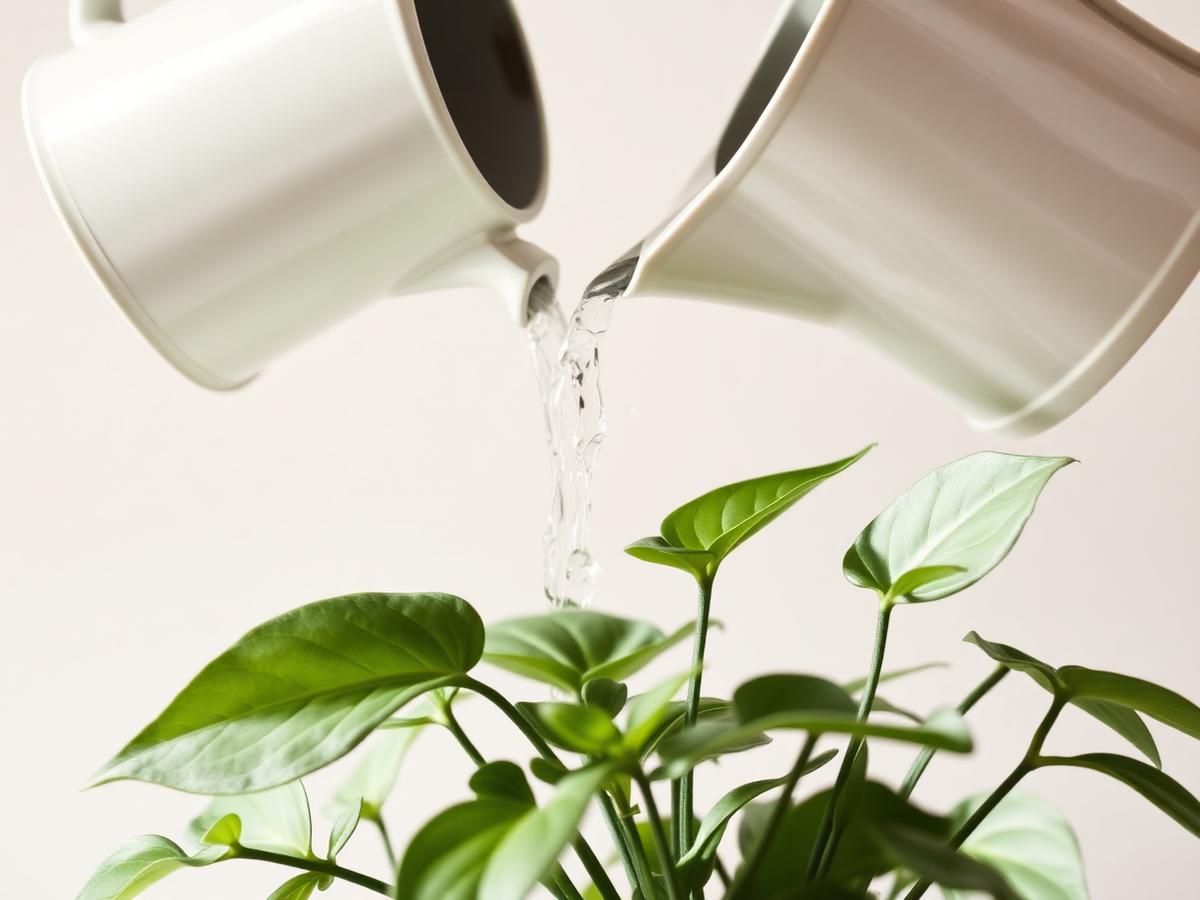
Bottom watering works exceptionally well for peperomia: set the pot in 2–3 cm of water for 15–20 minutes until the top of the soil is barely moist, then remove and allow to drain fully. This prevents water from sitting on the crown, which is particularly prone to rot in rosette species like Peperomia argyreia (watermelon peperomia) and Peperomia caperata (ripple peperomia).
Pot size and soil
Peperomias have small, compact root systems relative to their above-ground size — they prefer snug pots. A pot that is 1–2 cm wider than the root ball is ideal. A larger pot holds soil volume the roots cannot dry out quickly, raising the risk of the persistent moisture that triggers stem rot.
Soil recipe: 50% well-draining potting mix, 50% perlite or coarse horticultural sand. This mix drains fast and resists compaction. Avoid peat-heavy or coir-heavy mixes, which stay wet too long and may hold more water than peperomia roots can safely process.
Repot every 2–3 years or when roots emerge from the drainage holes. Spring is the best time. Peperomia roots are delicate — handle them gently during repotting and let the plant settle for a week before resuming watering at normal frequency.
10 popular peperomia species
These are the species most commonly available in Northern European plant shops, with the key distinguishing features and any specific care notes:
- ·Peperomia argyreia (Watermelon peperomia) — oval leaves with silver-and-green stripes resembling a watermelon rind; red stems. The most recognised peperomia. Bottom water only to avoid crown rot.
- ·Peperomia caperata (Ripple peperomia) — deeply ridged, heart-shaped dark-green leaves; compact rosette form. Needs at least 1,000 lux to hold its texture.
- ·Peperomia obtusifolia (Baby rubber plant) — glossy, rounded, dark-green leaves on upright stems. Tolerates lower light. Variegated form has cream-and-green leaves.
- ·Peperomia polybotrya (Raindrop peperomia) — large, glossy, teardrop-shaped leaves; upright growth. Often confused with Pilea peperomioides.
- ·Peperomia rotundifolia (Trailing jade) — small, round, succulent-textured leaves on trailing stems. Good for hanging baskets or shelves.
- ·Peperomia clusiifolia (Jelly peperomia) — thick red-edged leaves; pink tones intensify in brighter light (1,500+ lux).
- ·Peperomia scandens Variegata — trailing, heart-shaped cream-and-green leaves. Light requirement higher than trailing jade.
- ·Peperomia metallica — narrow, dark leaves with a metallic silver sheen. Less common; needs 1,000–1,500 lux for best colour.
- ·Peperomia puteolata (Parallel peperomia) — striped leaves similar to argyreia but on taller stems; more upright growth habit.
- ·Peperomia orba (Pixie peperomia) — tiny, mounding plant with small succulent-textured leaves. Excellent for small pots and terrariums.
Why peperomia leaves droop
Drooping or wilting peperomia leaves have two opposite causes and the leaves feel different in each case:
- 1Overwatering (squishy/spongy leaves, damp soil) — stem is compromised; stop watering, check for stem rot at soil level, repot into dry mix if stem is soft.
- 2Underwatering (thin/papery leaves, bone-dry soil) — water thoroughly; the plant recovers within 24–48 hours and leaves firm back up.
Propagation
Peperomias propagate from both leaf cuttings and stem cuttings, making them easy to multiply. Stem cuttings: take a 5–8 cm cutting with at least two nodes, remove lower leaves, and place in water or damp perlite. Roots form in 2–4 weeks. Stem cuttings work for all species.
Leaf cuttings: take a healthy leaf with 1–2 cm of petiole (stem) and push the petiole into barely damp soil. New plantlets emerge from the base of the petiole in 4–8 weeks. This method works well for Peperomia caperata, argyreia, and obtusifolia. Succulent-leaved species like Peperomia rotundifolia can also be propagated from individual leaves without a petiole, placed flat on damp soil.
Both methods work best in spring and summer. Keep cuttings in bright indirect light and resist the urge to water frequently — peperomia cuttings root better in slightly drier conditions than you would expect.
Pet safety and toxicity
Peperomia is one of the few popular houseplant genera that is non-toxic to cats and dogs per the ASPCA toxicity database. This makes it a genuinely pet-safe choice for households that need attractive foliage plants without the risk that comes with dracaena, pothos, or monstera.
While non-toxic in the clinical sense, ingestion of large amounts of any plant matter can still cause mild GI upset in pets due to roughage. As with all houseplants, it is sensible to discourage chewing, particularly in cats that may bite repeatedly at the same plant.