Why leaf shape is the best single trait
Botanists call leaf shape the lamina morphology, and it is the trait taxonomists most often use to key out a plant when no flowers are present. The reason is structural — leaf shape is set by the plant's vascular pattern (the venation system) and changes very little within a species. Two pothos plants raised under different conditions will differ in leaf size, leaf colour saturation, and stem length, but their leaves will both be heart-shaped with smooth margins.
By contrast, the traits people instinctively reach for — colour, size, glossiness — are far more variable. A snake plant in low light loses its yellow margins within months. A peace lily under a grow light triples in size. Leaf shape barely moves. That is why every reliable plant-ID workflow starts with shape and uses everything else as confirmation.
The 8 leaf-shape families that cover 95% of houseplants
Most common houseplants fall cleanly into one of eight families. Memorising the families is faster than memorising species.
- ·Heart-shaped (cordate): pointed tip, two rounded lobes meeting at the petiole. Pothos, Philodendron hederaceum, Hoya kerrii, juvenile Monstera, Anthurium clarinervium.
- ·Sword / strap (ensiform): long, narrow, upright, often pointed. Dracaena trifasciata (snake plant), Dracaena marginata, Sansevieria cylindrica.
- ·Oval / elliptic: rounded both ends, widest in the middle. Peperomia obtusifolia, Pilea peperomioides, Hoya carnosa, jade plant.
- ·Palmate / lobed: deeply cut into finger-like sections from a central point. Monstera deliciosa (mature), Fatsia japonica, Schefflera arboricola.
- ·Lanceolate: narrow, lance-shaped, longer than wide with a tapering tip. Calathea lancifolia, Aglaonema, Dracaena fragrans, Stromanthe.
- ·Pinnate / fern-shaped: many small leaflets along a central stem. Boston fern, maidenhair fern, asparagus fern, Polyscias.
- ·Ovate (egg-shaped): wider at the base than tip. Ficus elastica (rubber plant), Aglaonema 'Silver Bay', some Anthuriums.
- ·Arrow / sagittate: triangular with two backward-pointing lobes. Syngonium podophyllum, Alocasia 'Polly', Caladium, Anthurium andraeanum.
Heart-shaped leaves — the most confused family
Heart-shaped leaves are the single most common houseplant pattern and the source of more misidentifications than any other shape. The four candidates you will land on after a heart-shape match are pothos (Epipremnum aureum), heartleaf philodendron (Philodendron hederaceum), juvenile Monstera deliciosa, and the sweetheart hoya (Hoya kerrii).
Disambiguation lives in the petiole and the leaf texture. Pothos has a grooved petiole (run a fingernail down it — you will feel the channel) and a slightly waxy, asymmetric leaf. Philodendron hederaceum has a smooth round petiole and a softer, matte leaf. Juvenile Monstera leaves are smaller and lack the holes of mature foliage but already have the characteristic offset leaf base. Hoya kerrii is unmistakable — it is succulent, thick, and rigid like cardboard. The full breakdown is in pothos vs philodendron and hoya carnosa vs kerrii vs pubicalyx.
Sword and strap-shaped leaves
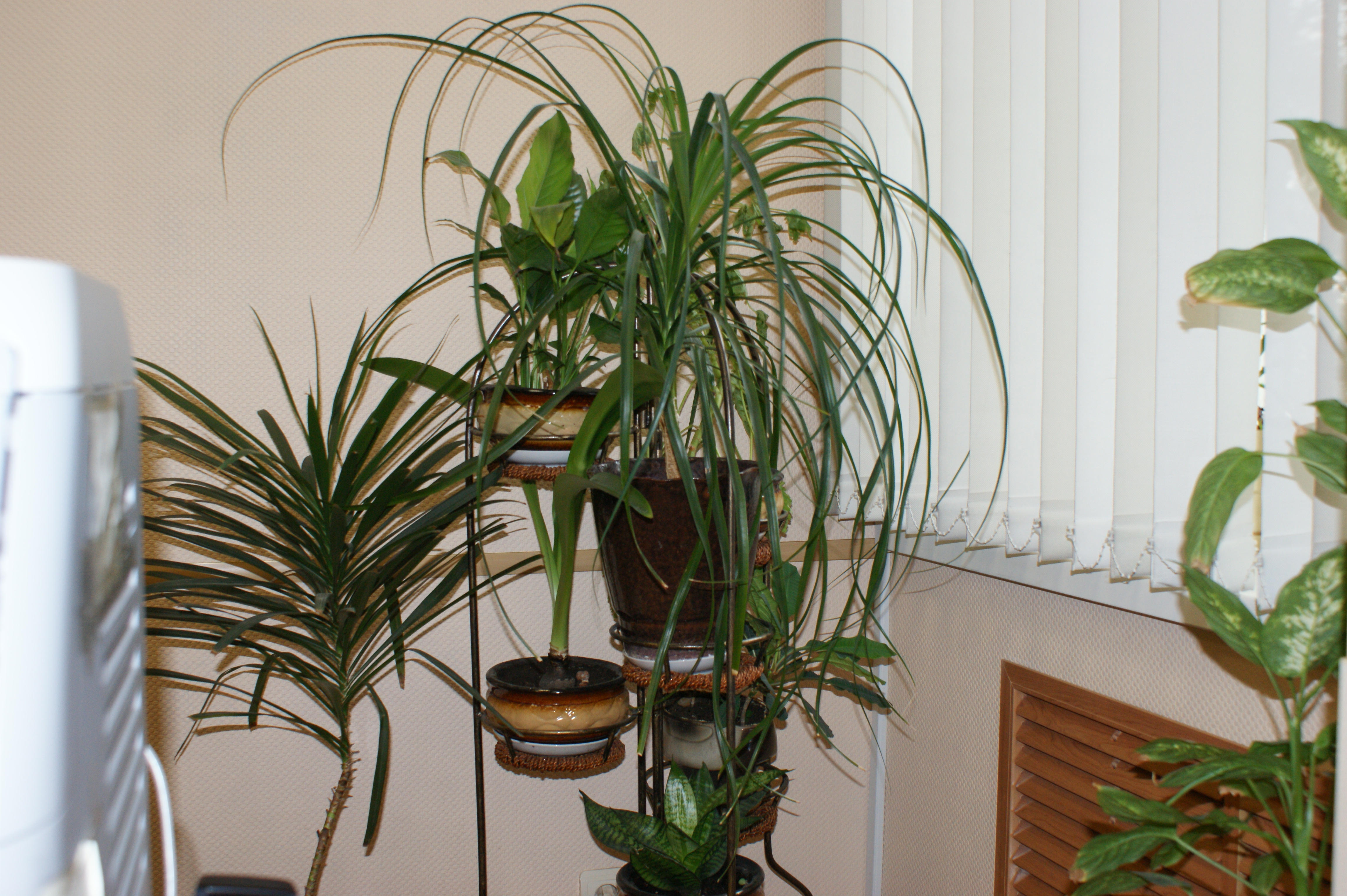
Long, narrow, upright leaves nearly always mean a Dracaena (the genus that absorbed Sansevieria for the snake plants). Dracaena trifasciata (snake plant) has thick, fleshy, cross-banded leaves that grow in clumps; Dracaena marginata (dragon tree) has thinner, drooping leaves on a slender trunk; Dracaena fragrans (corn plant) has wide, flat, strap leaves arching from the top of a thick stem.
If the leaf is cylindrical rather than flat, you are looking at Sansevieria cylindrica. The full identification key for snake-plant species is in snake plant varieties identification.
Oval and rounded leaves
Oval leaves split into two camps by texture: succulent (thick, fleshy, water-storing) and non-succulent (thinner, papery or matte). Succulent ovals point you to Crassula ovata (jade plant), Peperomia obtusifolia (baby rubber plant), or one of several Hoya species.
Non-succulent rounds with a perfectly circular silhouette and a central petiole attaching to the underside of the leaf (peltate attachment) are almost always Pilea peperomioides — the Chinese money plant. No other common houseplant has that specific peltate-round combination. If the leaves are rounded but the petiole attaches to the leaf edge in normal cordate fashion, you are likely looking at a peperomia, and the pilea vs peperomia raindrop vs polybotrya guide walks the cross-checks.
Palmate and deeply lobed leaves
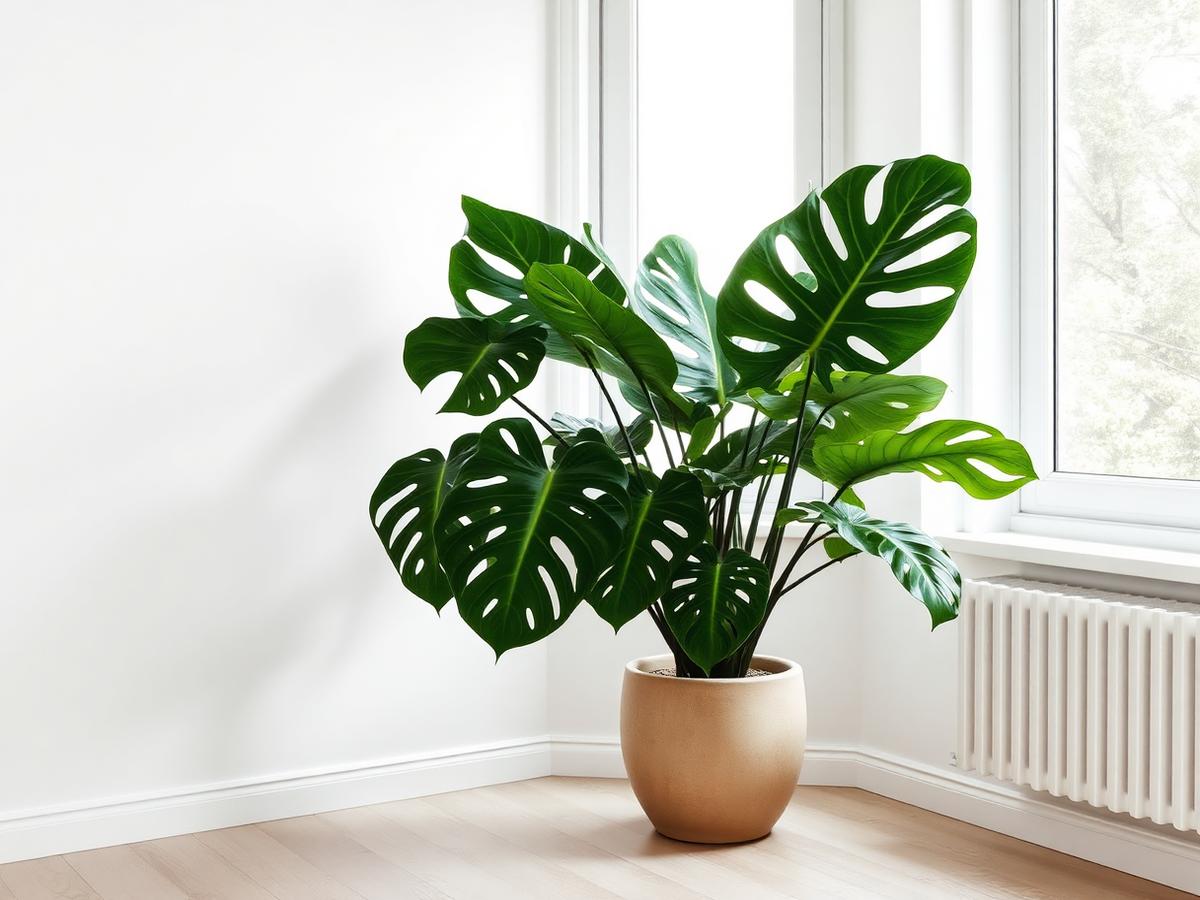
Deep cuts radiating from a single point on the petiole signal the palmate family. Mature Monstera deliciosa is the obvious candidate — fenestrated and split, with both edge-splits and oval holes inside the leaf surface. Fatsia japonica has 7–9 finger-like lobes on a thinner, smoother leaf with no holes. Schefflera arboricola has compound leaves where each finger is a separate leaflet on a single petiole, not a deep cut into one continuous leaf surface.
If the leaf has only edge-splits — no internal holes — and the plant has a thicker, often single trunk, you are looking at split-leaf philodendron (Thaumatophyllum bipinnatifidum, formerly Philodendron selloum), not a Monstera. The distinction matters because care needs differ slightly and both get sold under interchangeable common names. Cross-check with monstera vs philodendron vs mini monstera.
Lanceolate (lance-shaped) leaves
Lanceolate leaves are longer than wide with a tapering point — narrower than oval but broader than sword. Most prayer-plant family species (Calathea, Maranta, Stromanthe, Ctenanthe) have lanceolate leaves with patterned upper surfaces and pigmented undersides. Aglaonema cultivars are typically lanceolate with cream, pink, or silver patterning. Dracaena fragrans has long lanceolate strap leaves arching from a thick stem.
The fastest disambiguation: turn the leaf over. Magenta underside = Stromanthe; pale silvery-green = Maranta; burgundy on a wide leaf = Calathea; soft purple on a narrow leaf = Ctenanthe. The full visual key is in calathea vs maranta vs stromanthe vs ctenanthe.
Pinnate, ovate, and arrow shapes
Pinnate leaves — many small leaflets along a central stem — are the fern signature. Boston fern (Nephrolepis exaltata), maidenhair fern (Adiantum), and asparagus fern all read pinnate. Polyscias and Schefflera also have compound leaves but with thicker, glossier leaflets. Bird's nest fern is the exception in this family — it has strap-shaped leaves that look more like a Dracaena than a fern.
Ovate leaves — wider at the base than the tip — are the classic Ficus elastica (rubber plant) silhouette. Arrow / sagittate leaves with two backward-pointing lobes at the base point you to Syngonium, juvenile Alocasia, Caladium, or Anthurium andraeanum. The four are easy to tell apart by petiole position and underside colour.
When leaf shape isn't enough — the 4-step confirmation
Shape gets you to a genus 70–80% of the time. Confirming the species needs three more cues, ideally captured in the same photo set.
- 1Petiole: grooved (channelled) or round? Smooth or textured? Length relative to leaf? Pothos and Philodendron differ here, as do Monstera deliciosa vs adansonii.
- 2Venation: parallel veins running the length of the leaf (monocots — palms, dracaenas, prayer plants) or netted veins branching from a midrib (dicots — most other houseplants)?
- 3Underside: matte or glossy? Pigmented or pale? Fine hair on the veins (Calathea orbifolia) or smooth?
- 4Growth habit: clumping rosette, vining, upright single-stem, multi-stemmed shrub? This often makes the final call.
Photographing for ID — the recipe that actually works
If you intend to use a plant ID app to confirm your shape-based guess, the photo matters as much as the plant. Take three images: one mature leaf flat against a neutral background filling 70–80% of the frame, one close-up of the petiole where it meets the leaf, and one whole-plant shot showing growth habit.
Avoid direct midday sun (blows out detail), avoid flash (kills depth), and avoid backgrounds that match the leaf colour. Diffuse daylight near a north-facing window is ideal — the same conditions that read well on Instagram are also the easiest for a plant ID app to interpret.