The last-frost question, by UK region
"When is the last frost?" is a location-specific question in the UK, and the Met Office's long-run averages give a useful rule of thumb. The safe move-out date for tropical houseplants is at least two weeks after the regional last-frost average, by which point overnight minima reliably stay above 10–12 °C.
- ·South coast, London, and the Home Counties: Last frost typical around 15–22 April. Safe move-out from roughly 1 May onward, with late cold snaps still possible through mid-May.
- ·South-west England and Wales: Last frost typical late April. Safe from mid-May.
- ·Midlands and north-west England: Last frost typical late April–early May. Safe from mid-to-late May.
- ·North-east England and lowland Scotland: Last frost typical early–mid-May. Safe from late May.
- ·Highland Scotland and Aberdeenshire: Last frost typical mid–late May. Safe from early June. Keep plants protected overnight until then.
- ·Near the coast vs inland: Coastal areas 1–2 weeks earlier; frost pockets and valleys 1–2 weeks later than the regional average.
Which plants benefit, and which are better indoors
Almost every common tropical houseplant grows faster outside during a UK summer — light levels outdoors are 10–20× higher than even a bright indoor spot, which drives dramatic growth provided humidity and night temperatures are adequate. But a few plants are better kept inside.
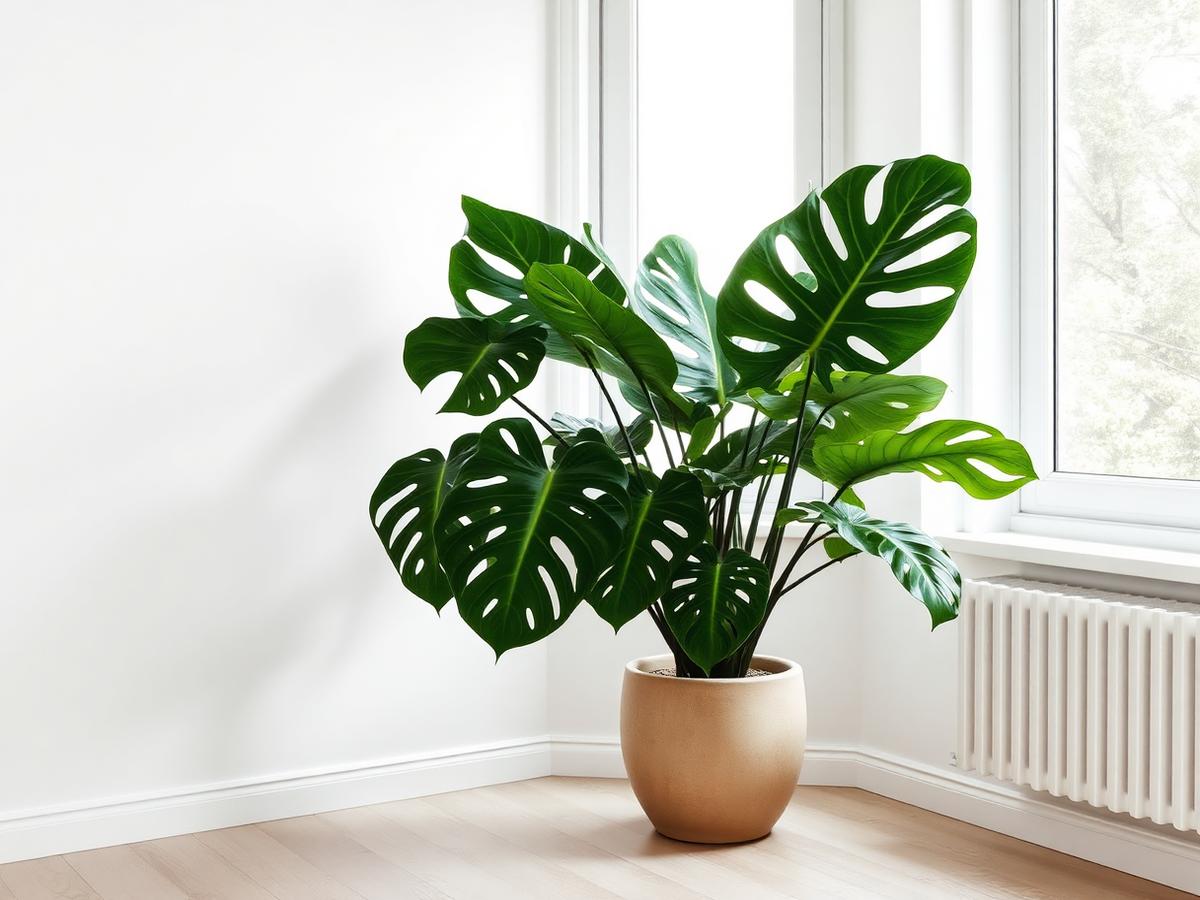
- ·Thrive outside: Monstera deliciosa, philodendron, pothos, rubber plant (ficus elastica), bird of paradise, schefflera, croton, citrus, hibiscus, Chinese money plant, olive, pelargoniums.
- ·Do fine outside in dappled shade: Peace lily, calathea (but see humidity caveat), dracaena, alocasia, colocasia, begonias, anthurium.
- ·Keep indoors — too tender or too fussy: Fiddle leaf fig (drops leaves on temperature swings), ZZ plant (prefers stable indoor conditions), orchids (too humidity-sensitive), African violets, succulents accustomed to indoor light (they will burn).
- ·Already outside plants: Sansevieria can go out in full sun if gradually acclimated; many cacti benefit from a summer outside in bright filtered light; olives and citrus want it.
The 7–14 day hardening-off protocol
A plant that has spent the winter indoors is almost entirely unadapted to outdoor conditions — direct sun, wind, wider temperature swings, and real UV. Dropping it straight onto a sunny patio is the fastest way to ruin it. The answer is a gradual transition called hardening off.
- 1Day 1–2: 1–2 hours in deep shade (north wall, under a tree). Bring back inside before evening.
- 2Day 3–4: 3–4 hours in deep shade. Still bringing in overnight.
- 3Day 5–7: All day in deep shade; overnight if night temps are safely above 10–12 °C.
- 4Day 8–10: Introduce dappled shade (filtered sun through leaves or a shade cloth) for 2–4 hours a day.
- 5Day 11–14: Move to the intended final spot — still in dappled shade for tropicals, morning sun only for sun-tolerant species.
- 6Week 3+: For full-sun plants (citrus, pelargoniums, some succulents), gradually increase direct sun exposure by 1–2 hours a day.
Where to actually put them
Most indoor tropicals want dappled shade outside — the kind of light found under a tree canopy, a pergola, or on an east-facing wall. This roughly matches the bright indirect light they evolved under in forest understories. Direct southern sun will scorch them within an hour, especially for species like calathea, monstera, and fiddle leaf fig. See acclimating houseplants to spring light for the broader scorch-prevention protocol.
Wind is the underappreciated risk. A 30+ mph gust will shred monstera fenestrations and snap stems on brittle plants. Pick a sheltered corner — a walled patio, a balcony corner, behind a fence — not an exposed roof terrace. If a plant has to live in an exposed spot, stake it and group pots together so they shelter each other.
For a balcony in a London or Manchester flat, the ideal spot is a north-east corner where morning sun hits for 1–2 hours and the rest of the day is bright shade. A south-west balcony needs shade cloth or a taller plant to provide the shade. Avoid placing pots directly on hot paving — the pot can heat to 45 °C+ in summer sun, cooking roots.
Watering, feeding, and pests outside
Water demand roughly doubles outside. Wind and brighter light drive transpiration, and smaller pots can dry in 24 hours on a hot day. Check daily during the first fortnight; most people are surprised at the jump. Bottom-watering doesn't work as well outdoors (the tray dries fast); a long slow pour from a watering can is better.
Feeding can also increase — to every 10–14 days during active growth rather than monthly. Use half-strength liquid fertiliser to avoid salt build-up as water demand rises. See how often to fertilise houseplants for the dilution rules.
Pests expand rapidly outdoors. Slugs and snails will eat soft foliage (calathea, begonia, any young growth) — use copper tape around pots or raise them on pot feet. Aphids colonise tender new leaves; spider mites explode if the plant is in dry wind; caterpillars appear on larger-leaved plants. Weekly inspections during the outside window catch problems early.
The September return — when and how
The danger window reverses in September. Once overnight minima drop below 14 °C for 3+ consecutive nights — typically mid-September in most of the UK, early September in Scotland — tropical plants begin to stress. They don't need to freeze to take damage; the cold by itself is enough.
The return protocol mirrors hardening-off in reverse, compressed into a week. Inspect every plant thoroughly for pests before bringing it in — spider mites and aphids that explode outdoors will destroy an indoor collection in weeks. A full shower under lukewarm water, a check under every leaf, and a 10-day quarantine on a separate windowsill catches almost everything. For anything that looks even faintly suspect, a single thorough insecticidal soap treatment before it comes in is cheap insurance.
- 1Day 1: Shower each plant thoroughly, check all leaves for pests, trim any damaged growth.
- 2Day 2–3: Move plants into a sheltered spot (porch, greenhouse, cold frame) overnight.
- 3Day 4–5: Bring indoors to a bright spot, ideally quarantined from the main collection.
- 4Day 6–10: Monitor for pests (they emerge from hiding when warm) before merging with other plants.
- 5Week 2+: Reduce watering to indoor rates; hold fertiliser until new growth appears or until spring.
Plants that stay out longer
Some popular houseplants tolerate colder nights than tropicals and can stay outside a couple of weeks longer — into late September or even early October in the south. Olive, bay, rosemary, pelargoniums (to a point), citrus (borderline — protect below 5 °C), and many succulents cope down to 5–8 °C overnight. Aspidistra and clivia are fully happy into October in sheltered spots.
Do not confuse these with true hardy plants that overwinter outdoors — most will still die if left out for a frost. The rule is: if in doubt, bring it in. Having to drag pots indoors in the first week of October is a minor nuisance; watching a plant you've owned for three years die to an unexpected frost isn't.