The 60-second diagnostic flow
Run these four checks in order. By the end, you will know which of the five causes is the most likely culprit, and you can jump to the matching section below.
- 1Lift the pot and feel its weight. Light and airy → likely underwatering. Heavy and waterlogged → likely overwatering / root rot.
- 2Push a finger 2–3 cm into the soil. Bone dry → thirsty. Still damp 3+ days after watering → drainage problem.
- 3Check recent changes: did you repot, move the plant, turn on heating, or open a cold window nearby in the last 2 weeks? If yes → environmental shock.
- 4Inspect the underside of leaves and the stem base. Webbing, tiny specks, sticky residue, or soft black stems → pest or rot damage.
Cause 1: Underwatering (the most common and easiest to fix)
Underwatered leaves are soft, thin, and hang limp from the stem — but the telltale signal is the pot itself: pick it up and it feels noticeably lighter than it did a week ago. Soil often pulls away from the pot edge, creating a visible gap, and the top 5 cm are bone dry to the touch. Peace lilies, calatheas, and nerve plants wilt dramatically when thirsty and recover within hours of watering, which is why they're sometimes called "drama queens."
The fix is a thorough soak, not a surface splash. If soil has gone hydrophobic (water runs straight through without absorbing), bottom-water the pot for 20–30 minutes in a tray of room-temperature water. Recovery usually begins within a few hours and completes in 24–48 hours. If the plant hasn't perked up after two days of moist soil, underwatering wasn't the real problem — move on to cause 2.
- ·Leaves feel soft and thin, but not slimy.
- ·Pot feels noticeably light when lifted.
- ·Soil has pulled away from the pot edge.
- ·Top 5 cm of soil is bone dry to the touch.
- ·Recovery: 24–48 hours after a deep soak.
Cause 2: Overwatering and root rot (the most dangerous)
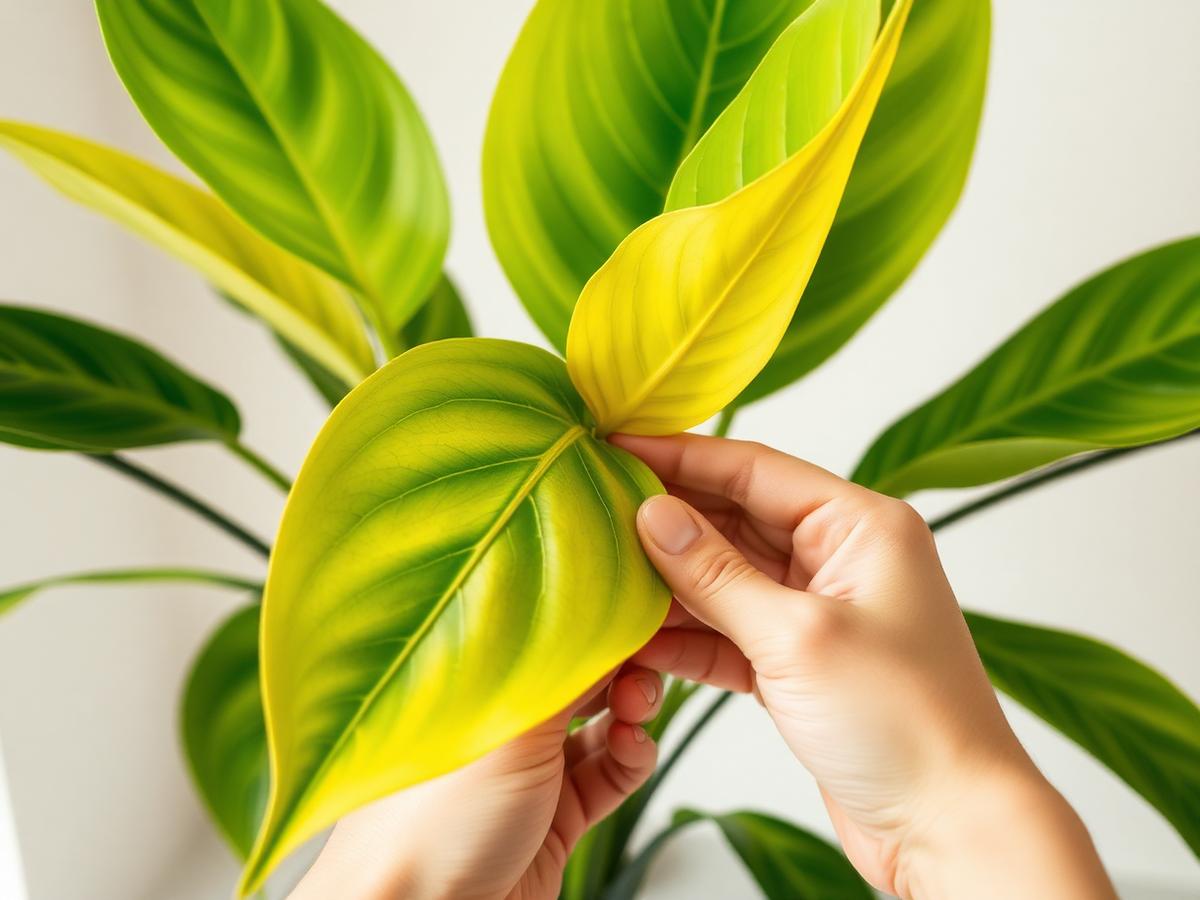
Overwatered droop looks deceptively similar to thirst — leaves go limp and the plant flops — but the pot feels heavy, the soil stays damp for more than 3–5 days after watering, and lower leaves often yellow before they droop. A sour, swampy smell from the soil is the unmistakable sign that root rot has set in. At this stage, watering again will kill the plant.
The fix is to unpot and inspect the roots. Healthy roots are firm and pale (white, cream, or light tan). Rotted roots are black, brown, or mushy and slide off when touched. Trim every rotted root with sterilised scissors, rinse the survivors, and repot into fresh, well-draining mix in a pot one size smaller. Hold water for 5–7 days, then water lightly. Recovery takes 2–6 weeks and the plant may drop leaves as it rebalances — see our full guide to yellowing leaves for the broader diagnostic path.
- ·Leaves soft and yellowing, soil still damp.
- ·Pot feels heavy; water stays in the saucer.
- ·Musty or sour smell from the root zone.
- ·Soft, blackened stem at the soil line.
- ·Recovery: 2–6 weeks with repotting and root trimming.
Cause 3: Temperature shock
Tropical houseplants — the vast majority of species sold indoors — evolved in stable 18–28°C environments and respond to sudden cold drafts, heater blasts, or cold-window proximity by drooping within hours. A plant that looked fine yesterday and is flopping today, with no watering change, is almost always a temperature victim. Common triggers: a window opened overnight in winter, a radiator turned on nearby, a delivery stored on a cold doorstep, or an air-conditioning vent aimed at the leaves.
The fix is to move the plant to a stable spot 18–24°C away from drafts, heaters, and AC vents. Do not water for stress recovery — cold + wet is root-rot territory. Most plants bounce back within 3–7 days once temperatures stabilise. If leaves blacken at the edges, those sections are dead and can be trimmed; new growth will come from healthy tissue.
Cause 4: Repot shock
Even a careful repot disturbs fine root hairs, and the plant often droops for 3–10 days while roots re-establish contact with soil. This is normal and requires patience, not intervention. If you repotted within the last two weeks and the plant is drooping but the soil is evenly moist, the odds are 80%+ that this is the cause.
The fix is to do less. Keep the plant out of direct sun, maintain even soil moisture (not soggy, not dry), and resist the urge to fertilise — fertiliser stresses recovering roots. New growth within 2–3 weeks confirms recovery. If you're unsure whether your plant was even ready for repotting, see our when-to-repot guide.
Cause 5: Pests and disease
Pests rarely cause sudden drooping by themselves, but severe infestations — especially spider mites, thrips, and root mealybugs — can dehydrate a plant from the inside out. Fungal root diseases (Pythium, Phytophthora) present identically to root rot from overwatering. If your diagnostic checks don't match causes 1–4, inspect the leaf undersides and stems carefully.
Look for: fine webbing between leaves (spider mites), tiny silvery streaks (thrips), white cottony clusters (mealybugs), sticky residue on nearby surfaces (scale, aphids, mealybugs), or black spots with yellow halos (bacterial or fungal leaf disease). See our guides to spider mites, sticky leaves, and white fuzz for species-specific treatment.
Species that droop dramatically but are usually fine
Some plants use wilt as communication, and their droop looks alarming but corrects within hours of a correct response. Knowing the list prevents panicked overwatering.
- ·Peace lily (Spathiphyllum): wilts hard when thirsty; recovers in 2–4 hours after watering.
- ·Calathea and maranta: droop in low humidity or cold water; recover overnight once corrected.
- ·Fittonia (nerve plant): collapses entirely when dry; upright again within an hour of a soak.
- ·Boston fern: fronds wilt when humidity drops below 40%; misting or a humidifier helps.
- ·Hydrangea (when brought indoors): thirsty within 24 hours of a full soak in warm rooms.
Diagnostic decision table
If you are still unsure after the 60-second flow, match your specific combination of signs against the table below. The combination of leaf feel, soil feel, and pot weight narrows the cause more reliably than any single symptom.
- ·Soft leaves + dry soil + light pot → underwatering. Soak thoroughly.
- ·Soft leaves + wet soil + heavy pot → overwatering / root rot. Unpot and inspect.
- ·Soft leaves + moist soil + recent move → temperature shock. Stabilise location.
- ·Soft leaves + moist soil + recent repot → repot shock. Wait 7–14 days.
- ·Curling leaves + dry soil → chronic underwatering or low humidity.
- ·Yellow lower leaves + droop + damp soil → confirmed overwatering.
- ·Droop + webbing underneath leaves → spider mite infestation.
- ·Droop + sticky residue → scale, aphids, or mealybugs.
What not to do when a plant droops
The urge to "help" a wilting plant causes more deaths than the original problem. Avoid the following reactions until you have identified the actual cause.
- ·Do not water reflexively — a drooping overwatered plant watered again is usually fatal.
- ·Do not fertilise a stressed plant — nutrients don't fix root or shock problems and can burn compromised roots.
- ·Do not repot immediately unless you've confirmed root rot — repotting a thirsty or shocked plant extends recovery.
- ·Do not move a plant to "better light" while it recovers — further environment changes compound stress.
- ·Do not cut off drooping leaves yet — many will re-inflate within 24 hours once the cause is fixed.
When to accept the plant is beyond saving
A plant with no firm white roots left, a mushy blackened stem at the soil line, and no green tissue in the crown is usually gone. But don't write off a plant too quickly — many species propagate readily from healthy cuttings even when the root system is lost. If any stem section or leaf is still firm and green, take a cutting, root it in water or perlite, and you have likely saved the genetics if not the original plant.
Monstera, pothos, philodendron, and most trailing aroids root reliably from nodes. Snake plants root from leaf sections. Fiddle leaf figs, rubber trees, and other ficus root from tip cuttings with two leaves. It's often the fastest recovery path when root rot has claimed most of the original system.