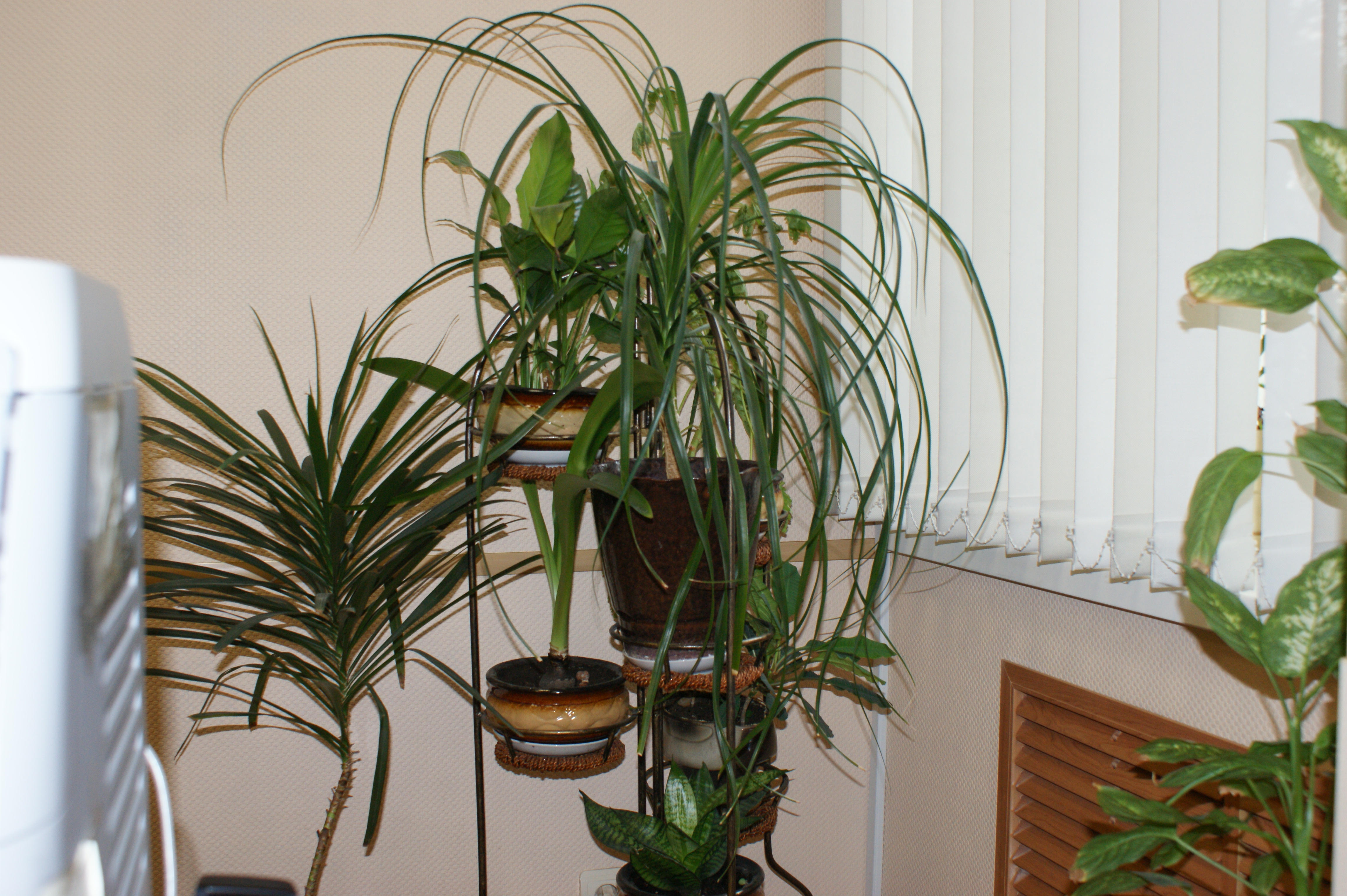
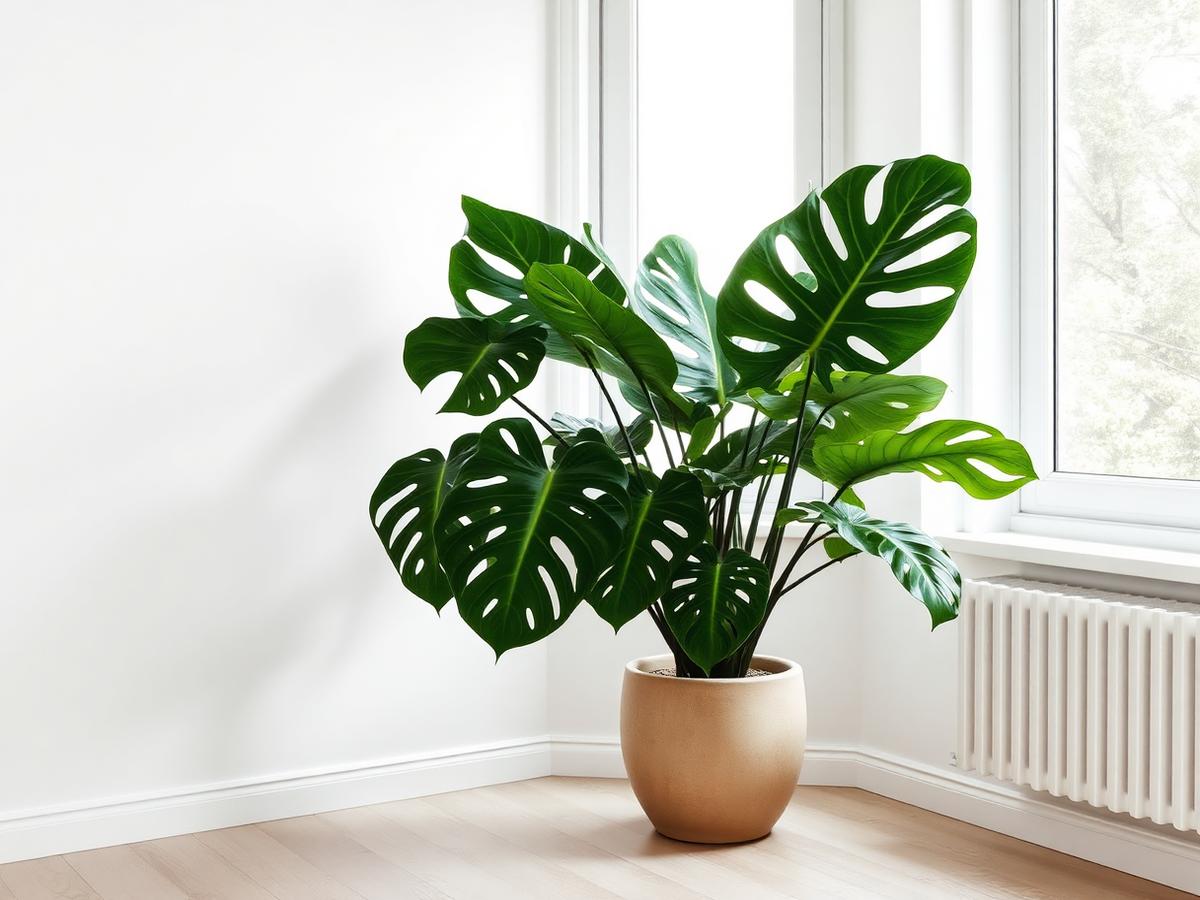
The headline number: 70–85% on common species
Across the major plant ID apps available in 2026 — Pl@ntNet, Google Lens, PictureThis, iNaturalist's Seek, Flora Incognita — overall accuracy on common houseplants in well-lit photos sits in the 70–85% range at genus level. At species level, the same apps land between 55% and 70%. These numbers are consistent across multiple peer-reviewed evaluations published since 2019 and informal benchmarks run by horticultural communities since.
What the headline number hides is variance. Performance on the top 50 commercial houseplants — pothos, monstera, snake plant, peace lily, ZZ — is excellent, often above 90% at genus. Performance on cultivars, hybrids, and uncommon species drops to coin-flip territory, and on rare aroid cultivars (Philodendron pink princess, Monstera Thai Constellation, Anthurium clarinervium) it is often worse than guessing at random because the model returns a high-confidence wrong answer.
Where plant ID apps fail (and why)
App failures are not random. They cluster around predictable categories where the visual signal a model relies on is either absent, atypical, or shared across many species. Knowing the failure modes is more useful than knowing the average accuracy — it tells you when to trust the app and when to verify.
- ·Cultivars and named varieties. A 'Marble Queen' pothos and a 'Snow Queen' pothos are the same species (Epipremnum aureum) but the cultivar is what determines the look and value. Most apps return only the species and miss the cultivar entirely.
- ·Variegated forms. Variegation patterns confuse the visual model — a half-moon Monstera albo can be misclassified as a different species because the white tissue lacks the chlorophyll signature the model expects.
- ·Juvenile leaves. A juvenile Monstera deliciosa has unsplit heart-shaped leaves and looks nothing like the mature plant. Apps trained mostly on mature foliage often misclassify juveniles.
- ·Succulents and cacti. Echeveria hybrids, Haworthia cultivars, and Sempervivum varieties are visually subtle and prone to misclassification. See the houseplant look-alikes guide for the families where lookalike confusion is structural, not avoidable.
- ·Calathea / Maranta / Stromanthe / Ctenanthe. Four genera of prayer plants share leaf shape and venation. Even good photos return inconsistent answers — see the prayer plant comparison.
- ·Bad photos. The single biggest source of misidentification is photo quality, not model error. A blurry top-down shot under warm tungsten light produces wrong answers from every app.
The structural problem: training data bias
Plant ID apps train on what people photograph. That dataset is heavily biased toward common species, mature plants, and outdoor light. iNaturalist's training pool — used by Seek and influencing Pl@ntNet — comes from observations uploaded by citizen scientists, mostly outdoors, mostly of native or ornamental plants in their habitats. Houseplants are underrepresented relative to their popularity, and rare cultivars almost never appear at all.
The downstream effect: a Pink Princess philodendron in a Stockholm flat sits in a part of the model's distribution that is sparse. The model's confidence score still reads high because the closest match in training data scored well, but the closest match is often the wrong cultivar. This is why a high-confidence app result is not the same as a verified ID — confidence is calibrated to the training distribution, not the truth.
How to take a photo the model can actually use
Photo quality is the single largest variable you control. A good photo turns a mediocre app into an accurate one; a bad photo defeats every model. The photo recipe is consistent across apps.
- 1Pick one mature leaf — fully expanded, undamaged. Juvenile leaves trip up most models.
- 2Lay it flat against a plain background — a sheet of white paper, a wood floor, a kitchen counter. Avoid busy backgrounds that the model may try to identify instead.
- 3Shoot in bright indirect daylight — near a window, no direct sun, no flash. Tungsten and LED indoor light shifts colour balance enough to confuse colour-sensitive models.
- 4Capture the leaf top and underside. Vein pattern and underside colouration distinguish prayer-plant genera.
- 5Include scale — a coin or finger nearby helps for size-sensitive species.
- 6For uncertain results, also photograph the petiole base, the growth habit (whole plant in pot), and the stem cross-section if visible. The fuller protocol is in the photo identification guide.
Reading the confidence score honestly
Most apps return a top match plus 2–4 alternatives, each with a confidence percentage. The number is useful but easily misread. A 92% confidence on a clear monstera leaf almost always means correct; a 92% confidence on a blurry succulent leaf often means the model is confident in the wrong answer because all rosette succulents look similar to it.
Practical reading rule: trust scores above 80% only when (1) the photo is good, (2) the suggested species is a common houseplant, and (3) the alternatives in the top-3 list are visually distinct from the top match. If the top three results are all visually similar species — three philodendrons, three calatheas — the model is hedging within a confused cluster. Drop into a human-confirmed reference like Kew's Plants of the World Online or a look-alike guide before acting.
The two-tool rule: never trust a single source
For anything that matters — a plant you are paying real money for, a plant a pet might chew on, a cutting you are about to root — use two independent sources before acting. The combinations that work: app + botanical reference (Kew's POWO, Missouri Botanical Garden, RHS), app + human community (a plant-specific subreddit, a Facebook ID group), or app + a curated species index. The reason is simple: a single source can be confidently wrong, but two independent sources rarely converge on the same wrong answer. If both agree, you have a verified ID; if they disagree, you have a flag to investigate.
Never use the app result for toxicity decisions without verification. ASPCA and Pet Poison Helpline maintain authoritative toxicity data — confirm any "is it safe for my cat" question against one of those, not a chatbot or app summary.
App-specific strengths in 2026
Different apps win in different categories. There is no single best app — picking the right one for the situation matters more than picking the most popular.
- ·Pl@ntNet — strongest on European wild plants, weeds, and native species. Free and open. Less reliable on tropical houseplants with limited training data.
- ·Google Lens — broad and fast. Useful as a starting point and for shopping cross-checks. Surfaces matching commercial product pages, which helps confirm cultivars from how the plant is sold.
- ·iNaturalist Seek — excellent for outdoor species and naturalised plants. Houseplant coverage is moderate. Training data is community-verified, which raises the floor on accuracy.
- ·PictureThis — strong consumer UX and broader houseplant coverage than Pl@ntNet, but accuracy claims should be checked against another source. Subscription model.
- ·Flora Incognita — academic project, very accurate on European flora. Limited interface for houseplant queries.
When to skip the app entirely
Some IDs are so reliable through visual heuristics that an app slows you down. The eight most-asked houseplant identification questions can be answered in under a minute with the right reference.
- ·Monstera vs split-leaf philodendron — see the 10-second visual test.
- ·Pothos vs philodendron — leaf texture (pothos is waxy, philodendron is matte) and the pothos vs philodendron guide settle most cases.
- ·Snake plant cultivar — Laurentii vs Cylindrica vs Moonshine — see the snake plant varieties photo set.
- ·Philodendron cultivar — Brasil, Birkin, Micans, Gloriosum — apps confuse these constantly; the philodendron varieties guide is faster.
- ·Calathea vs Maranta vs Stromanthe vs Ctenanthe — undersides, growth habit, and one botanical key. See the prayer plant comparison.
What good ID is actually worth
A correct species ID is the foundation of every care decision: light requirement, watering frequency, soil pH, humidity tolerance, fertiliser ratio, and toxicity to pets are all species-specific. Wrong ID = wrong care = preventable plant deaths. The most common pattern is a "snake plant" sold as Sansevieria trifasciata that is actually Sansevieria cylindrica — different watering tolerance, different propagation method, different repotting interval.
The cost of a misidentification scales with the value of what you do with it. For a €5 pothos cutting, a wrong ID is mostly an annoyance. For a €150 Pink Princess philodendron with reverting variegation, a wrong ID can mean over-pruning the wrong stem and losing the variegated growth. For a curious cat in a flat with a Dieffenbachia, a wrong ID can be a vet visit. Treat the app as a starting point — the verified ID is the asset.