What a deficiency actually does to a leaf
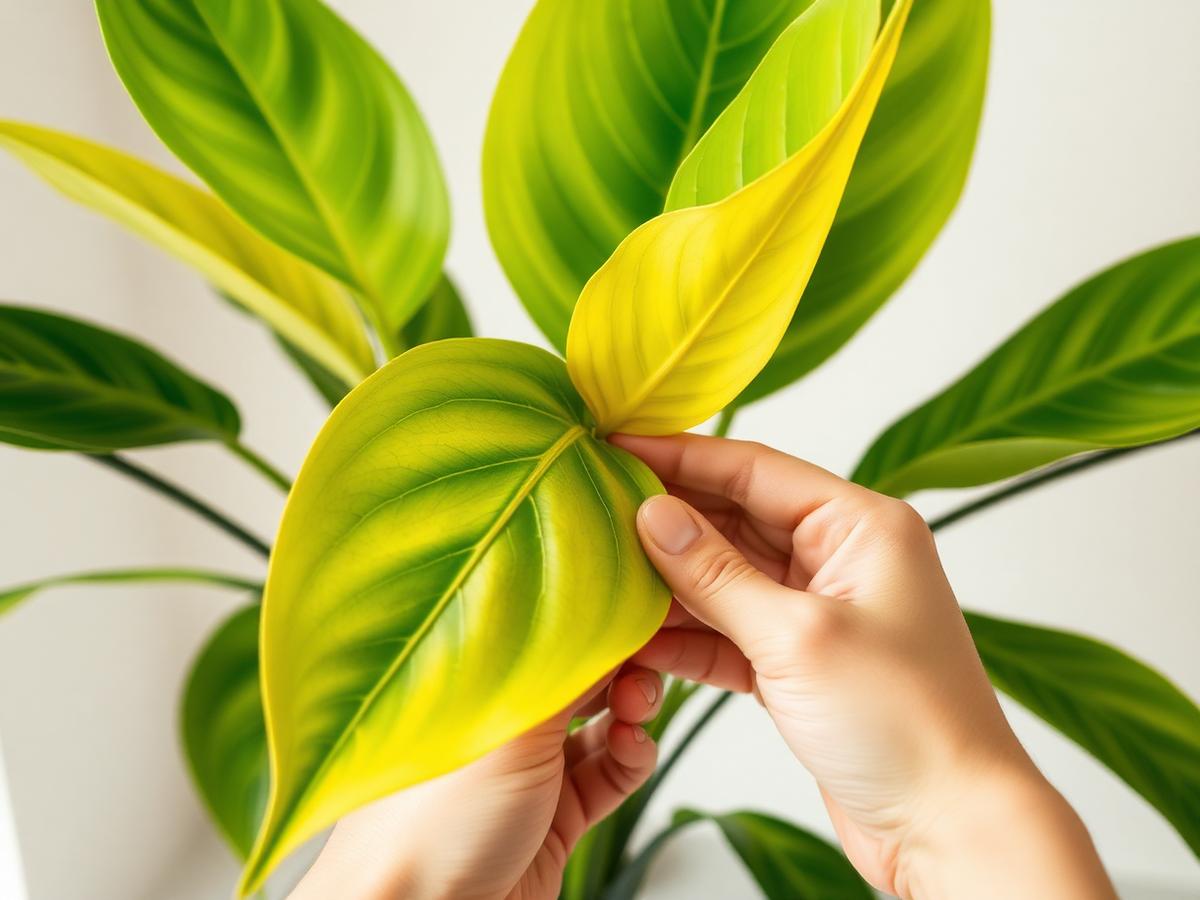
Healthy green leaves contain three pigments at scale: chlorophyll a and b (green, the workhorse of photosynthesis), and small amounts of carotenoids (yellow-orange, normally masked). When a nutrient is missing, the plant cannot synthesise or maintain chlorophyll, the green fades, and the carotenoids underneath become visible as yellow. This is chlorosis — and it is the single most common visual signature of nutrient stress.
Each nutrient has a specific role in chlorophyll production or transport, and the failure mode reflects that role. Magnesium sits at the centre of every chlorophyll molecule, so magnesium deficiency causes immediate chlorophyll breakdown. Iron is essential for chlorophyll synthesis but not part of the molecule itself, so iron deficiency stops new chlorophyll from being made. Nitrogen is a building block of every protein in the leaf, so nitrogen deficiency causes the whole metabolic machine to slow.
First, rule out the imposters
Three other problems mimic nutrient deficiency closely enough that confirming the deficiency before fertilising matters. Add fertiliser to a plant with one of these underlying issues and you make the problem worse, not better.
Root rot from overwatering blocks uptake of every nutrient, so a healthy soil will still produce a deficient leaf. Check the roots — black, mushy, or thinned-out roots mean the problem is not nutrition. Wrong pH locks specific nutrients in the soil even when they are present; aroid soil drifting alkaline (above pH 7) makes iron unavailable, and a plant in old peat-based soil drifting acidic (below pH 5.5) loses access to calcium and magnesium. Cold, dim conditions slow the metabolism so the plant does not actually need or process the nutrients in the soil — winter yellowing is rarely deficiency in plants that were green all summer.
- ·Soggy soil + black or thinned roots → root rot, not deficiency.
- ·Soil pH below 5.5 or above 7.5 → uptake blocked. Repot into fresh mix.
- ·Symptoms only in winter on a plant that was healthy in summer → winter dormancy, not deficiency.
- ·Yellow lower leaves on a recently overwatered plant → overwatering, not deficiency.
The mobility rule: old leaves vs new leaves
The single most diagnostic axis for nutrient deficiency is whether the symptom appears on old, lower leaves first or on new, top leaves first. This is not aesthetic — it reflects basic plant physiology and reliably narrows seven deficiencies down to one or two candidates.
Mobile nutrients are ones the plant can move between leaves. When supply runs short, the plant cannibalises its own old leaves, dismantling chlorophyll and proteins to ship the freed nutrient up to the new growth. The old leaves yellow and drop; the new leaves stay green. Nitrogen, phosphorus, potassium, and magnesium are mobile. Immobile nutrients cannot be relocated once incorporated into a leaf — when supply runs short, the plant has to stop building new tissue with them, and the new leaves come in deficient while the old ones stay healthy. Iron, calcium, manganese, sulphur, and zinc are immobile.
- ·Old leaves yellowing first → mobile nutrient deficient (nitrogen, magnesium, potassium, phosphorus).
- ·New leaves yellowing first → immobile nutrient deficient (iron, calcium, manganese, sulphur, zinc).
- ·Whole plant uniformly affected → severe deficiency or, much more likely, root or pH issue.
- ·Single branch or side affected → not deficiency. Check for pest or mechanical damage.
The seven deficiencies you will actually see
Indoors, in a typical living-room context with regular fertiliser, you will mostly encounter four or five of the seven below. The others are rare without unusual circumstances — wrong substrate, very alkaline tap water, or a plant that has not been repotted in five years.
- ·Nitrogen (N): Uniform pale yellow-green on lower leaves first; whole plant looks washed-out. Stunted small new leaves. The most common indoor deficiency, especially in plants on a no-fertiliser regime.
- ·Magnesium (Mg): Interveinal yellowing on lower, older leaves — yellow tissue between green veins. Looks like green-veined yellow lace. Common in long-term containers without fertiliser top-ups.
- ·Iron (Fe): Interveinal yellowing on the youngest, top leaves — same lace pattern as magnesium but in the wrong place. Often goes white between the veins in advanced cases. Very common in alkaline or hard-water conditions; see hard water and houseplants.
- ·Potassium (K): Yellow then brown leaf margins on lower leaves, working inward; veins stay green. Older leaves curl downward and look scorched at the edge.
- ·Calcium (Ca): Distorted, hooked, or stunted new leaves; brown necrotic patches on new-leaf tips. Calcium deficiency is rare in tap-watered houseplants but appears in distilled-water-only setups.
- ·Phosphorus (P): Dark green or purplish-red older leaves, especially on undersides; stunted overall growth. Less common but striking when it appears, often in cold-stressed plants where roots cannot take up phosphorus.
- ·Manganese (Mn): Interveinal yellowing on new leaves with a finer pattern than iron — the green vein margins look feathered, not solid. Often appears alongside iron deficiency in the same alkaline conditions.
Reading the chart: pattern × position → nutrient
Combining the two axes from the previous sections — pattern (uniform yellow, interveinal, marginal, distorted) and position (old leaves first, new leaves first) — uniquely identifies six of the seven deficiencies above. This is the visual chart in the [keyFacts] of this article restated as a flow:
- 1Uniform yellow + old leaves → Nitrogen.
- 2Interveinal yellow + old leaves → Magnesium.
- 3Yellow margins working inward + old leaves → Potassium.
- 4Dark green or purplish + old leaves → Phosphorus.
- 5Interveinal yellow + new leaves → Iron (or Manganese, similar pattern).
- 6Distorted hooked + new leaves → Calcium.
- 7Whole plant pale + uniform → check pH, root health, and light first.
Why fertilising rarely fixes it on its own
Roughly half of apparent nutrient deficiencies do not respond to fertiliser because the underlying problem is not a missing nutrient — it is a blocked uptake pathway. The four common blockers are root damage from overwatering, soil pH outside the plant's tolerated range, bone-dry soil that cannot move minerals, and a fully root-bound pot with almost no soil left to hold nutrients in the first place. Adding more fertiliser to any of these makes the symptom worse: salts accumulate, root tips burn, and the leaf yellowing accelerates.
Before fertilising, run a 60-second uptake check. Pot weight: is it normal for this size, or does it feel hollow and bone-dry? Drainage speed: when you water, does it drain in seconds (root-bound) or pool on the surface (compacted, hydrophobic)? Root condition: tip the plant out and look. White or tan firm roots with white tips mean uptake is working; dark, mushy, or thinned roots mean the deficiency is downstream of the actual problem. If any of these flags trip, repot into fresh mix before touching fertiliser.
The fix: feed, flush, or repot
Once the deficiency is confirmed and uptake is intact, the correction depends on which nutrient is missing and how chronic the issue is. Match the fix to the deficiency, not the season — a magnesium deficiency in February still wants Epsom salts, just at a lower frequency.
- ·Nitrogen, potassium, phosphorus: Use a balanced liquid fertiliser at half the label strength every 2–4 weeks during active growth. NPK ratios on the label are roughly equal (e.g. 7-7-7 or 10-10-10) for general-purpose use.
- ·Magnesium: Half a teaspoon of Epsom salts (magnesium sulphate) dissolved in a litre of water, applied as a regular watering, monthly until new growth comes in green. Do not exceed monthly — magnesium can lock out calcium at high doses.
- ·Iron: Switch to filtered or rainwater (tap water is often the cause if it is alkaline or hard), repot into fresh mildly acidic mix (most aroid blends are right), and use a fertiliser with chelated iron in the formula. Iron supplements like Sequestrene work but are usually unnecessary if the underlying pH and water are fixed.
- ·Calcium: Rare; usually only in distilled-water-only setups. Switch to standard tap or remineralised water, or add a pinch of crushed eggshell to the soil surface as a slow-release source.
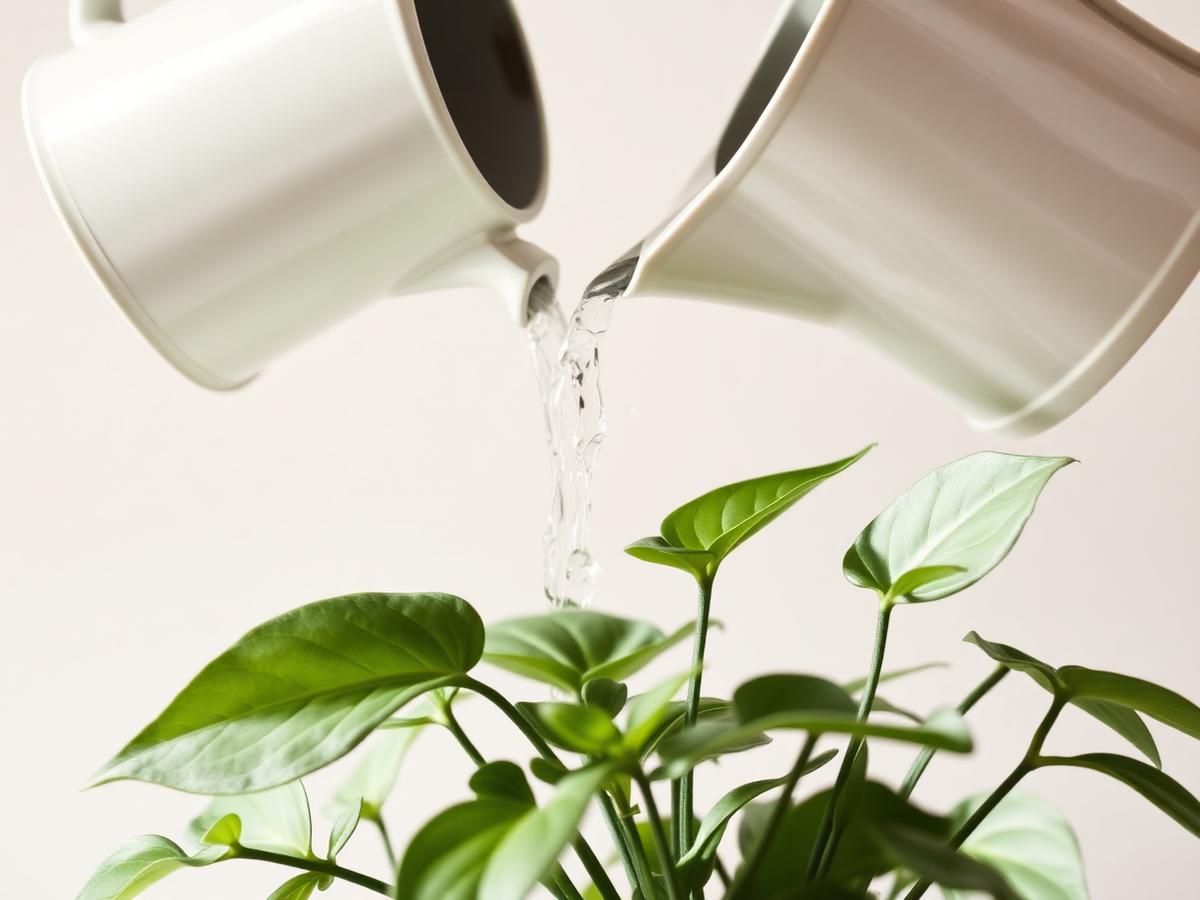
- ·Salt build-up (toxicity, not deficiency): Flush the pot. Run plain water through the soil at three times the pot's volume, slowly, over 20 minutes. Repeat in a week. Then resume fertilising at quarter strength for a month before returning to normal.
Fertiliser toxicity: when too much looks like deficiency
The cruel paradox of houseplant feeding is that over-fertilising produces symptoms that look like nutrient deficiency. Salt accumulation in the soil draws water out of root cells, the roots burn from the tips inward, and the leaves develop the same brown-margins and chlorosis pattern that a real deficiency would. The give-aways: a white crust on the soil surface, salt rings on the inside of terracotta pots, and a recent history of fertilising with no improvement.
If toxicity is suspected, do not add more fertiliser. Flush the pot with three times its volume of plain water (over 20 minutes, in a sink or bath), let the plant fully drain, and pause feeding for at least a month. Most plants that were over-fertilised recover completely on plain water within 4–6 weeks; new growth comes back at the right colour, and the existing damaged leaves can be pruned. The full guide to dosing is in how often to fertilise houseplants.