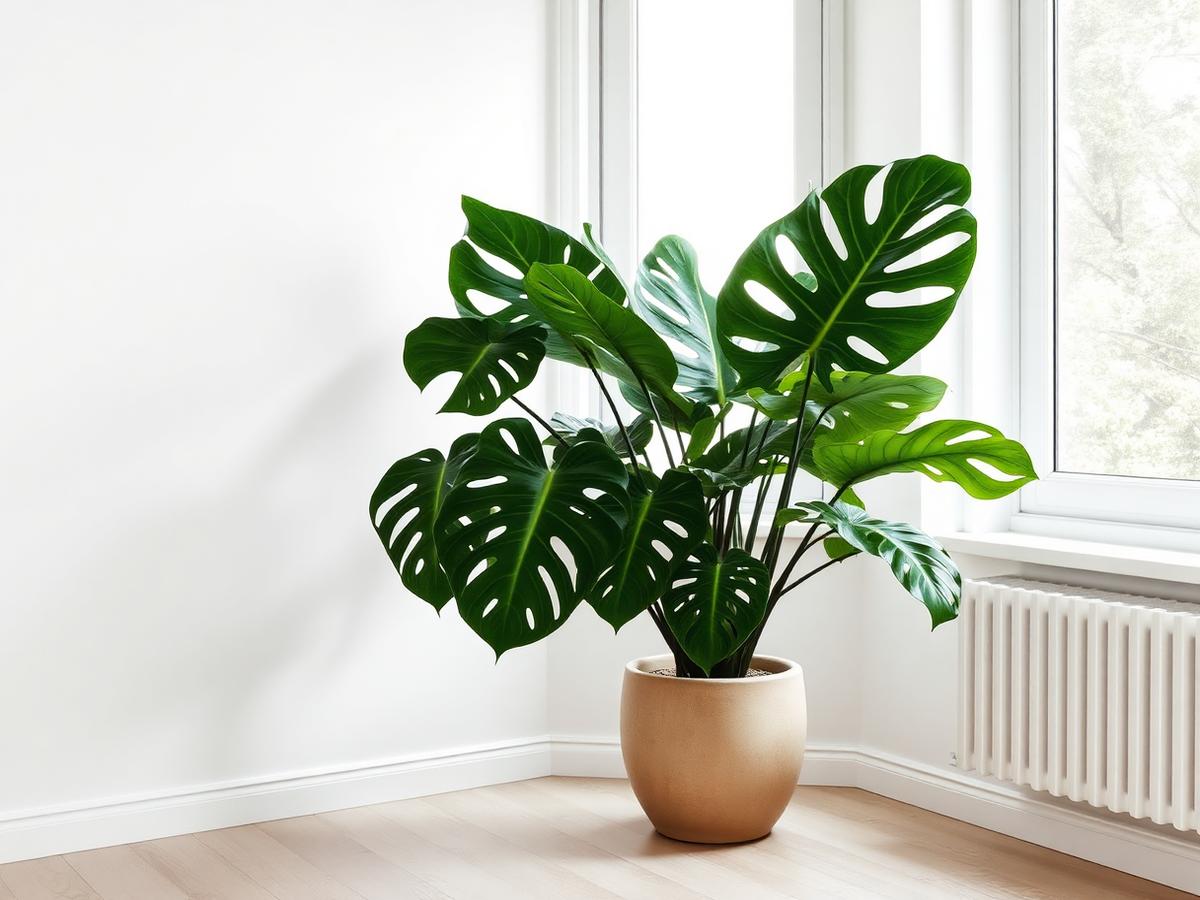
Why a Victorian flat is its own environment
A typical first-floor Victorian flat in London, Edinburgh, or Manchester was built for coal fires, thick curtains, and rooms that changed temperature dramatically across a day. The building still acts that way a century and a half later. Single-glazed sashes leak heat at a U-value of 4.8–5.7 W/m²K, compared to 1.6 for modern double-glazing — which means the air within 30 cm of the glass runs 5–15 °C colder than the rest of the room whenever the outside temperature is below about 12 °C.
On a cold January night in London, the inside surface of a single-pane sash can sit at 2–5 °C, even with a radiator underneath. That radiator contributes the other half of the problem: a 60 °C convector pushes warm dry air straight up past the window, pulling air humidity down to 20–30% in winter — well below what most tropicals tolerate comfortably. The classic Victorian "plant in the window" therefore experiences cold roots, desiccating warm air at leaf level, and a draught pulling air past it continuously.
Add the chimney breast. Even a bricked-up fireplace with a vent cover above it still channels air out of the room through the warm flue. Plants placed in the alcove or near the hearth feel that airflow year-round.
The windowsill trap in winter
The biggest mistake in a Victorian flat is putting a tropical plant on the windowsill because it "needs the light". In summer that works. In winter, the root ball on the sill can drop to 5–8 °C overnight — warm enough not to freeze, cold enough to trigger dormancy or root damage in plants like calathea, philodendron, ficus, and alocasia.
The diagnostic pattern is distinctive: leaves that were fine in October start dropping or yellowing in late November, with no obvious watering cause. Check the soil surface temperature at 11 PM on a cold night with the back of your hand — if it feels cold, the plant is in the wrong spot.
Move tropicals 30–60 cm back from the glass for the winter. Move them back to the sill in April. A £5 wooden plant stand that lifts pots off the sill and clear of the convection draught from the radiator also helps — 10 cm of clear air underneath makes a measurable difference.
Radiator-under-window: the desiccation problem
A radiator directly below a plant pushes a plume of 30–40 °C air up and across its leaves continuously while the heating is on. This strips humidity faster than anything else in a flat. Calatheas and marantas brown at the tips within weeks; ferns crisp and abort new fronds; fiddle leaf figs drop leaves. See the winter houseplant care guide for the full radiator-era protocol.
Three defences, in order of effectiveness: move the plant off the radiator column (step back 1–1.5 m from the window); add a small room humidifier (a £30 ultrasonic model lifts a living room from 25% to 45% easily); and use a radiator shelf or foil reflector to direct the heat plume forward into the room rather than up past the plant. The reflector is the cheapest and best-leveraged single change in a Victorian room.
What Victorians actually grew — and why it still works
Houseplant fashion peaked in Victorian Britain for a specific reason: the plants that survived gas-lit, coal-heated, single-glazed drawing rooms are a narrow list of extremely tough species. Modern guides sometimes sneer at them — they're not fashionable — but they are exactly the right picks for the same conditions.
- ·Aspidistra elatior (cast-iron plant): Literally bred for Victorian parlours. Tolerates 200 lux, dry air, cold draughts, and erratic watering. Slow but indestructible.
- ·Clivia miniata: Another Victorian parlour staple. Wants a cool winter rest (10–15 °C) — which a Victorian flat provides naturally — and rewards it with brilliant orange flowers in spring.
- ·Chlorophytum comosum (spider plant): Handles radiator air better than almost anything else. Produces runners freely; easy to propagate for swaps.
- ·Chamaedorea elegans (parlour palm): Literal parlour palm. Tolerates low humidity and cool nights. Prefers not to dry out fully between waterings.
- ·Asparagus fern (Asparagus setaceus): Less tolerant of dry air than the others but iconic and recoverable from a full defoliation if the crown stays alive.
- ·Pelargoniums (regal and scented geraniums): Grown indoors in Victorian drawing rooms through winter and moved outside in summer. Sunny south-facing sill is ideal.
- ·Ivy (Hedera helix, small-leaf varieties): Handles cold far better than any tropical. Good for chilly north-east bay windows.
Modern picks that fit Victorian constraints
A handful of modern-popular species actually do fine in Victorian flats if placed right. What they all have in common: tolerance of dry air, no fuss about cold windows provided you move them off the sill in winter.
- ·ZZ plant (Zamioculcas zamiifolia): Tolerates low light and 20% humidity. Does not care about draughts.
- ·Snake plant (Dracaena trifasciata): See the snake plant care guide. Handles anything short of frost.
- ·Pothos (Epipremnum aureum): Off the windowsill, on a shelf. Handles radiator air better than any other aroid.
- ·Philodendron scandens (heartleaf philodendron): Like pothos, placement-sensitive but cold-tolerant for an aroid.
- ·Peperomia (most species): Small, slow, undemanding. Handles cool nights well.
- ·Succulents and cacti (Echeveria, Haworthia, Gasteria): Thrive in dry radiator air. Need bright south or east light, not a dim north sill.
Placement: the not-on-the-sill rule
The single change that fixes most problems in a Victorian flat is also the simplest: take every plant off the windowsill between November and March, and put it on a small stand or shelf 30–80 cm back from the window and above the radiator's heat column. This is worth more than any other intervention in the flat.
Why it works: the sill is the coldest, draughtiest, driest spot in the room in winter. Moving back 30 cm raises the root zone temperature by 3–5 °C, pulls the plant out of the radiator's direct convection path, and keeps humidity a few percent higher. The light cost is usually less than the inverse-square rule would suggest, because diffuse winter light spreads widely anyway.
For plants that genuinely need maximum light (orchids, succulents, sun-lovers), insulate the sill with a thick wooden or cork mat under the pot and add a thermal blind or interlined curtain that closes at night. The goal is to stop the root ball seeing below 12 °C even on the coldest January nights.
The one change worth making
If you only do one thing in a Victorian flat to help houseplants, install thermally-lined curtains or insulated roller blinds and close them at night. Standard curtains halve the overnight cold-glass exposure; interlined or thermal curtains with pelmets cut it by 60–75%. This single change lifts the overnight minimum near the window by 3–6 °C in most rooms.
It also matters for a reason most guides miss — it keeps the daytime humidity elevated. Closed thermal curtains overnight prevent the rapid humidity drop that happens when a radiator kicks on in the morning against a cold-soaked window. Plants on bay window seats in particular benefit enormously. See the winter humidity guide for the broader picture.