First 24 hours: the three things that matter
Most gift-plant deaths trace to one decision in the first day: nobody slit the decorative foil sleeve. Florists wrap pots in metallic or printed foil so they look gift-wrapped, but the foil is a sealed bag — water you pour in stays in, the drainage hole sits in a puddle, and roots rot within 4–7 days. The first thing to do is cut the foil away from the bottom of the pot, or remove it entirely and slip the nursery pot into a saucer or cachepot.
The second thing is to put the plant somewhere appropriate to its species — not somewhere appropriate to your decor. Most gift plants are sold blooming because they're at peak retail appeal, but the bloom uses up reserves the plant has built over months of greenhouse growth. Put it in too little light and the bloom finishes faster and the plant declines into recovery; too much sun and a tender supermarket plant scorches in a day.
The third is to leave the rest alone. Do not repot it. Do not fertilise it. Do not move it three times trying to find the perfect spot. Gift plants arrive stressed by transit and the move into your home — let them settle for at least 4–6 weeks before any major intervention. See our guide to supermarket plant rescue for the same logic in more detail. If you are the giver rather than the receiver, our best plants to gift for Mother's Day guide flags the species worth picking and the four common florist plants to avoid in pet households.
- 1Cut or remove the foil sleeve. Confirm the pot can drain into a saucer.
- 2Identify the plant — match it to a section below by leaf and flower shape.
- 3Place it according to the species' light needs (sections below).
- 4Skip repotting for 4–6 weeks. Skip fertiliser entirely for the first month.
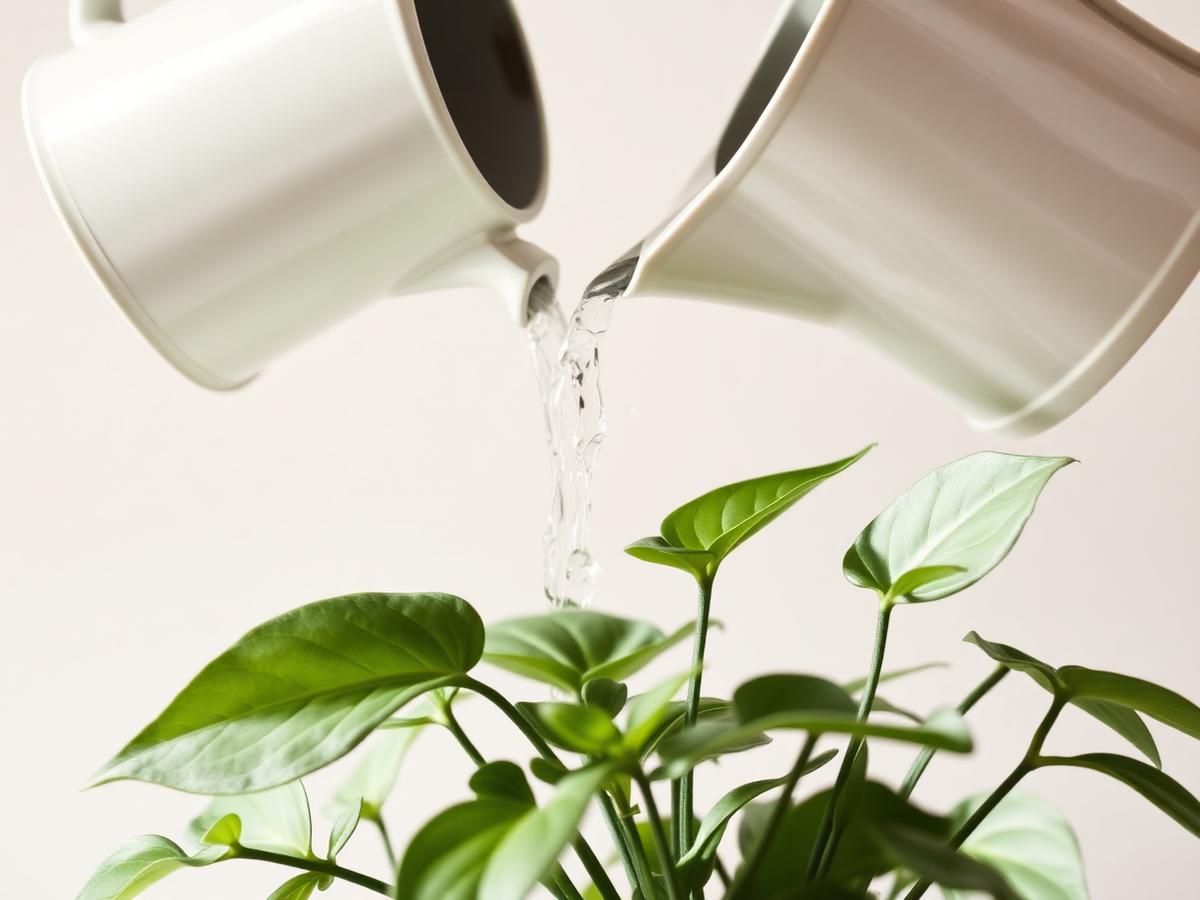
- 5Water by checking the soil with a finger — never on a fixed schedule.
Phalaenopsis orchid (moth orchid)
The most common Mother's Day gift plant, and the one with the best survival odds. Phalaenopsis (moth orchid) has thick strappy leaves and tall arching spikes of waxy flowers that last 8–12 weeks. They almost always come potted in clear plastic pots full of bark — the clear pot is intentional: orchid roots photosynthesise and you need to see them.
Place by a bright window with no direct midday sun (east or filtered south). Water once every 7–10 days by tipping the inner pot into a sink, soaking the bark for 10 minutes, draining fully, and returning to the cachepot. Never let the pot sit in standing water — the most common Phalaenopsis killer is root rot from a foil sleeve. Once the bloom finishes, cut the spike at the base and care continues unchanged; new spikes typically emerge 6–9 months later.
- ·Light: bright indirect — east window or 1–2 m from south.
- ·Water: soak inner pot every 7–10 days; let drain fully.
- ·Bloom lasts: 8–12 weeks. Rebloom: yes, 6–9 months later.
- ·Don't: cut healthy aerial roots, repot while in bloom, or water from the top into the crown.
Peace lily (Spathiphyllum)
Peace lilies have glossy dark green spear-shaped leaves and white spathes (those single 'flowers' are technically modified leaves around a spadix). They tolerate the lowest light of any plant on this list — medium-low indirect is fine — and they tell you when they need water by drooping dramatically and recovering within hours of a soak. That tolerance is also their problem: it makes them easy to underwater for years and easy to overwater because the foil sleeve hides the drainage problem.
Place anywhere except direct sun, water when leaves droop slightly or the top 2 cm of soil feels dry, and expect the white spathes to last 4–6 weeks. New spathes appear naturally in spring and again in autumn for a healthy plant. Full care detail in our peace lily guide.
Potted hydrangea (Hydrangea macrophylla)
Forced hydrangeas are gift plants for the bloom, not for indoor living. They're greenhouse-forced to flower in spring, sold for one big show, then expected to either move outdoors or fade. Indoors they last 3–6 weeks at best — they have huge leaves, transpire fast, and want temperatures cooler than most living rooms (they fade quickly above 21 °C).
Plan ahead: enjoy the bloom indoors for the first 1–2 weeks, place by the brightest cool window, water generously (the leaves wilt visibly when thirsty), and move outdoors after the last frost — once nights are reliably above 5 °C — to plant in the garden or keep in a large pot on a shaded balcony. Indoors past 6 weeks is a losing battle.
Kalanchoe blossfeldiana
Kalanchoe (sometimes called florist kalanchoe or flaming Katy) is a small succulent with thick scalloped leaves and dense clusters of small flowers in red, pink, orange, yellow, or white. Among the gift plants on this list it has one of the best long-term survival rates indoors — it's a true succulent, the bloom lasts 6–8 weeks, and a healthy plant will rebloom annually with the right light cue.
Place in the brightest window you have — south-facing direct sun is ideal. Water only when the soil is fully dry, which on a sunny windowsill is roughly every 10–14 days. Reblooming requires a deliberate dark-period treatment in autumn (12+ hours of complete darkness for 6 weeks) — most kalanchoes are bought, bloomed once, and quietly kept as foliage afterwards, which is also fine.
Anthurium (flamingo flower)
Anthurium andraeanum has glossy heart-shaped leaves and waxy red, pink, or white spathes around a colourful spadix — the same family as peace lilies but flashier. It's an excellent long-term houseplant, blooming on and off year-round in good conditions, and one of the most rewarding Mother's Day plants if you have a humid bright spot.
Place near a bright window without direct midday sun. Water when the top 3 cm of soil is dry, typically every 5–10 days. Anthuriums benefit from higher humidity (50%+) — a humidifier helps if your home is dry. Watch for yellowing lower leaves, which usually mean the pot is staying too wet, often because the foil sleeve was never removed.
Gerbera daisy (mini)
Mini gerberas are sold blooming in 10–12 cm pots and are functionally cut-flower replacements — tough to keep beyond 4–6 weeks indoors. They want full direct sun, evenly moist soil that's never sodden, and high air circulation. Powdery mildew on the leaves and crown rot from overwatering kill more gerberas than anything else.
Place in the sunniest window in the house. Water from the bottom (a saucer-soak for 10–15 minutes, then drain) to keep water off the crown. Deadhead spent flowers at the base. After 6–8 weeks indoors, gerberas typically decline regardless of care — the realistic plan is to enjoy the bloom and accept the short timeline, or move it outdoors after the last frost where it'll do better as a summer annual.
Mini rose (Rosa)
Mini roses look like a long-term gift but indoors they're one of the hardest plants on this list. Roses want intense direct sun for 6+ hours a day, cool nights, and high airflow — the average living-room windowsill provides none of those, and they almost always succumb to spider mites within 4–8 weeks indoors.
If you got one and want it to live: place in the brightest direct-sun window you have, check leaf undersides weekly under a loupe for spider mites, water when the top 2 cm of soil is dry (they wilt fast), and plan to move it outdoors after the last frost. A mini rose on a sunny balcony or in a sunny garden will outlive any indoor placement by years.
Forced azalea (Rhododendron simsii)
Indoor or florist azaleas are dwarf evergreen Rhododendrons forced into bloom for spring sales. They're stunning for 3–5 weeks then physically incompatible with indoor life — they want acidic soil, cool temperatures (10–18 °C is ideal), and outdoor humidity, none of which a heated home provides past late spring.
Place near a cool bright window away from radiators. Keep the soil consistently moist but never sodden — azaleas dry out and wilt fast in heated rooms. Realistic plan: enjoy the bloom for a few weeks, then move outdoors after the last frost into an acidic soil bed in part shade. Indoor-only long-term keeping is rarely successful.
Why gift plants seem to die so fast
Three reasons. First, most gift plants are bought during peak bloom — they spent months in greenhouse conditions building reserves, used those reserves to flower, and arrive at peak depletion. Second, the move from a greenhouse to a heated, dry, dim home is the single biggest stress event in a plant's life — leaf drop and a dropped flower or two is normal, not failure. Third, the foil sleeve, decorative cachepot, and gift-wrap context all hide drainage and routine care needs.
If a plant looks rough at week 3, the response is rarely emergency repotting. Move it to its species-appropriate light, slit the sleeve, water on the finger test, and wait. Most gift plants either recover by week 6 or were the kind (gerbera, mini rose, hydrangea, azalea) that were never going to last indoors regardless. See our guide to why new plants drop leaves for the normal-stress timeline.
Can I plant it outside?
For four of the eight: yes, and it's often the best move. Hydrangea, mini rose, gerbera, and azalea are outdoor plants forced into early bloom for spring sales — they thrive in a garden bed or balcony pot once the last frost has passed and night temperatures stay above ~5 °C. Acclimatise them to outdoor light gradually over 7–10 days before leaving them out permanently — see our guide on acclimating plants to spring light for the protocol.
For the other four — orchid, peace lily, kalanchoe, anthurium — keep them indoors. They can summer outdoors in shade for 6–10 weeks at room temperatures, but they're tropical plants that won't tolerate cool nights, and the long-term health benefit is small compared to the risk of forgetting to bring them in before autumn cools.