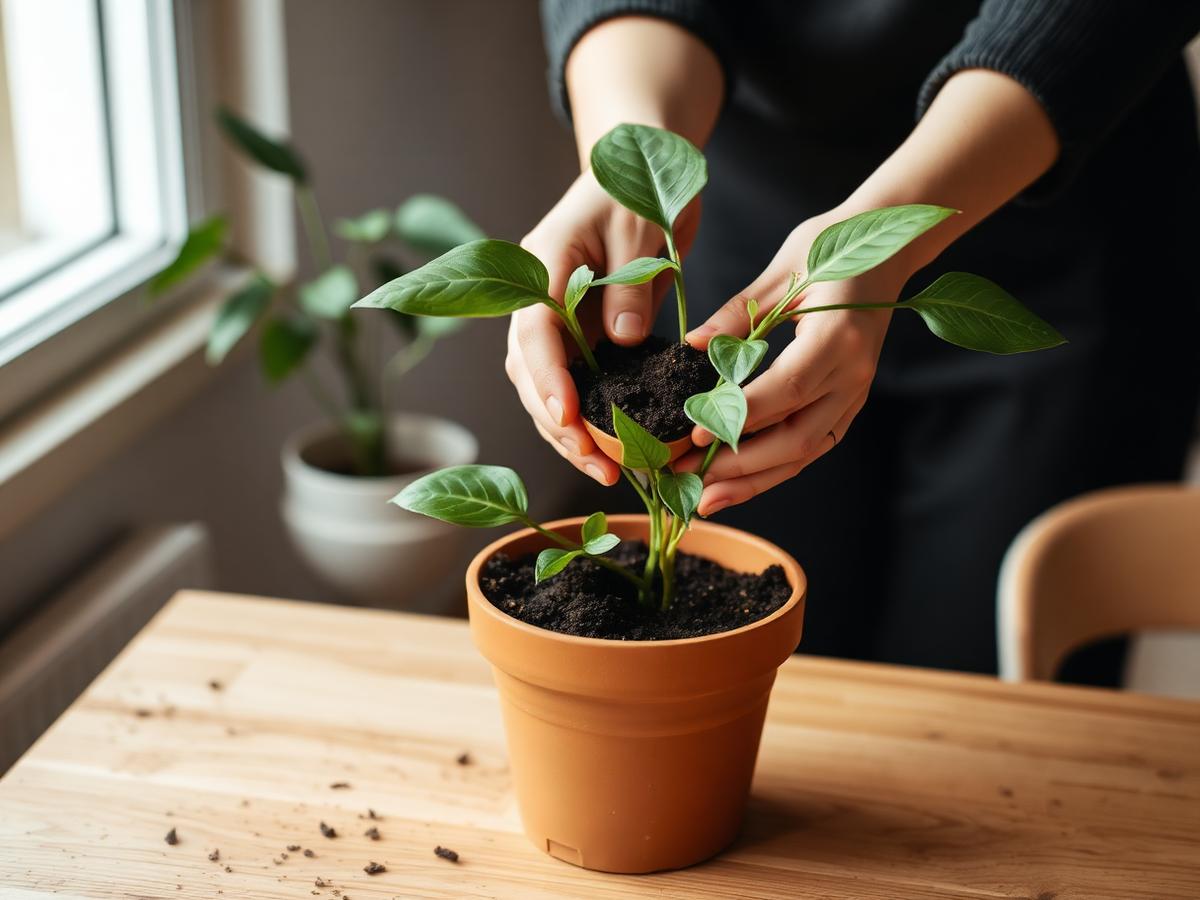
Why supermarket plants arrive stressed
A plant on an IKEA shelf has been through four environments in rapid succession: a large commercial greenhouse (warm, humid, bright, fertilised weekly), a logistics warehouse (cold, dark, several days), the shop floor (dim, dry, variable temperature), and then your car or bag home. Each transition is a micro-shock, and by the time it reaches you the plant is running on stored energy reserves.
Understanding this reframes what "care" looks like. Your job for the first month isn't to maximise growth — it's to minimise further change. Every variable you can keep stable (light, temperature, water) lets the plant rebuild. Aggressive repotting, fertilising, or relocating only adds to the stress.
Day one: inspect, don't repot
The first 30 minutes matter. Before you put the plant anywhere, do this short triage:
- 1Remove any decorative wrapping or foil — foil sleeves trap water at the pot base and drown roots within days.
- 2Check the soil with a finger. Wet through? Don't water, and place the plant somewhere ventilated to let the top dry.
- 3Slide the plant out of its nursery pot (squeeze the sides) and look at the roots. Firm and white to cream = healthy. Black, mushy, or smelling of sulphur = root rot, urgent.
- 4Look under the leaves and in the leaf axils for pests: fine webbing (spider mites), white cotton (mealybugs), brown bumps (scale), tiny black flies around soil (fungus gnats).
- 5Slip the plant back into its pot. Don't repot yet, even if the soil is poor — let it settle into your home's light and humidity first.
Week 1: the acclimation week
Place the plant in bright indirect light — the brightest spot in your home that doesn't get direct sun. A metre back from a south-facing window, or right next to an east window, works for almost all tropical foliage plants. Do not put it in direct sun immediately; greenhouse-grown leaves burn in direct sun within hours.
Keep it away from radiators, cold drafts, and air-con vents. Temperature swings are harder on a freshly-moved plant than the absolute temperature. Consistent 18–22°C is ideal.
Water only if the top 2–3 cm of soil is dry. If it arrived wet, it may not need water for 10–14 days. Over-watering in week 1 is the single most common reason a supermarket plant dies — the peaty substrate holds far more water than the plant can drink in stressed conditions.
Week 2: observe, don't intervene
Two to five older leaves yellowing and dropping in the first fortnight is normal acclimation — the plant is discarding leaves it grew under greenhouse light that it can't sustain in your dimmer indoor light. What matters is whether new growth continues. Look at the growth tip: any small new leaves forming means the plant is adjusting.
If more than a quarter of leaves drop in two weeks, or new growth is limp and underdeveloped, check the root ball again. Root rot often shows up at this point if the plant arrived wet. See the drooping plant guide for the full checklist.
Week 3: the repot decision
Most supermarket plants can wait 4–8 weeks before repotting — they prefer to repot into a stable environment. But there are three cases where you should repot in week 3:
- ·The root ball is tightly bound with almost no visible soil — roots circling the pot and emerging from drainage holes. Root-bound plants dry out unnaturally fast and can't recover with watering alone.
- ·The substrate smells sour, is compacted like bread dough, or the pot feels heavy days after watering. Poor substrate is actively killing roots.
- ·The nursery pot has no drainage hole (common with plants sold in decorative sleeves). No drainage equals death — move the plant to a pot with holes the same day you notice.
Week 4: first fertilisation (maybe)
Greenhouse plants are over-fertilised by home standards — commercial growers apply dilute fertiliser at every watering to push fast growth for sale. That feed continues to leach out of the soil for roughly 4 weeks. If you fertilise before that, you can burn the roots.
At the end of week 4, if the plant has produced new growth and soil feels normal, you can start a dilute feed (quarter-strength balanced fertiliser) every other watering during the growing season. Hold off if growth has stalled or if the plant is still stabilising.
When to give up on a supermarket plant
Some plants arrive too damaged to save. If after 4 weeks the plant has lost more than half its leaves, the stem feels soft or darkens below the soil line, or there's no new growth and the root ball is largely black, it's unlikely to recover. Composting or discarding is a valid decision — the plants are cheap, and persisting drains time that would be better spent on a new, healthier specimen.
A practical rule from years of rescues: if a plant cost €8 and has spent three weeks visibly dying, buying a healthier replacement is often the right call. Supermarket plants are a great way to start, not a sunk cost to defend.