What 'shine' actually is on a plant leaf
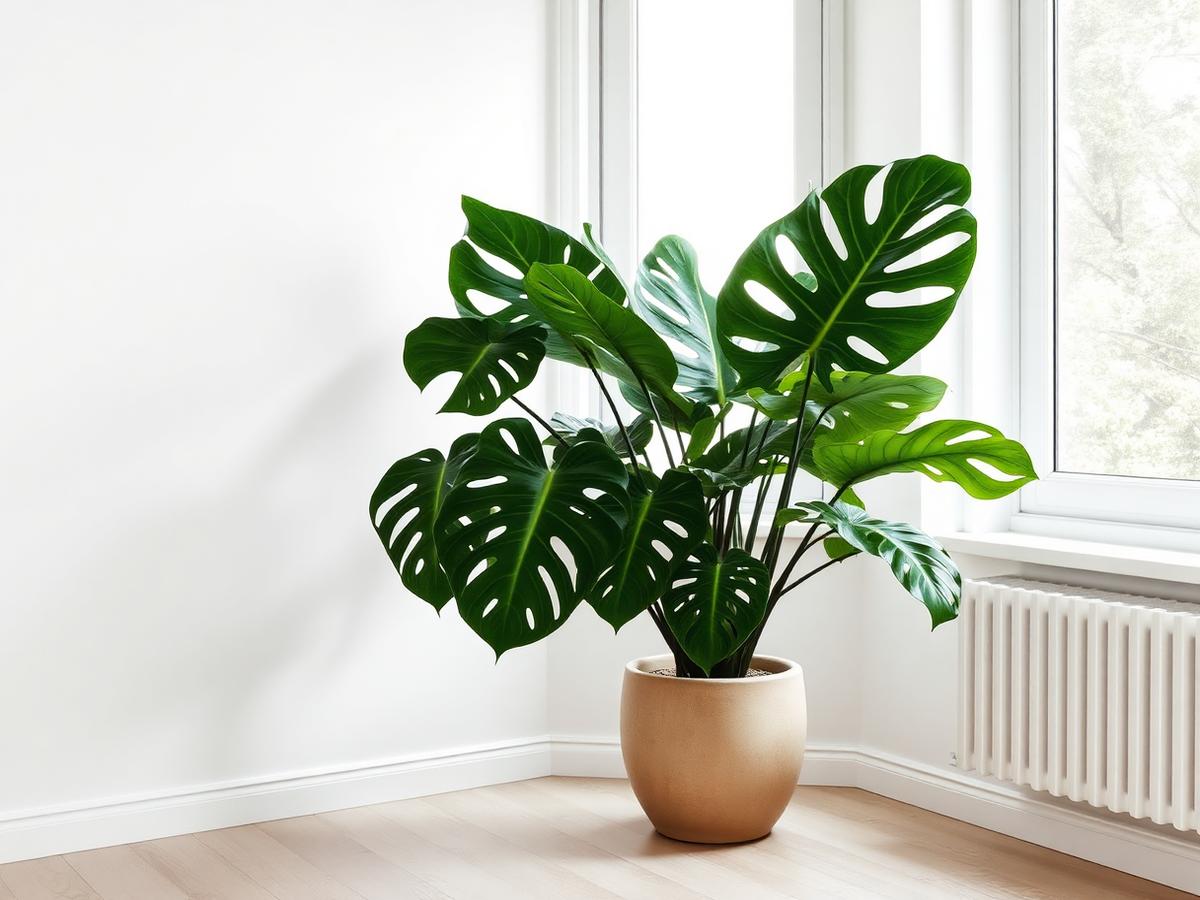
The glossy finish on a healthy houseplant leaf is the cuticle — a thin waxy layer the plant secretes onto the upper leaf surface to limit water loss and reflect excess sunlight. On species like Ficus elastica (rubber plant), Anthurium clarinervium, or Philodendron gloriosum the cuticle is thick and visibly polished; on softer species like calathea or fern it is thinner and reads more matte. Either way, the shine is structural — the plant builds it, and the only thing cleaning needs to do is keep it visible.
Anything you put on top of the cuticle is, by definition, between you and the shine you are trying to expose. Leaf-shine sprays, oils, milk, and waxes all add a coating that is initially glossy but quickly attracts and holds airborne dust. Within a week or two the leaf is duller than it was before treatment, because instead of clean cuticle it is now coated film holding a fresh layer of particulates.
The functional cost is more serious than the cosmetic one. The leaf surface is studded with microscopic pores called stomata that open and close to exchange CO₂, oxygen, and water vapour. A film thick enough to be visibly glossy is also thick enough to partially occlude stomata. Field studies on coated houseplant leaves consistently show photosynthesis drops of 5–20% — and on plants in already-marginal indoor light, that drop is the difference between a plant that grows and one that just survives.
The damp microfibre method (the gold standard)
A damp microfibre cloth and distilled or filtered water is the simplest and best leaf-cleaning method by every measure: it removes dust mechanically, leaves no residue, costs nothing after the cloth, and exposes the cuticle's natural shine. Distilled water matters in hard-water areas — tap water leaves visible mineral spots on the leaf as it dries, especially on dark-leaf species like rubber plant or fiddle-leaf fig.
The technique: support the leaf from beneath with one hand, wipe gently from the petiole outward to the tip with the damp cloth in the other. Two passes per leaf — one to lift the dust, one to dry. Re-wet and re-fold the cloth between plants to avoid moving dust between specimens. A single cloth handles a 30-leaf room cleaning in 15–20 minutes.
On smaller-leaved or more delicate plants — calathea, maranta, fittonia — substitute a soft watercolour brush or a plant-grade dust brush for the cloth. The mechanical principle is the same; the gentler tool just suits the surface.
The shower method (for plants too big for a cloth)
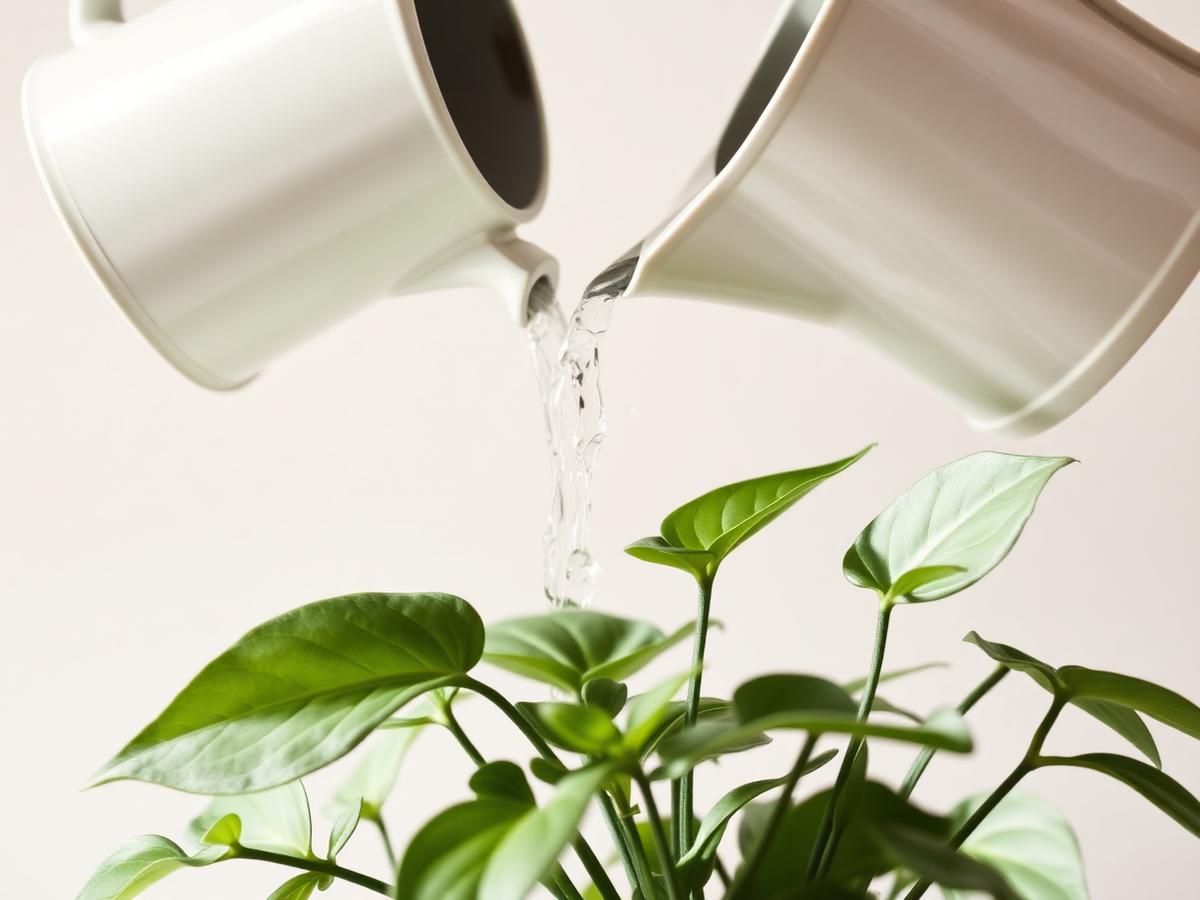
A lukewarm shower handles plants with too many leaves to wipe one at a time, or with leaf surfaces too soft for a cloth. Move the plant to the bathroom (or, for outdoor-tolerant species, the balcony), set the shower to lukewarm — 18–22 °C, never cold — and let water run over the foliage at gentle pressure for 3–5 minutes. The combined effects of mechanical rinse and leaf-temperature warming are surprisingly effective at lifting weeks of accumulated dust.
Two cautions. First, support the soil from washing out of the pot — either tilt the pot under the spray or temporarily wrap a plastic bag around the soil surface. Second, do not put the plant back in direct sun while wet — droplet-focused sunlight can scorch leaves before they dry. Let the plant drip-dry in indirect light for 30–60 minutes before returning it to its usual spot.
For plants with crowns vulnerable to crown rot — African violet, Saintpaulia, some calatheas — keep water off the crown by aiming the spray downward at leaf level only. Better yet, skip the shower for these species and stick to the wipe.
Olive oil, coconut oil, mayonnaise: why they fail
These three rotate through plant-care content as 'natural leaf shine' tips for the same reason: they make a leaf glossy on contact, and the result photographs well. The problem is not that they fail to shine the leaf in the moment — they do. The problem is what happens over the following two weeks. Plant-grade and food-grade oils sit on top of the cuticle and attract every airborne particulate the leaf is exposed to. Within 5–10 days the leaf is duller than its untreated baseline, and the only way to fully remove the oil layer is a soap wash that needs separate care to avoid leaving residue itself.
The functional cost is worse. A 0.1–0.2 mm film of plant oil partially blocks stomata across the leaf surface, and unlike water, oil does not evaporate. Stomatal conductance drops, transpiration drops, photosynthesis drops, and the plant's overall growth rate slows. On a high-light healthy plant the cost is small and recoverable; on a marginally-lit indoor plant it is the difference between net positive and net negative carbon balance.
Mayonnaise is olive oil with extra steps. The dairy and emulsifier components add a thin protein-and-fat layer that not only blocks stomata but also serves as a substrate for fungal growth in humid rooms. Skip it.
Milk on plant leaves — the half-truth
The 'milk on leaves' tip has a kernel of validity that is usually misapplied. Skim milk is mildly antifungal — the lactic acid bacteria and proteins create a surface environment that suppresses some powdery mildew species — and a dilute milk wipe followed by a water rinse can leave a clean leaf with a temporary natural shine. The problems start when the milk is left on without rinsing.
Unrinsed milk on a leaf turns rancid within 24–48 hours at room temperature, leaves a sour-smelling film on the leaf surface, and provides a substrate for mould growth. The shine is real for a few hours; the consequence over the following week is a duller leaf with a faint biological odour, sometimes accompanied by visible fungal patches.
If you want to use the milk method correctly: mix 50:50 skim milk and distilled water, wipe sparingly onto the leaf with a microfibre cloth, leave for 20–30 minutes, then wipe again with a clean water-only cloth to remove all residue. The end result is a clean leaf with no remaining film — equivalent to the plain microfibre method but with mildly antifungal benefit. If you skip the rinse step, you have done damage rather than cleaning.
Commercial leaf-shine sprays: what they're made of and why to skip
Most commercial leaf-shine sprays are some combination of mineral oil, silicone polymer, and a volatile carrier solvent. They produce a high-gloss finish on contact, the carrier evaporates within minutes, and the silicone or oil layer remains on the leaf for weeks. The cosmetic effect is immediate; the functional cost is the same as oil — partial stomatal occlusion and accelerated dust accumulation.
There is no formulation of commercial leaf-shine spray that solves this problem. Some 'natural' brands replace mineral oil with carnauba wax or jojoba oil; the substituted ingredients shine differently but still produce a film that blocks stomata. The Royal Horticultural Society's general advice on indoor plant care is consistent on this — sprays of any kind should be avoided, and a damp cloth is the recommended cleaning method.
The one exception worth knowing about is photographic plant work — for a single staged photo, a brief application of leaf shine spray is reversible if you wipe the leaf with a soap-water cloth within 24 hours. For routine care, there is no version of this product that helps the plant.
Banana peels: harmless myth or actual harm?
The 'wipe a leaf with the inside of a banana peel' tip circulates as a free, natural leaf shine. It does shine the leaf briefly — the inside of a banana peel contains plant oils, traces of starch, and some surface waxes that transfer onto the leaf and produce a low-grade gloss. The harm sits between the cosmetic-only and the actively-damaging end of the spectrum: the residue is a thin film that traps dust and partially occludes stomata, much like olive oil but at lower concentration.
It is not a catastrophe — a banana-peel-wiped leaf is not in distress — but it is also not better than the damp-cloth method, and it leaves a sticky residue that pulls fresh dust within days. If you want to use a banana peel productively, compost the peel rather than rubbing it on a leaf; the same nutrients reach the same plants more usefully through the soil.
When a leaf is too dirty to wipe — the soak technique
Sometimes a leaf has accumulated months of dust, smoke residue, or hard-water film that a single damp cloth pass cannot lift. For these cases, soak rather than scrub: lay the leaf flat over a soft towel, place a folded cloth saturated with lukewarm distilled water over the leaf for 5–10 minutes, then wipe gently. The hydration loosens the residue without abrading the cuticle.
For very heavily soiled large-leaf plants — fiddle-leaf fig, monstera, alocasia — the alternative is the shower-and-wipe combination from the city-dust guide: 5 minutes of lukewarm shower to lift the bulk of the dust, then a follow-up microfibre wipe once dry to clean any remaining film. This is also the right protocol for plants that have been near kitchens with cooking oil residues, or in rooms where someone smokes — neither of which lifts off with a single dry wipe.