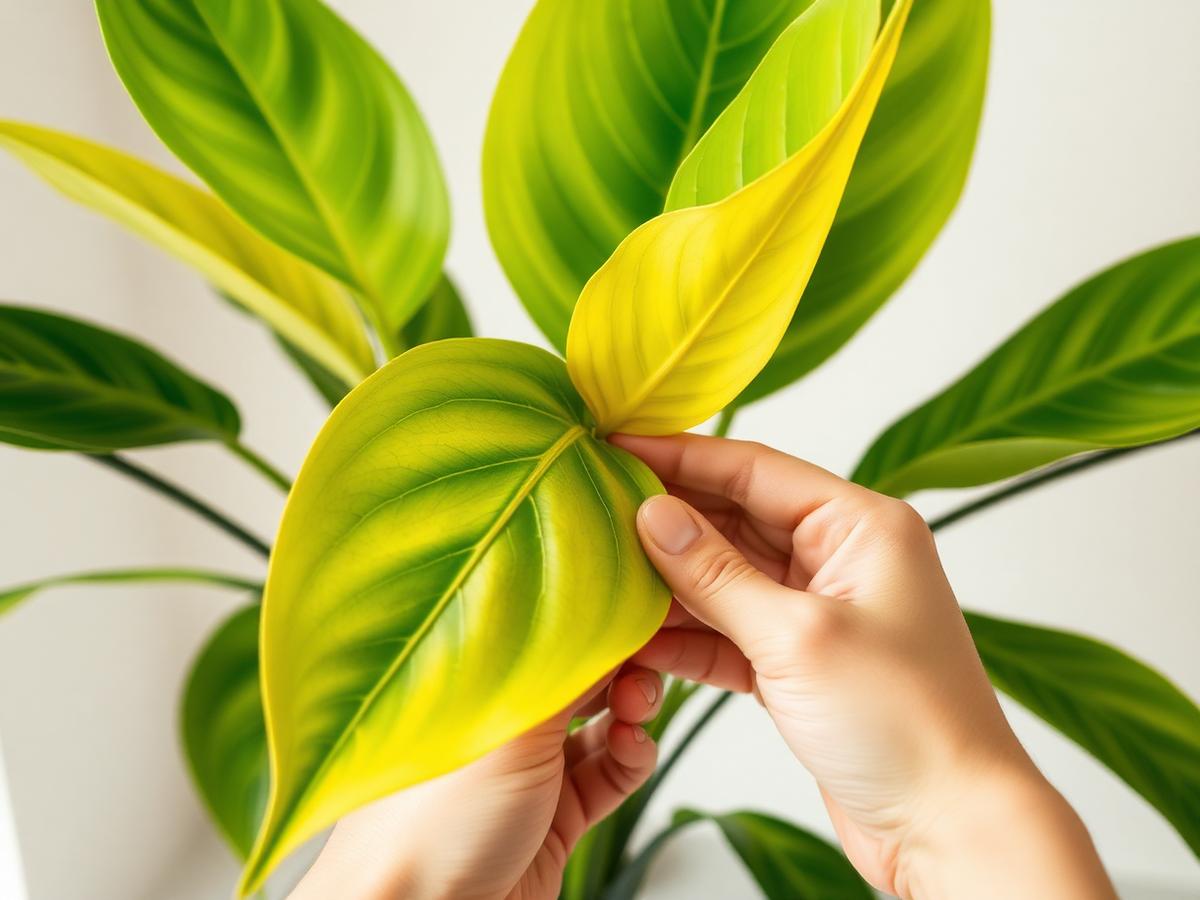
What crown rot looks like
An African violet with crown rot has a soft, sometimes blackened, sometimes water-soaked centre — the youngest leaves at the heart of the rosette go limp first, then darken, then collapse into a mushy mass that can have a faintly sour smell. The outer ring of older leaves often looks fine for the first few days, which is what fools owners; by the time the rot is obvious from across the room, the central meristem is already dead.
Distinguish from cold damage (sharp glassy patches on outer leaves, often on the side of the plant facing a winter window) and from natural senescence (only the lowest 1–2 outer leaves go yellow then translucent, and the centre stays firm). Crown rot is the only failure mode that hits the centre of the rosette first.
Why African violets are uniquely vulnerable
Saintpaulia leaves are covered in fine trichomes — the velvet hairs that give the plant its texture. Those hairs are hydrophobic in their natural state, but when water lands directly on them it gets trapped in the spaces between hairs and beads up against the leaf surface. On any other houseplant, that water would evaporate within an hour. On a Saintpaulia in a cool damp bathroom or kitchen, it can sit for half a day, and where the trapped water meets the meristem at the centre of the rosette, conditions are ideal for soil-borne fungi to colonise tissue they normally cannot reach.
The pathogens themselves — *Pythium ultimum*, *Phytophthora cryptogea*, and *Rhizoctonia solani* — are nearly always present in commercial potting mixes at low levels. They are kept in check by the plant's own defences and by oxygen in unsaturated soil. A wet crown removes both protections at once: it provides liquid water for spore germination and it sits directly on the most vulnerable tissue the plant has. The University of Minnesota Extension flags this as the single most common reason African violets die in homes.
The 60-second diagnostic
Look at three things: where on the plant the damage starts, the firmness of the central crown, and what was happening to the plant in the days before symptoms.
- 1Centre of rosette is soft, blackened, or mushy; outer leaves still firm? → Crown rot. Days, not weeks, of treatment window.
- 2Outer leaves only — limp, yellowing, or translucent — centre still firm? → Overwatering or natural senescence; see overwatered vs underwatered houseplant.
- 3Sharp glassy patches on outer leaves, often after a cold draught? → Cold damage; move away from window and remove damaged leaves.
- 4Pale ring spots or yellowed patches on leaves where cold water touched? → Cold-water leaf marking — not crown rot, but a watering technique problem the bottom-water fix also solves.
Why top-watering is the killer
Top-watering with a watering can is fine for most houseplants and lethal for African violets. The two failure modes — crown rot and cold-water leaf marking — both come from water hitting the leaves. Crown rot is the catastrophic one; leaf marking (pale ring patches where cold water touched the surface) is cosmetic but persistent and ugly.
The fix is mechanical: never let water touch the leaves or the crown. Three methods deliver water to the soil without touching the plant: bottom-watering, wick-watering, and self-watering pots designed for African violets. All three are reliable; the choice is convenience.
The bottom-watering routine
Bottom-watering is the simplest method and works for any African violet in any pot with a drainage hole. Fill a shallow tray with 2–3 cm of room-temperature water, set the pot in the tray, and wait 20–30 minutes. The soil draws water up through the drainage hole; when the topsoil feels barely damp to the touch, the rootball has fully rehydrated. Lift the pot out, drain for 10 minutes, and return it to its spot.
Frequency depends on conditions. In a typical bright living room at 21 °C and 40% humidity, expect to bottom-water every 5–10 days. Use the bottom-watering houseplants guide for the wider technique. Two African-violet-specific tweaks: use room-temperature water (cold water marks the leaves and shocks roots — see tap water for houseplants), and once a month top-water gently around the soil edge to flush accumulated salts. African violets are sensitive to mineral buildup; if your tap is hard, switch to filtered or rain water — see hard water and houseplants.
- 1Fill a shallow tray with 2–3 cm of room-temperature water (18–22 °C).
- 2Set the pot in the tray and wait 20–30 minutes.
- 3Lift out when the topsoil feels barely damp; drain 10 minutes.
- 4Return the pot to its spot. Empty any remaining water in the tray.
- 5Once a month, flush the soil with a gentle top-water around the edge — never on leaves.
The wick-watering technique
Wick-watering is the upgrade for anyone with multiple African violets, or for people who travel and need a system that delivers water reliably for weeks. A piece of synthetic yarn or polyester cord runs from the bottom of the soil through the drainage hole into a reservoir below; capillary action keeps the soil at a constant moisture level. The plant takes water at exactly the rate it needs it, and the crown stays bone-dry forever.
Set up: thread a 15 cm length of acrylic or polyester yarn through the drainage hole before potting (or through new soil if the plant is already potted), so 5 cm sits inside the soil and 10 cm dangles below. Place the pot on a small upturned saucer inside a deeper container — a yogurt pot inside a jar works — so the wick reaches a reservoir of room-temperature water. Top up the reservoir every 1–4 weeks depending on size. Many growers run wick-watering year-round and report fewer crown rot incidents per plant per year than any other watering method.
Use synthetic fibre, not natural — cotton and wool decompose in a few months and stop wicking. Use a 50/50 mix of standard African violet potting mix and perlite or vermiculite; pure peat clogs the wick. The technique works best for plants in 8–12 cm pots; very small plants (under 6 cm) over-saturate.
If the crown is already mushy: leaf propagation
Once the central crown is soft and blackened, the original plant cannot be saved — the meristem is dead, and even cutting back to healthy tissue leaves a plant with no growing point. The rescue is propagation from a healthy outer leaf, which is unusually easy for Saintpaulia and produces a genetically identical plant within 4–6 months.
Choose a healthy mature outer leaf — not the youngest, not the oldest — with a firm green petiole. Cut the petiole cleanly to about 3 cm with a sterilised blade. Insert the cut petiole into a small pot of moist (not wet) African violet mix, with the leaf surface just above the soil line and angled slightly. Cover loosely with a clear bag or dome to keep humidity high; uncover daily for 10 minutes for airflow. Within 4–6 weeks, tiny rosettes (plantlets) emerge from the base of the petiole. Once each plantlet has 3–4 leaves, separate gently and pot up individually. The original parent leaf eventually shrivels but the plantlets are full African violets and flower within 8–14 months.
See how long do cuttings take to root for the wider context — African violet leaf propagation is one of the few times soil propagation is far more reliable than water rooting. For the broader propagation logic, see propagation: water vs soil.
When crown rot has spread to the soil
A pot that just lost a plant to crown rot has Pythium and Phytophthora throughout the soil. Reusing that soil for a new African violet — or any other plant in the same pot — is the most common cause of repeat losses. Bin the soil and wash the pot in dilute bleach (10% solution, rinse thoroughly) before reusing. The pathogens are nearly always present in trace amounts in fresh commercial potting mix, but actively colonising soil is a different problem. The same protocol applies if you have other African violets in the same room: isolate the affected plant immediately, do not share watering trays, and wash hands between plants.
Other failure modes that look like crown rot
Two other failure modes can look superficially like crown rot but have different causes and different fixes. The first is bacterial soft rot from Erwinia / Pectobacterium — a faster-spreading, foul-smelling rot that follows a wound or a recent repotting. See mushy black stems on houseplants for the diagnostic and isolation protocol. The second is general overwatering rot from below — the lowest leaves yellow and drop first while the crown stays firm; see root rot in houseplants.
African violets received as gifts (Mother's Day, hospital visits, retirement gifts) often arrive in a foil-wrapped pot with no drainage and a watering can routine the giver expected. Within a few months, almost every one of them develops crown rot or root rot from this combination. See how to care for a Mother's Day plant for the post-gift transition that prevents the standard 6-month decline.