What repotting shock actually is
When you tip a plant out of its pot, even gently, you damage the layer of microscopic root hairs that does most of the water and nutrient uptake. These root hairs are single-cell projections from the fine roots; they are fragile, they shear off when the root ball moves, and they take 2–4 weeks to regrow. While they regrow, the plant cannot pull water as efficiently as before — even though the soil is moist and the visible roots look fine.
The result is a plant in mild drought stress despite a damp pot. Leaves wilt or droop on the warmest part of the day, lower leaves yellow as the plant scavenges nitrogen from old tissue, and new growth stalls because the energy that would push new leaves is being spent rebuilding the root system. None of this means the plant is dying — it means the recovery clock has started.
How to tell shock from a real problem
Shock and root rot can look superficially similar — both produce wilting and yellow leaves — but the underlying conditions are opposite. Shock symptoms appear within a week of repotting, the soil dries at a normal rate, and the plant's stems and crown stay firm. Root rot symptoms can appear at any time, the soil stays soggy for days after watering, and the stems near the soil line feel soft or hollow. If you can lift the pot and the soil hasn't dried at all in 7–10 days, the problem is overwatering, not shock.
Most shock-versus-rot mistakes happen because the response to shock and the response to rot are opposite. Shock wants stable conditions and patience; rot wants you to unpot, trim, and dry out. Pick the wrong response and you compound the original problem. Use the symptom checklist below before deciding.
- ·Wilted leaves but firm stems and a pot that dries normally = shock.
- ·Wilted leaves with soft mushy stems near the soil and damp pot = root rot, not shock.
- ·Lower leaves yellowing one or two at a time over 2–3 weeks = shock or normal turnover.
- ·Multiple leaves yellow + soft + soil sour-smelling = overwatering or rot, not shock.
- ·New growth has stopped but old leaves look fine = shock — wait it out.
Why your plant might be hit harder than mine
Three things determine how badly a plant takes repotting. The first is species: rainforest-understory plants like calathea, anthurium, fern, and fiddle leaf fig have delicate fine root systems and shock visibly. Tougher species — pothos, snake plant, ZZ, philodendron, monstera — barely register being moved.
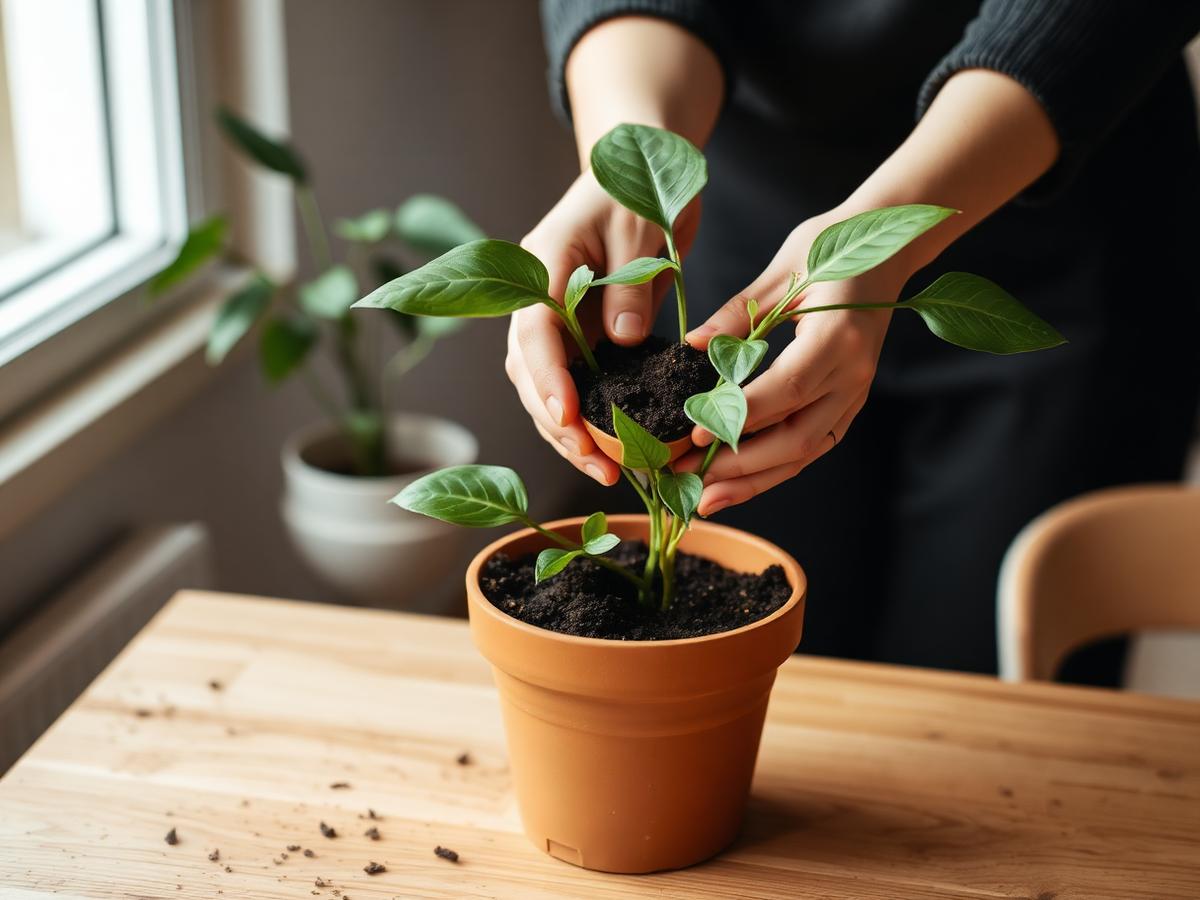
The second is what you did to the root ball. A simple slip-pot into a slightly larger container with no root disturbance produces minimal shock. Teasing apart a root-bound mass, shaking off old soil, root-pruning, or bare-rooting all expose the plant to substantially more damage and longer recovery. The most common new-plant mistake is bare-rooting a healthy plant 'to give it a fresh start' — see should you repot a new plant immediately for why this almost always backfires.
The third is timing. Repotting in active growth (spring, summer) gives the plant the warm bright conditions needed to rebuild roots fast. Repotting in late autumn or winter — when growth is already slow — extends the shock window from 2–3 weeks to 4–8 weeks because the plant has fewer photosynthate reserves to spend on root regrowth.
The 4-week recovery routine
The aim of recovery is to keep conditions stable — not to add intervention. Plants in shock are best served by being left alone, given just enough water to keep the new soil from drying completely, and protected from any change that would compound the stress. Skip fertiliser, skip moving the plant, skip changing the light level, and skip 'helping' it.
- 1Day 0 (right after repotting): water thoroughly until water runs from the drainage hole. This settles the new soil around the roots — not because the plant needs the water, but because air pockets dry surface roots fast.
- 2Days 1–14: leave the plant exactly where it was. Same light, same room, same shelf height. Water only when the top 3–4 cm of soil is dry — typically every 7–14 days depending on species.
- 3Days 7–28: expect 1–3 lower leaves to yellow and drop. Do not pluck them — let them detach naturally. Plucking pulls on stem tissue still under stress.
- 4Skip fertiliser entirely for the first 4 weeks. The plant cannot use the nutrients while it rebuilds roots, and excess salts in fresh substrate make osmotic stress worse.
- 5Week 4 onward: when you see a new leaf or visibly active growing tip, the recovery is over. Resume normal watering and add a half-strength feed at the next watering.
What not to do (the four common mistakes)
Repotting shock turns into permanent damage almost always through well-intentioned interventions. The four mistakes below cause more shock fatalities than any actual handling damage.
First: extra water. A wilting plant after repotting looks thirsty, but the soil is usually still damp from the watering-in. Adding more water keeps soil saturated past the recovery window and tips shock into rot. Always check the soil with a finger 3–4 cm down before watering a recently repotted plant.
Second: fertiliser. Plants in shock cannot use the nutrients, and concentrated salts in the soil make it harder for damaged root hairs to take up water (the same osmotic problem that causes salt-burn brown tips). Skip fertiliser for at least 4 weeks after repotting.
Third: stronger light. Moving a wilting plant into brighter light to 'help it photosynthesise' increases transpiration when the plant cannot replace water fast enough. The result is more wilting and faster leaf damage. Keep light levels equal to or slightly lower than where the plant was before repotting.
Fourth: re-repotting. Tipping the plant back out to inspect the roots two days after repotting is the single most damaging intervention possible. Every disturbance restarts the root-hair regeneration clock. Trust the original repot for at least 4 weeks before considering touching the root ball again.
When the symptoms mean something worse
Most repotting symptoms are shock — but a few signs mean the situation has tipped into a real problem. The decision points below tell you when to escalate from 'wait and watch' to 'unpot and inspect'.
If the plant is still no better at week 6, with no new growth, no recovery in leaf turgor, and the same wilted appearance as week 1, the issue is likely either rot, severe root damage, or a wildly mismatched substrate. Tip the plant out and check the roots — healthy roots are pale and firm; mushy black roots mean rot, dry papery roots mean the substrate dried out completely at some point. The treatment in either case is in our root rot guide.
If new growth appeared but is small, pale, or distorted, the substrate or pot may be wrong for the species. Aroids in dense water-retentive soil, succulents in peaty mix, or any plant in a pot that's two sizes too big all produce this pattern. Repotting again — into the right mix, at the right pot size — is appropriate at this point because the original repot was the actual problem, not the shock.
Preventing shock on the next repot
The single biggest predictor of mild versus severe shock is how much the root ball was disturbed. A 'slip-pot' — sliding the intact root ball straight into a slightly larger pot with fresh substrate around the sides — produces almost no shock. Shaking soil off, teasing apart roots, or bare-rooting a healthy plant produces noticeable shock that lasts 2–6 weeks. Save the aggressive techniques for plants that need them: severely root-bound, declining from old substrate, or showing root rot.
Time the repot to the plant's growth season. For most tropical houseplants in temperate latitudes, that means March through August. Repotting on a sunny weekend in early May lets the plant rebuild roots in 2 weeks; repotting on the same plant in mid-November stretches that to 6+ weeks. See our pillar when to repot houseplants for the seasonal calendar and signs that a repot is genuinely overdue.