What 'low light' actually means
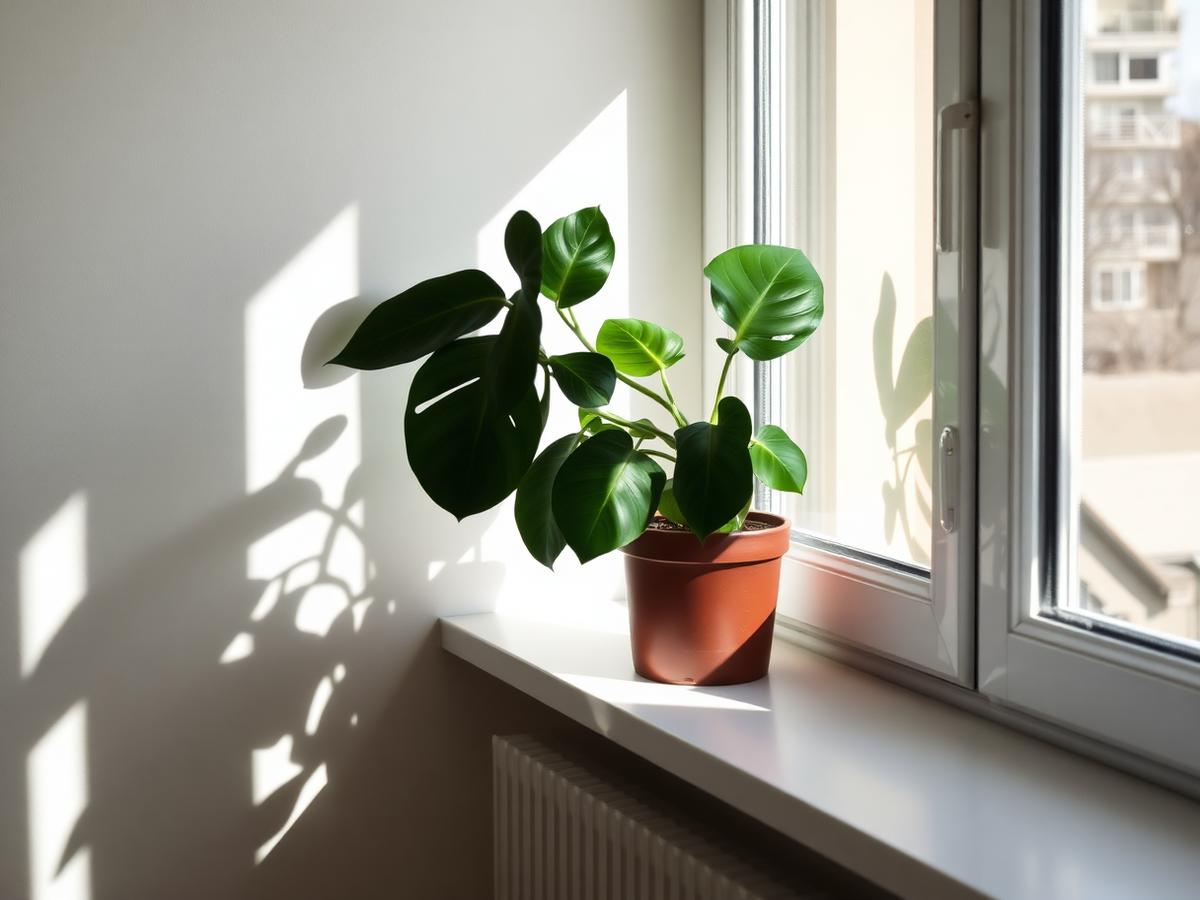
Plant writers, nurseries, and plant tags use "low light" loosely — usually to mean "anywhere that isn't a sunny window." In horticulture terms, low light is 100–500 lux — a spot where you would reach for a lamp to read during daytime. A north-facing windowsill with a clear sky view is around 2,500–5,000 lux on a bright day; that's medium indirect light, not low light. The genuinely low spots are interior rooms, corridors, bookshelves two metres from the window, and windowless bathrooms.
The practical test: hold a phone with a lux meter app at the plant's leaf level at noon on a clear day. Under 500 lux, you are in genuine low-light territory — and the list of plants that thrive there is shorter than most listicles suggest. Almost everything else labelled "low-light tolerant" actually wants 1,000 lux or more.
Snake plant (Dracaena trifasciata) — the benchmark
Snake plants survive 100 lux and shrug off months of drought. They are almost impossible to kill with neglect — their only vulnerability is overwatering in cold rooms. In a dim north-facing hallway, a snake plant will put out one or two new leaves per year and remain green and upright. Variegated cultivars ('Laurentii', 'Moonshine') lose variegation fastest in low light; for dim spots, stick to the plain green forms.
See the full snake plant care guide for watering and propagation, or the varieties identification chart if you're deciding between cultivars.
ZZ plant (Zamioculcas zamiifolia) — the lazy person's plant
ZZ plants store water in underground rhizomes, which makes them both drought-proof and genuinely low-light-tolerant. Below 200 lux, growth slows to a crawl but the plant stays healthy and glossy-green for years. New growth comes in as fresh shoots rising from the soil, rather than extending existing stems, so the plant doesn't go leggy in dim conditions the way pothos does.
The dark-leaved cultivar 'Raven' holds up well in low light too, but grows noticeably slower than the standard green form. Toxic to pets if chewed — keep away from cats that nibble leaves.
Pothos (Epipremnum aureum) — the tolerant trailer
Golden pothos is the most forgiving trailing plant for dim rooms. Below 500 lux, growth slows and variegation fades (the yellow streaks revert to plain green as the plant pulls more chlorophyll to cope with low light), but it stays alive and continues to put out the occasional new leaf. For deep shade, the Jade Pothos cultivar (no variegation) is the most reliable, since there is no variegation to lose.
Pothos is also the plant most likely to go leggy in low light — internodes stretch toward the window. Rotate the pot weekly to keep the vine even. Full care in the pothos guide.
Heartleaf philodendron (Philodendron hederaceum)
Pothos's close cousin — a trailing vine with heart-shaped leaves — and often sold interchangeably at garden centres. It tolerates lower light than pothos (roughly 200 lux upward), though leaves may darken and internodes lengthen. The 'Brasil' cultivar keeps its yellow-green variegation better in dim rooms than most variegated pothos. See pothos vs philodendron to tell them apart at the shop.
Chinese evergreen (Aglaonema)
Aglaonemas were bred for office interiors — entire cultivars are selected for survival under fluorescent tubes. The silver and red variegated cultivars ('Silver Bay', 'Red Valentine', 'Lady Valentine') hold their colour in low light better than almost any other variegated houseplant. They need slightly more water than snake plants or ZZs but tolerate irregular watering. Toxic if chewed.
Cast iron plant (Aspidistra elatior)
The plant Victorian householders used when gaslights blackened everything else. Cast iron plant thrives in 100–300 lux, handles long dry spells, and lives essentially forever in the same pot. Growth is slow — one or two new leaves per year in a dim corner — but the leaves are large, glossy, and architectural. A genuine low-light champion that deserves more shelf space than it gets.
If your dim corner is too dark for any of the soil-grown plants on this list — say, a 3 m² interior bathroom or a corridor with no window — the soilless option worth considering is mounted air plants (Tillandsia). Mesic species like T. brachycaulos and T. juncea hold colour at 5,000+ lux indirect, sit on a wall, and need no soil at all. Not a long-term low-light fix, but a quiet decorative option a snake plant cannot match.
Peace lily (Spathiphyllum)
Peace lilies tolerate 200–500 lux and will even flower in medium shade — the only common low-light plant that blooms reliably indoors. The white spathes last 3–6 weeks. Peace lilies wilt dramatically when thirsty and recover within hours of watering, which makes them unusually readable plants for beginners. Toxic to cats and dogs; cover in the pet-safe list as a plant to avoid if you have chewers.
Parlour palm (Chamaedorea elegans)
One of the few palms that tolerates genuine low light — 200 lux upward — and the only palm on the ASPCA's non-toxic list, which makes it a good pick for homes with cats or dogs. Slow-growing but reaches 1.5 m over several years. Prefers evenly moist soil and can go brown at the tips if tap water is heavy on minerals.
Monstera adansonii (Swiss cheese vine)
Unlike its cousin Monstera deliciosa, which needs bright indirect to fenestrate properly, Monstera adansonii holds up surprisingly well at 500–1,000 lux. Leaves will be smaller and holes less dramatic, but the vine continues to grow and drape. See the monstera species comparison if you're trying to tell adansonii from similar trailers.
Ferns (Boston, Bird's Nest, Maidenhair)
Ferns genuinely tolerate low light — they evolved as forest floor plants — but they demand constant humidity and even moisture, which most homes don't provide. Bird's nest fern (Asplenium nidus) is the most forgiving; Boston ferns (Nephrolepis) drop leaves fast in dry air; maidenhair ferns (Adiantum) are notorious for dying overnight if you miss one watering. For humid bathrooms with a small window, ferns are hard to beat — see the six ferns that survive a dim bathroom for the species-by-species breakdown. For dry centrally-heated rooms the humidity will kill them long before low light does; see the winter humidity guide for how to stabilise the room.
Lucky bamboo (Dracaena sanderiana)
Sold in water or pebbles, lucky bamboo tolerates 200 lux and neglect. It's not actually a bamboo but a close cousin of the snake plant. Water turns yellow over time — change it every 2 weeks. If planted in soil it behaves like any other Dracaena and is equally tolerant. Toxic to pets if chewed.
What NOT to buy for a low-light room
Most popular 'Instagram' houseplants need bright indirect light and will slowly decline anywhere darker. If you're filling a dim corner, avoid these regardless of how often they turn up on 'low-light-tolerant' lists.
- ·Fiddle leaf fig (Ficus lyrata) — drops leaves within weeks below 1,000 lux. Full needs in the fiddle leaf guide.
- ·Calathea / prayer plants — leaf markings fade and leaf curl is common in poor light. See the calathea guide.
- ·Alocasia (elephant ear) — yellows and drops leaves fast in dim rooms.
- ·Most succulents and cacti — etiolate dramatically within weeks.
- ·Croton (Codiaeum) — variegation collapses without direct sun.
- ·Herbs (basil, mint, rosemary) — need 6+ hours of direct sun or a grow light.
- ·Strelitzia (bird of paradise) — large leaves, minimum 1,500 lux to stay healthy.
Three mistakes that kill low-light plants
Even the right plant fails in the wrong routine. These are the three errors I see most often in Stockholm apartments — where every plant is a low-light plant by default.
- 1Watering on the summer schedule. Low-light plants transpire slowly. They need 30–50% less water than the same plant in bright light, year-round — not just in winter. See the watering guide for the soil-moisture test.
- 2Ignoring the dust. A layer of dust on large leaves (snake plant, cast iron, peace lily) reduces photosynthesis by 10–20% — a real loss when light is already limiting. Wipe leaves monthly with a damp cloth.
- 3Expecting growth. Low-light plants survive, they don't sprint. If you're watching a ZZ plant in a dim hallway waiting for new growth, you'll wait six months. That's normal, not a problem to fix.
- 4Expecting them to clean the air. The snake-plant-cleans-the-air claim is based on a 1989 NASA study that doesn't scale to real rooms — see what the research actually shows. Keep these plants for how they look, not for what they supposedly do to air quality.
When a grow light is the honest answer
If your space has no window at all, or only a basement-level one, no plant will actually thrive — all of them will "survive" for a while, then slowly decline. A small full-spectrum LED on a timer fixes the real problem for €30–50. See do houseplants need a grow light? for what to buy and how to position it.