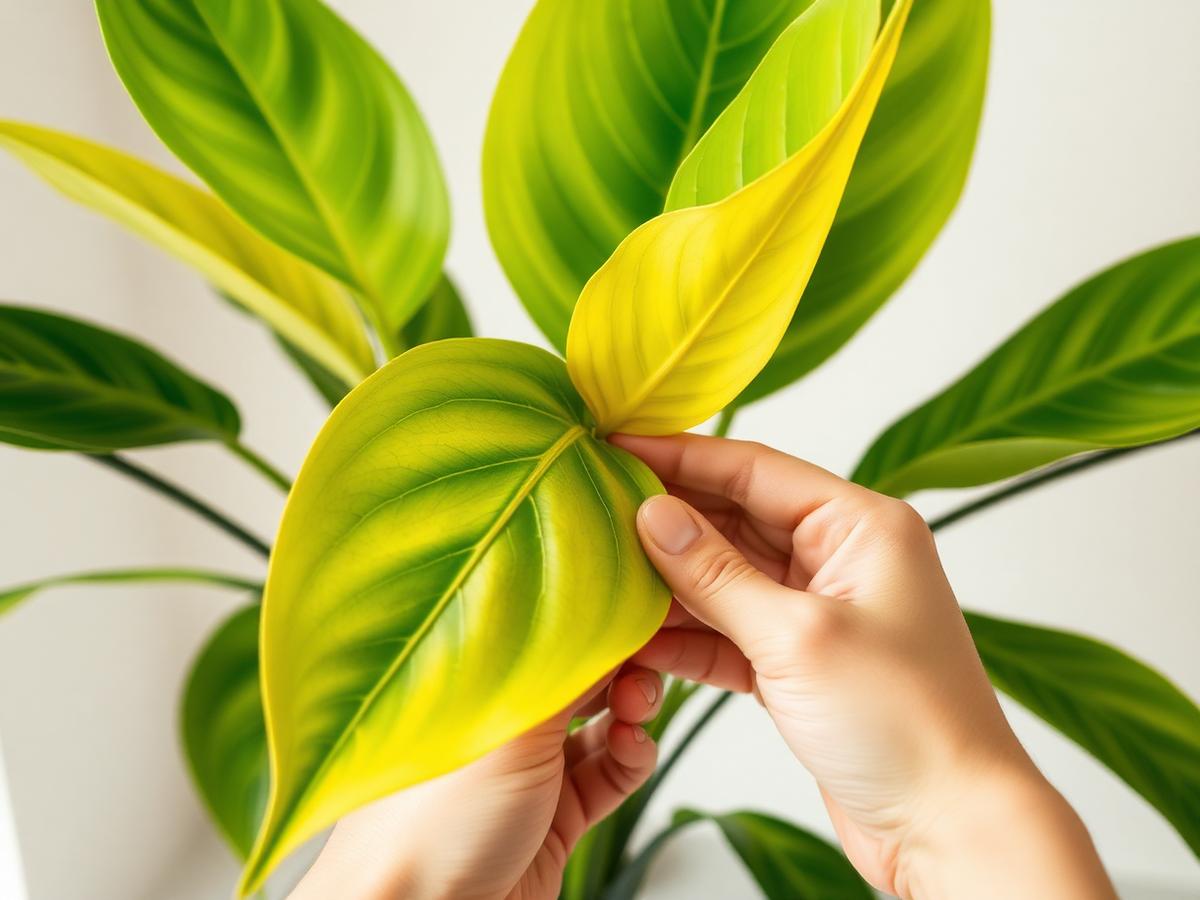
Two kinds of variegation, two outcomes
Almost all popular variegated houseplants fall into one of two genetic categories, and the difference predicts everything about how stable the variegation is.
- ·Chimeric variegation: two genetically different cell lines coexist in the same plant. Some cells make chlorophyll (green); others cannot (white/cream). The mix is unstable — any growth point can revert if the white cells lose out. Examples: Monstera deliciosa 'Albo-Variegata', Philodendron 'Pink Princess', most Variegata pothos.
- ·Genetic variegation: every cell carries the same DNA, and a stable expression pattern produces variegation. Stable across propagation, almost never reverts. Examples: Monstera 'Thai Constellation', Manjula pothos, calathea leaf patterns.
- ·Pigment variegation (third, smaller category): pattern comes from carotenoids or anthocyanins, not absent chlorophyll. Stable but light-dependent — fades in dim conditions. Examples: many Tradescantia, Stromanthe.
- ·Viral variegation: rare and not a goal — caused by tobacco mosaic and similar viruses. Avoid; the plant is sick.
Why low light triggers reversion
White and cream sectors of a variegated leaf cannot photosynthesise — they have no chlorophyll. The plant supports them with sugars made by the green sectors. In low light, the green sectors do not make enough surplus, and the plant favours non-variegated growth points where every cell can produce energy. Over months, all-green branches grow faster than variegated ones, and the plant "reverts" — really, it shifts mass toward the cells that can support themselves. See understanding light levels for the lux ranges.
The threshold is species-specific but consistent for the most popular variegated aroids: under 10,000 lux, reversion accelerates; 15,000–25,000 lux holds variegation steady or improves it; above 30,000 lux the white tissue can scorch and crisp at the edges. A bright east window or 30 cm under a grow light usually hits the target; an interior shelf 3 m from the window does not.
How to spot reversion early
Reversion happens leaf by leaf, not overnight. Each new leaf with less variegation than the previous one is a warning sign. Stop watching for total green and start watching the trend.
- ·New leaves emerging with smaller white sectors than the leaf before — the slow drift.
- ·An entire new shoot growing from a node with no variegation at all (a fully reverted branch).
- ·Faded pink or yellow on plants like Pink Princess or Pink Lemonade — pigment variegation losing intensity.
- ·Multiple consecutive all-green leaves on a previously variegated vine.
- ·The lowest, oldest leaves yellowing while new leaves stay all green — the plant is shedding the variegated tissue it cannot support.
The prune-and-keep rule
Reverted growth on chimeric varieties does not re-variegate by itself — the underlying cell layer at that node has lost the white-cell line. Once a branch goes green, every leaf from that branch is green. The fix is surgical: prune the reverted branch back to a node above the most variegated leaf you still have. The cut forces the plant to push new growth from a node that still carries the chimeric tissue, often with stronger variegation than before.
Cut decisively. Half-measures (snipping just the latest green leaf) do not work — you need to remove the entire reverted branch back to a variegated node. Sterilise scissors, cut at a 45° angle just above a node, and seal the wound with cinnamon if you are nervous. New growth typically appears within 2–6 weeks at the cut node.
- 1Identify the most variegated leaf currently on the plant.
- 2Trace its branch back to a node — that is your cut point.
- 3Sterilise scissors with 70% isopropyl alcohol.
- 4Cut at a 45° angle just above the chosen node.
- 5Use the removed cutting to propagate (it will be all green or partly variegated).
- 6Move the parent plant to brighter light — 15,000–25,000 lux for chimeric varieties.
Light is the lever — practical setups
Even with aggressive pruning, reversion returns if light is too low. Place chimeric variegates in the brightest indirect spot in your home — an east window 30–60 cm in, a south or west window with sheer curtaining, or directly under a 20–40 W full-spectrum grow light. Use a phone lux meter to confirm; visual brightness is unreliable for this judgement.
Rotation matters. Variegated leaves photosynthesise asymmetrically, so plants tend to lean toward the light and produce more variegation on the lit side. Rotate the pot a quarter-turn weekly to balance growth, especially during the active growing season. The Thai Constellation and other genetically stable variegates are more forgiving — they need less light and revert less — but Albo, Pink Princess, and Marble Queen pothos are unforgiving in this regard. See Monstera albo vs Thai Constellation.
Propagation traps that cause reversion
Cuttings only carry the variegation expressed at the node you cut from. A cutting taken from a half-green section will produce a half-green plant; a cutting from a node where the chimeric layer has thinned will produce a green plant. This is why expensive Albo cuttings sometimes arrive looking promising and then produce only green leaves — the buyer paid for variegation that the propagator could not honestly guarantee at that node.
When buying a chimeric variegate, look at the highest variegation in the youngest growth, not the oldest leaves. Old variegated leaves can hang on for months while new growth has already lost the trait. The cleanest signal is a plant with at least 2–3 consecutive variegated new leaves and a visible variegated growing point. See propagation in water vs soil for cutting-prep tradeoffs.
What you cannot fix
Some reversion is permanent. If a chimeric plant has reverted past the last variegated node — every new leaf is green and there is no remaining variegated tissue — there is no node to cut back to. The plant will continue to grow but never re-variegate from that point. The only path forward is to source a new cutting from a stably variegated specimen.
Pigment-based variegation (Tradescantia 'Nanouk', Stromanthe Triostar) loses intensity in low light but does not disappear at the tissue level. Move to brighter light and the new leaves come in with stronger pigment again — within 4–8 weeks for fast growers. Genetic variegation (Thai Constellation, Manjula) almost never reverts; if it does, the cause is usually severe stress, not light.
Are these plants worth it?
Honest answer: chimeric variegates are demanding and lose value the moment they revert. If you can deliver 15,000+ lux year-round and tolerate aggressive pruning, the most popular ones (Monstera albo, Philodendron Pink Princess, Marble Queen pothos) are stable enough to enjoy long-term. If you have a north-facing flat or a busy life, a "stable" variegate (Thai Constellation, Manjula, snake plant Bantel's Sensation) gives you the visual reward with much less management.