Lux: the unit that actually matters
Lux is the SI unit of illuminance — lumens per square metre — and it is the number every plant-lighting paper, grow-light spec sheet, and horticultural institution uses. When a grower says a plant needs "medium light," what they mean in the underlying research is something like 500–2,500 lux for 10–12 hours a day. Foot-candles (fc) are the older American unit — 1 fc equals about 10.76 lux — and you'll see both in plant guides, but lux dominates modern horticultural writing.
Lux is not the same as PAR (photosynthetically active radiation) or PPFD (photosynthetic photon flux density), which are specialist units that also weight the wavelengths plants actually photosynthesise. For houseplants in a typical window, lux is close enough — the discrepancies only matter for serious grow-light setups. Our light levels pillar guide goes deeper on the spectrum side.
What your phone's light sensor does
Since roughly 2010, every iPhone and nearly every mid-range Android has shipped with an ambient light sensor — a small photodiode usually hidden near the front camera or earpiece. Its job is to auto-brighten the screen, but it also reports illumination in lux to any app that asks. This is the sensor lux-meter apps use; it's the same sensor manufacturers use in their phones' own brightness code.
The sensor isn't a laboratory instrument. Tested against a calibrated illuminance meter, a recent iPhone's ambient sensor is accurate to roughly ±15–20% across the useful range for plants (100–50,000 lux). Android accuracy varies by phone model — flagships from Samsung, Google, and OnePlus are similar to iPhone; budget Android sensors can drift further. For plant purposes, ±20% is plenty: the difference between 400 lux and 480 lux doesn't change what a plant will do.
Which lux meter apps actually work
Two categories of apps exist, and only one is useful. Proper lux meter apps read directly from the ambient light sensor and report the value the sensor is measuring. Camera-based "lux meters" estimate illumination from the camera's auto-exposure values — these are less accurate, can be thrown off by the camera's white balance, and should be avoided for plant work.
For iPhone and iPad, good sensor-based apps include Photone (paid, designed for grow lights) and Lux Light Meter Pro. For Android, Lux Light Meter (by Doggo Apps) and Light Meter (by the same family) read the ambient sensor directly. Check app descriptions for "ambient light sensor" or "ALS" — if the app emphasises the camera, skip it. Free versions of the better apps are enough for houseplant use; the paid tiers are aimed at grow-light setups.
- ·Photone (iPhone/iPad) — reads ambient sensor, also supports camera-based PAR/PPFD for grow lights (paid tier).
- ·Lux Light Meter Pro (iPhone) — ambient sensor, simple lux readout, free with ads.
- ·Lux Light Meter (Android, Doggo Apps) — ambient sensor, free.
- ·Plant Light Meter (iOS and Android) — reads ambient sensor, interprets values for common houseplants.
- ·Avoid: any app that says "requires camera" and does not mention the ambient sensor.
How to take a reading that actually reflects your plant's light
A lux reading depends heavily on where and how you hold the phone. The number you care about is the light falling on the leaves of the plant, at the angle the leaves are oriented to receive it.
- 1Hold the phone at the height and position of the plant's canopy — not on a table below it, not hovering near the ceiling.
- 2Turn the phone so the sensor (near the front camera) faces the light source, same orientation a flat leaf would be in.
- 3Keep your hand out of the light path — a palm casting shadow on the sensor will cut the reading by 30–50%.
- 4Take the reading with the room lights in their normal state — overhead lamps off if you're measuring daylight, on if you're checking what a dim corner actually gets with the lamp running.
- 5Take three readings spaced an hour apart on a sunny day and an overcast day; use the average as your baseline. Single readings vary too much by cloud and sun angle.
What the numbers mean for your plants
Once you have a reading, map it to plant light requirements. The categories below are the ones most houseplant care guides use implicitly — converted to the lux ranges research papers actually report.
- ·50–200 lux (low light): ZZ plant, snake plant, pothos, aglaonema, cast iron plant survive here but grow slowly.
- ·200–500 lux (low-medium): peace lily, philodendron, parlor palm, small aroids — growth is slow but steady.
- ·500–2,500 lux (medium): most foliage tropicals — calathea, maranta, dracaena, spathiphyllum, alocasia.
- ·2,500–10,000 lux (medium-bright): fiddle leaf fig, rubber plant, monstera deliciosa, bird of paradise — growth accelerates here.
- ·10,000–20,000 lux (bright indirect): variegated monsteras, ficus, anthurium, most flowering tropicals — optimal growth.
- ·20,000–50,000 lux (direct sun): succulents, cacti, citrus, herbs, hoya — want this.
- ·50,000–100,000+ lux (full summer sun): succulents and cacti tolerate; most tropicals will scorch.
Daily light integral: why duration matters as much as intensity
A single lux reading tells you the instant brightness. Plants respond to cumulative light over a day — Daily Light Integral (DLI), usually measured in mol/m²/day for research but approximable from average lux times daylight hours.
Practical translation: 10,000 lux for two hours does more for a plant than 1,000 lux for six hours, because the shorter bright window delivers more total photons. This is why a plant in a bright-but-brief sunny window can do better than one in a dimmer spot with longer exposure. If you're trying to diagnose why a plant isn't growing, take readings throughout the day (morning, midday, afternoon, evening) rather than one mid-morning snapshot — the cumulative picture is what the plant is actually experiencing. The related question of how far from the window a plant should sit depends on exactly this calculation.
Sanity checks on your readings
Use these reference points to confirm your app is reading sensibly. If your numbers are drastically off from these, either your sensor is shaded or the app is using the camera.
- ·Overcast outdoor midday: 1,000–5,000 lux.
- ·Direct summer noon sun outdoors: 50,000–120,000 lux.
- ·Sunny south window, on the glass at noon: 20,000–80,000 lux.
- ·One metre back from a sunny south window at noon: 2,000–10,000 lux.
- ·Three metres back from any window at noon: 200–800 lux.
- ·Dim indoor corner with overhead light: 50–200 lux.
- ·A well-lit office: 300–500 lux.
When the phone isn't enough
Phone sensors have limits. They cap out at about 65,000–100,000 lux depending on model — direct summer sun readings can saturate the sensor and report an artificially low number. Very dim readings (under 10 lux) also get noisy. The spectrum weighting is approximate; if you're comparing grow lights with different colour temperatures, a proper PAR meter is worth it.
For casual houseplant use, none of this matters. The phone tells you whether your "bright indirect" spot is actually 8,000 lux or 400 lux — a difference that decides whether a fiddle leaf fig will grow or stall. Buy a proper lux meter (Extech, HS1010, LX1330B, all under 40 euros) if you want lab-grade numbers; otherwise the phone is fine.
Using readings to move your plants
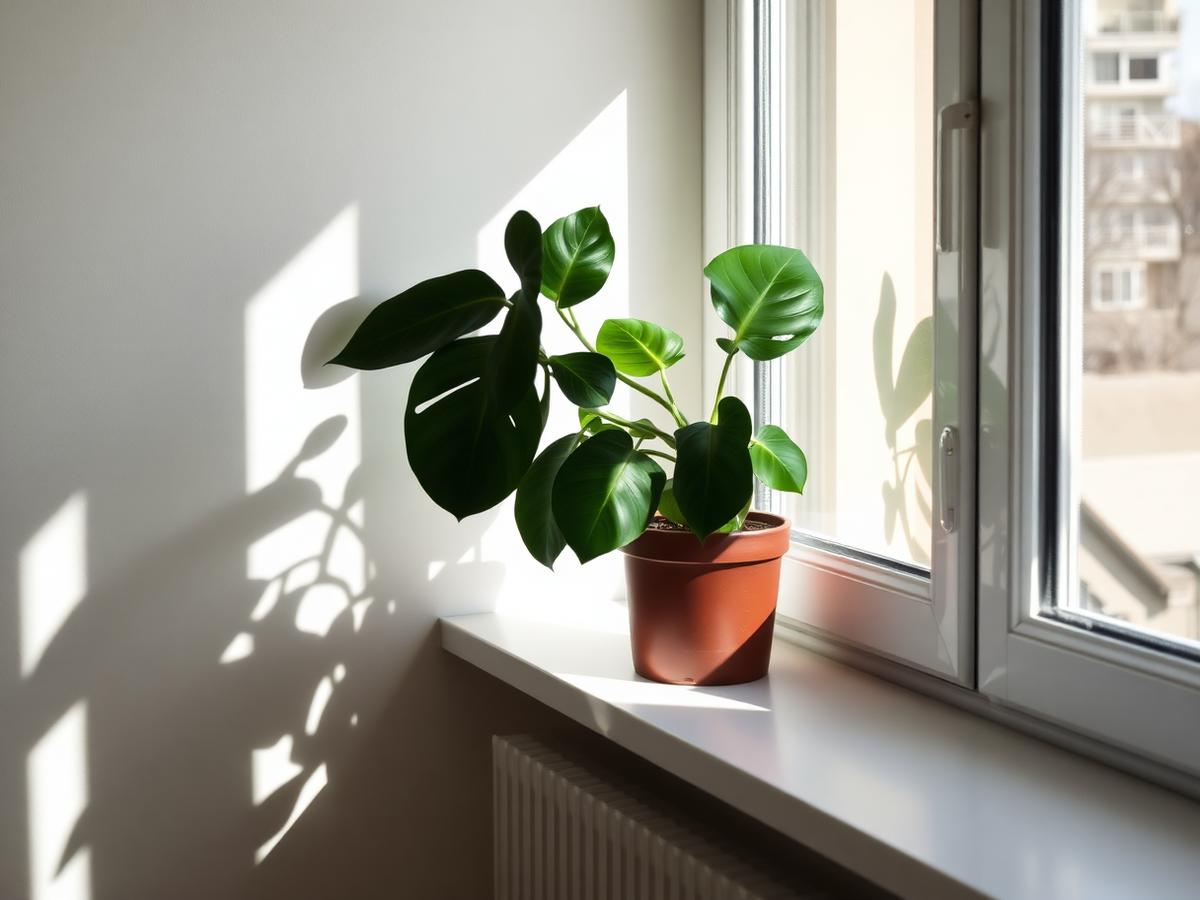
The single most valuable thing lux measurement does is settle the "where should this plant actually go" question. Take readings in every spot you might put a plant — the bathroom shelf, the desk corner, the top of the bookshelf, the kitchen counter. Note the daytime range for each. Then match plants to spots rather than eyeballing it.
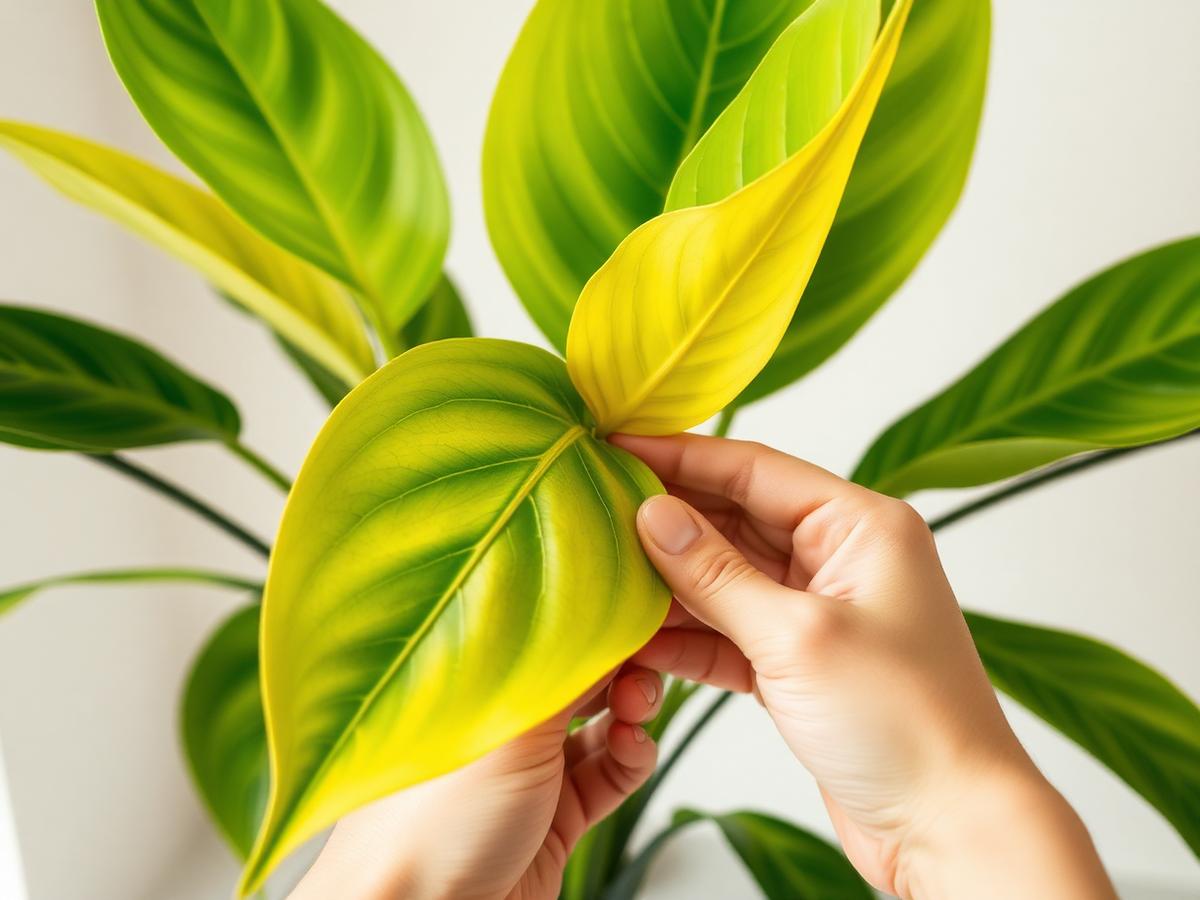
For plants already in trouble, measuring their current spot is the fastest diagnostic step. A leggy plant reaching toward the window is probably in a 100–300 lux spot when it wants 1,000+. A plant with crispy leaf tips might be in 20,000+ lux direct sun when it wanted 5,000. The measurement turns "maybe the light is wrong" into a specific decision.