Why plants make yellow leaves on purpose
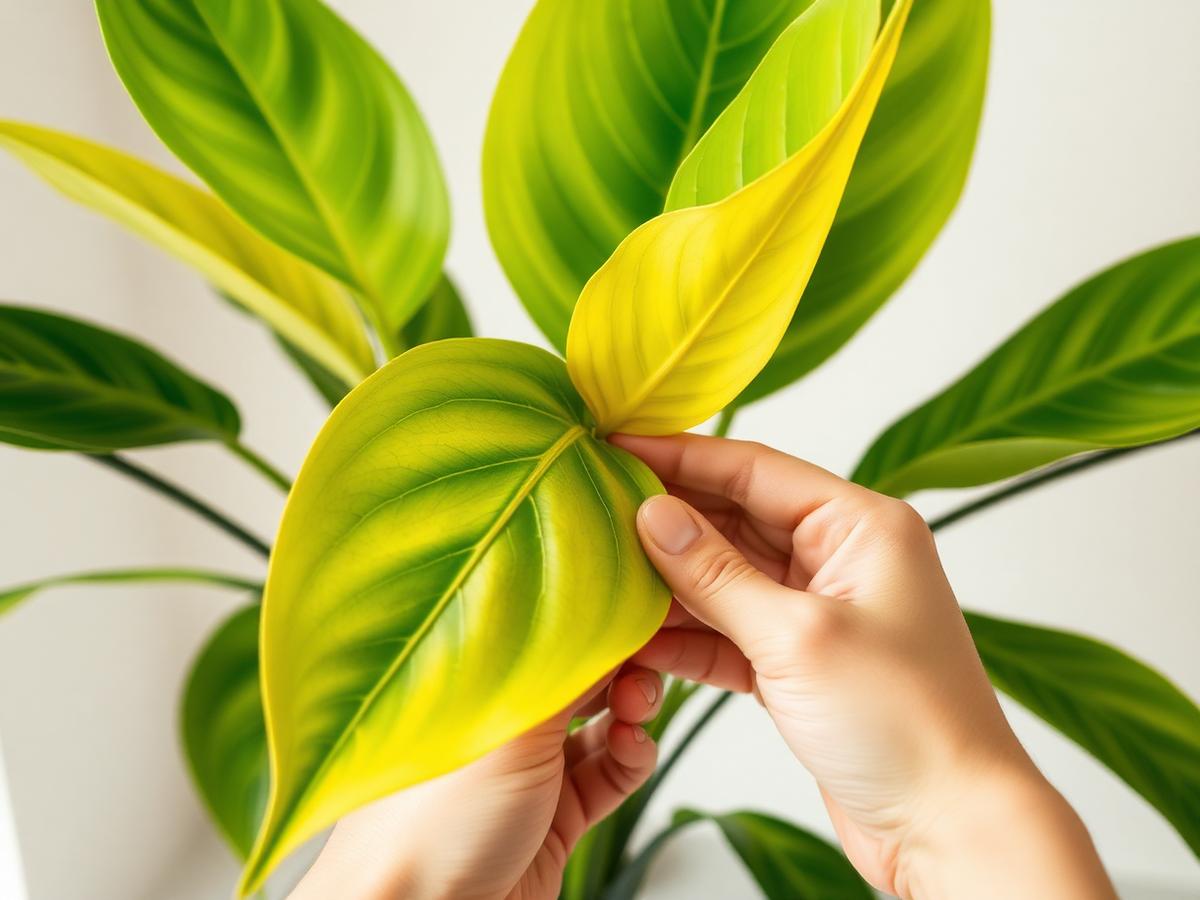
A yellowing houseplant leaf is, most of the time, the visible end-stage of a process the plant started weeks ago. As a leaf ages or as the plant decides it is no longer worth supporting, the cell machinery shifts from photosynthesis into nutrient salvage: chlorophyll breaks down, magnesium and nitrogen are pulled out of the leaf, and the green colour fades to yellow as the underlying carotenoid pigments are exposed. Senescence is the formal name; recycling is the simpler one.
By the time a leaf is fully yellow, the plant has typically reclaimed 50–80% of its mobile nutrients. The leaf is now a low-value drain on the plant — a small amount of residual photosynthesis from any green tissue still present, set against the water cost of keeping the leaf turgid. The plant is preparing to drop it via the abscission zone at the base of the petiole, a band of cells that softens and releases the leaf cleanly when the salvage is complete.
This is why a single yellow lower leaf on a pothos or a monstera that is otherwise pushing healthy new growth is not a problem — it is the plant funding new leaves with the nitrogen from old ones. Cutting that leaf off two weeks early forces the plant to source the same nitrogen from elsewhere.
The 30% rule — when to cut, when to wait
The simplest decision rule is the 30% rule: if more than 30% of the leaf is still green, leave it alone. The remaining green tissue is still photosynthesising, and the recycling process is unfinished. Once the leaf is fully yellow, soft to the touch, or beginning to brown at the edge, the salvage is complete and removal is welcome — the plant has nothing left to gain from the leaf and the empty leaf is now a target for fungal infection if humidity is high.
There is one exception: if a partially yellow leaf is also clearly diseased — black or brown lesions with a yellow halo, fungal sporing on the underside, soft mushy patches — cut it off immediately to stop the disease spreading, regardless of the 30% rule. The cost of losing salvageable nutrients is worth it to protect the rest of the plant.
- ·Fully yellow + soft + a gentle tug releases it = cut now (or pull gently).
- ·More than 30% still green, no disease signs = leave it for another 1–2 weeks.
- ·Partially yellow with dark spots, fungal halos, or soft lesions = cut now, regardless of green tissue.
- ·Yellow only at the tip or one edge, otherwise green = cause is at the tip — see brown leaf tips.
- ·Yellow and the leaf still feels firm and rigid = the plant has not finished recycling — wait.
The gentle tug test (and what releasing tells you)
The most reliable signal that a leaf is ready to come off is the plant's own readiness to release it. Hold the petiole between thumb and forefinger near the stem and tug gently — about the force needed to pull a sock onto a foot, no more. If the leaf detaches cleanly with no resistance, the abscission zone has finished its work and the plant has finished recycling. If the leaf resists, even slightly, the salvage is unfinished and you should wait another few days.
This test fails one way: leaves with thick fibrous petioles like snake plant or ZZ plant sometimes refuse to release even after the leaf is fully yellow, because the petiole structure is built to hold up to drought stress rather than to abscise. For these species, the decision rule reverts to the 30% rule plus a clean scissor cut at the base.
When yellow leaves are normal vs a problem
One bottom leaf going yellow on a healthy plant every few weeks is normal turnover. Most tropical houseplants live with their leaves for 12–24 months and then deliberately replace them; if there is a healthy flush of new growth at the top, an old leaf going yellow at the bottom is the funding mechanism. This pattern accelerates in spring as the plant pushes new growth and aggressively recycles older leaves to support it — see yellow leaves in spring for the seasonal pattern.
Multiple yellow leaves at once, yellow leaves on new growth, or yellow leaves accompanied by drooping or soft stems, is a symptom — and the cause needs identifying before any pruning is helpful. The most common indoor causes, in rough order: overwatering, root rot, low light, nutrient deficiency, water-quality stress, pests. The full diagnostic ladder is in why are my plant's leaves turning yellow; the short version is: check the soil first, the roots second, the light third.
Pruning yellow leaves without finding the cause is symptom management — the plant produces more yellow leaves at the same rate the next week. Diagnosing first means the next round of yellowing is the last round.
How to cut a yellow leaf without damaging the next one
If the leaf is ready and you have decided to cut, the technique matters more than the timing. Use sharp scissors or pruners — not snippers blunt enough to crush the petiole — and sterilise the blades with 70% isopropyl alcohol or a dilute bleach solution between plants. A clean blade is the difference between a single sealed cut and a carrier route for fungal spores between specimens.
Cut the petiole 0.5–1 cm above the stem at a slight angle, not flush against the main stem. The remaining stub dries and falls off cleanly within a week or two; cutting flush risks nicking the stem itself, which can introduce rot at the wound site. For plants with a sheath at the base of the petiole (calatheas, prayer plants), cut just above where the sheath joins the stem — pulling on the sheath itself damages the next leaf below.
Do not seal the cut. Houseplant stems have well-developed wound-response mechanisms that close cleanly within hours; sealants, paints, and cinnamon all do more harm than good in domestic conditions. The exception is succulents and cacti, where letting the wound callus over for 24–48 hours before watering reduces the chance of basal rot.
Should you peel a yellow leaf away with your fingers?
If the leaf passes the gentle tug test, yes — pulling it off cleanly is fine, and is what the plant has prepared the abscission zone to do. If the leaf resists, no — pulling forces tears the petiole and leaves a ragged stem wound that takes longer to heal than a scissor cut, and can pull living tissue away with the dead leaf.
A useful rule: if you find yourself bracing the stem with your other hand to pull the leaf off, the leaf is not ready and you should not be pulling it off. Switch to scissors and a clean cut, or wait three more days and try the tug again.
Will the yellow leaf turn green again?
Almost never. Once chlorophyll has broken down and the magnesium and nitrogen have been reabsorbed, the leaf cannot rebuild the photosynthetic machinery — the cellular pathway is one-directional. The exceptions are leaves where the yellowing is caused by very recent magnesium deficiency or transient nitrogen scarcity that you correct quickly: leaves that are only mildly yellowing on the interveinal tissue can sometimes regreen if you fix the cause within a few days.
For the more common causes — overwatering, root rot, light stress, age — the yellow leaf is not coming back. The right strategy is to fix the root cause so the next leaf the plant produces is green from the start, and let the existing yellow leaves complete their recycling on their own schedule.
Do yellow leaves drain energy from the plant?
Marginally, and not enough to justify pulling them early. A fully yellow leaf has nearly no chlorophyll and contributes almost nothing in photosynthesis, but the plant's water cost to keep the leaf turgid is also small — a few millilitres a day. The main case for removing fully yellow leaves is appearance and disease prevention, not energy economics.
The case for leaving partially yellow leaves on the plant is stronger. A leaf that is 60% yellow still photosynthesises in the green tissue, and is mid-way through the recycling process — pulling it now interrupts both. Wait for the abscission zone to finish its work; the plant knows when it is done.