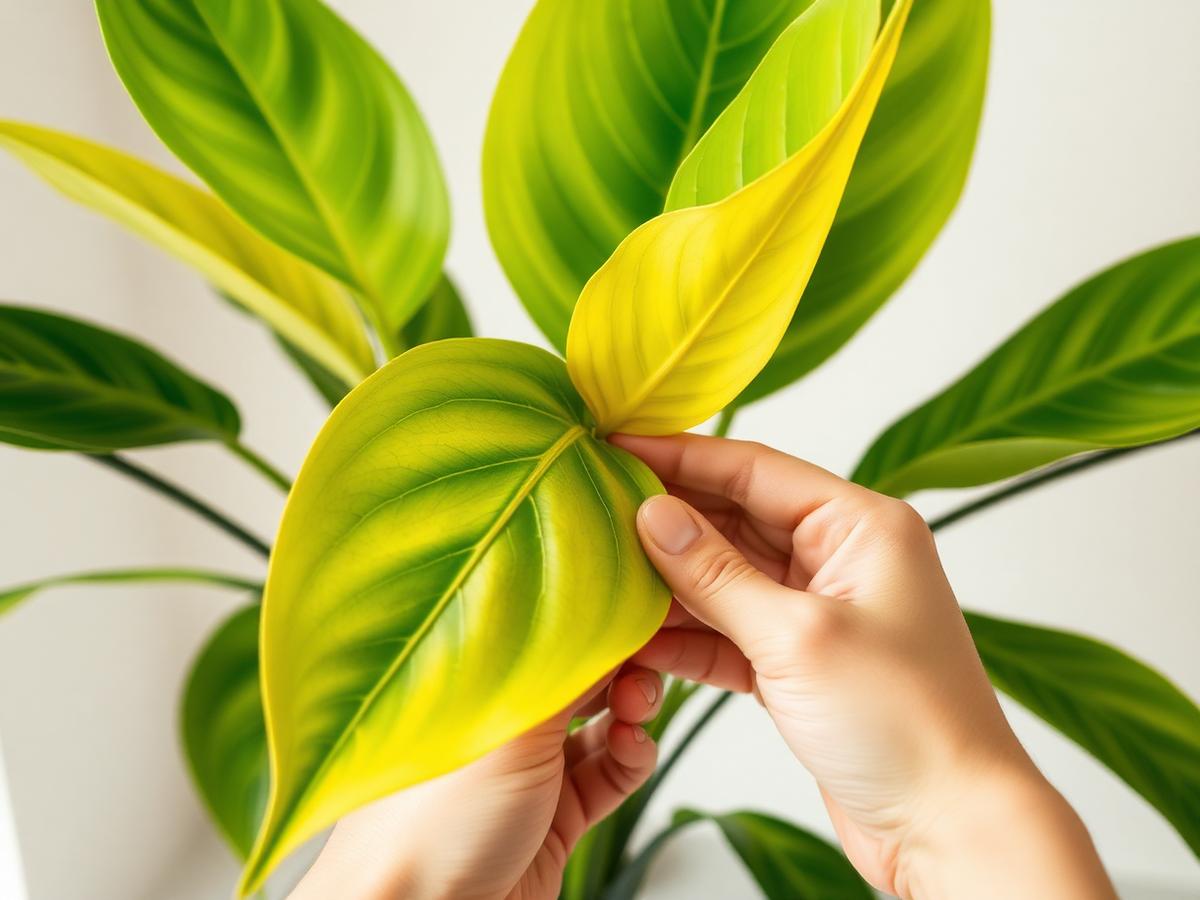
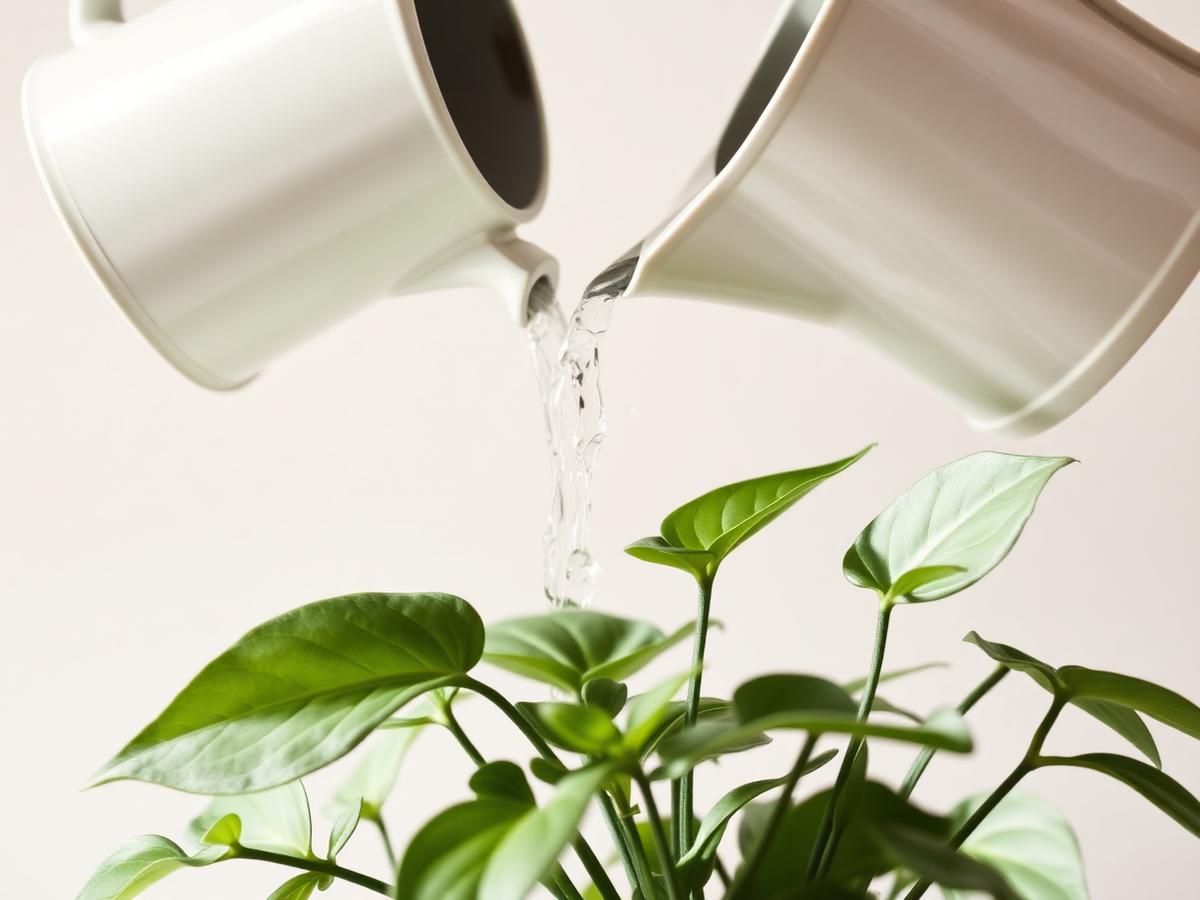
The spring-specific diagnostic: start here
Before chasing causes, answer two questions that instantly narrow the field.
First: is the plant pushing new growth? A plant that is actively growing — new leaves unfurling, stem extending, aerial roots forming — is doing fine, and yellow lower leaves are almost always normal senescence. The plant is transferring resources from its oldest leaves into new ones. This is the single most common pattern in March–May and is not a problem to fix.
Second: is it one leaf or multiple? A single yellow leaf on the bottom of a plant pushing new growth up top is routine. Multiple yellow leaves at once — two, three, or a whole section — is always a signal worth diagnosing. Use the 1-leaf-vs-multi-leaf distinction as your first gate.
- 1One yellow leaf + new growth visible → normal, leave it alone. The plant will drop the leaf on its own schedule.
- 2Multiple yellow leaves + no new growth + damp soil → likely overwatering carry-over (see below).
- 3Yellow patches on upper leaves only + sudden spring sun → light scorch (not overall chlorosis).
- 4Yellow + pale veins + older leaves first → nutrient depletion.
- 5Yellow on the side facing a window + cool nights → temperature swing.
- 6Yellow + fine webbing or tiny bugs → pest cycle, jump to spider mites or the bug ID guide.
Cause 1: normal senescence (50% of spring cases)
Plants cycle their oldest leaves year-round, but the pattern is most visible in spring because new growth is fastest. A Pothos that pushed no new leaves from November to February will start pushing one or two per week by mid-April — and the lowest, oldest leaf will yellow and drop to fund that growth. This is how the plant is supposed to behave.
What this looks like: a single leaf at the bottom of the stem, uniformly yellow (no spots, no brown edges), with a plant that otherwise looks great and has visible new growth. The leaf comes off with a gentle pull. No action required — let the plant drop it, or pinch it off if it bothers you aesthetically. The full timing rule for when to cut and when to wait is in should you cut yellow leaves off.
The easiest tell: look for a new leaf forming at the same time. If you see one leaf yellowing low and one leaf unfurling high, the plant is exchanging currency. Don't intervene.
Cause 2: overwatering carry-over from winter
The single biggest actively-damaging cause of spring yellowing. Most plants reduce transpiration by 30–50% in winter, and watering habits that were correct in June are overwatering in December. People carry that schedule into March — when the plant's demand hasn't fully ramped back up — and the top 5 cm of soil stays wet for weeks on end. Roots suffocate, fine roots die, and leaves yellow to signal the damage.
Pattern: multiple lower leaves yellowing simultaneously, soft rather than crispy, soil reliably wet when you check. May come with a vague "mustiness" from the soil. This is the subset of spring yellowing most likely to progress to root rot if left.
- ·Let soil dry to the second knuckle before watering — for most tropicals, that's 2–3 cm into the pot.
- ·Switch from a fixed schedule ("every Sunday") to a check-based one. See how often to water houseplants.
- ·Lift the pot — if it feels heavy, don't water regardless of calendar.
- ·For recent overwatering (2–3 weeks), the plant recovers with drying alone. For older damage, unpot and check roots.
Cause 3: spring light scorch
Less obvious than overwatering, and specifically a spring problem. Through winter at 60°N, even a south-facing window delivers ~25% of its June intensity. A plant's leaves adapt to that — they thin their cuticle, redistribute chlorophyll, and become efficient at low light. When the sun swings back in March and April, the same window that was providing gentle light in December is suddenly delivering 4× the intensity. Leaves that were fine all winter scorch in a single afternoon.
Pattern: pale yellow or bleached patches on the leaf surface facing the window — not uniform yellowing. Often on upper leaves only. Usually shows up within 48 hours of a sunny spring day, first on plants closest to south or west windows. The damage is cosmetic; the plant is fine. Move the plant 30–50 cm further from the window, or add a thin curtain for 2–3 weeks while leaves rebuild their cuticle. New leaves will come in with proper sun tolerance. For the full 10–14 day protocol, see acclimating houseplants to spring light.
Cause 4: post-winter nutrient depletion
Plants don't actively draw nutrients when they're not growing, so winter depletion isn't a thing. But once spring growth resumes, the plant is rapidly spending what's in the soil — and most indoor soils have been nutrient-depleted since the last repot. By late April, a plant that hasn't been fed since autumn can start yellowing from the bottom up: uniformly pale yellow, interveinal (the vein stays green while the tissue between yellows), spreading from oldest leaves upward.
This is classic nitrogen deficiency, and the fix is straightforward: resume half-strength balanced fertiliser every 2–3 weeks once the plant shows active growth. Full-strength feeding is unnecessary and can burn tender spring growth. If the plant hasn't been repotted in 2+ years, spring is also the right window for that — see when to repot houseplants.
Cause 5: temperature swing stress
Nordic apartments run heating through April, then switch it off in a single day when the weather turns. Daytime might still hit 22°C under sun, but overnight drops to 14°C indoors. Over a week of that swing, cold-sensitive plants (Calatheas, Anthuriums, Fiddle leaf figs) can yellow leaves on the side facing a cool window.
Pattern: leaves yellowing preferentially on one side — usually the window side — and often with slightly rolled or curled edges. Most common in plants on windowsills or near cold-conducting walls. Solution: move the plant 30 cm into the room, away from direct window glass. Leaves already yellow won't recover, but the problem stops progressing within a few days.
Cause 6: the first active pest cycle of the year
Pest populations in indoor plants often overwinter at very low density — too low to notice — and then explode as temperatures rise and breeding resumes. Spider mites in particular go from invisible in February to obvious in April under the same conditions that make plants grow faster. Thrips and aphids follow similar patterns.
Pattern: yellowing in stippled patches (tiny yellow dots rather than uniform colour), especially on undersides or along veins. Fine webbing between leaves or at leaf joints is diagnostic for spider mites. Small dark specks that move when watched are adult pests. This is a different fix entirely — see the pest-specific guides.
The check-soil-first workflow
Before doing anything else: check the soil. It costs 30 seconds and rules out the most common fixable cause.
- 1Push a finger 2–3 cm into the soil. Is it wet, moist, or dry?
- 2Lift the pot. Is it heavy (fresh-watered feel) or light (near-dry feel)?
- 3Smell the soil near a drainage hole. Earthy = fine. Musty, mouldy, or sulphurous = root issues.
- 4Look at the saucer under the pot. Standing water there means the pot drained but water has been sitting — roots are likely waterlogged.
- 5Check the plant's overall position — is it next to a window, directly over a radiator, or in a cold corner?
What not to do in spring
Some interventions that feel helpful make things worse at this specific time of year.
- ·Don't repot a yellowing plant before you've identified the cause. Repotting stresses a plant further. Fix the water, light, or nutrient problem first, then repot only if needed.
- ·Don't full-strength fertilise yellowing leaves. If the cause is nutrient depletion, half-strength is enough; if the cause is anything else, full-strength fertiliser makes it worse.
- ·Don't move a plant from low-light to full sun "to help it recover." Leaves grown in low winter light burn. Add light gradually — see the understanding light levels guide.
- ·Don't cut off all yellow leaves at once. The plant is often still pulling nutrients from them. Let them finish yellowing and drop on their own, or remove only the fully-yellow ones.