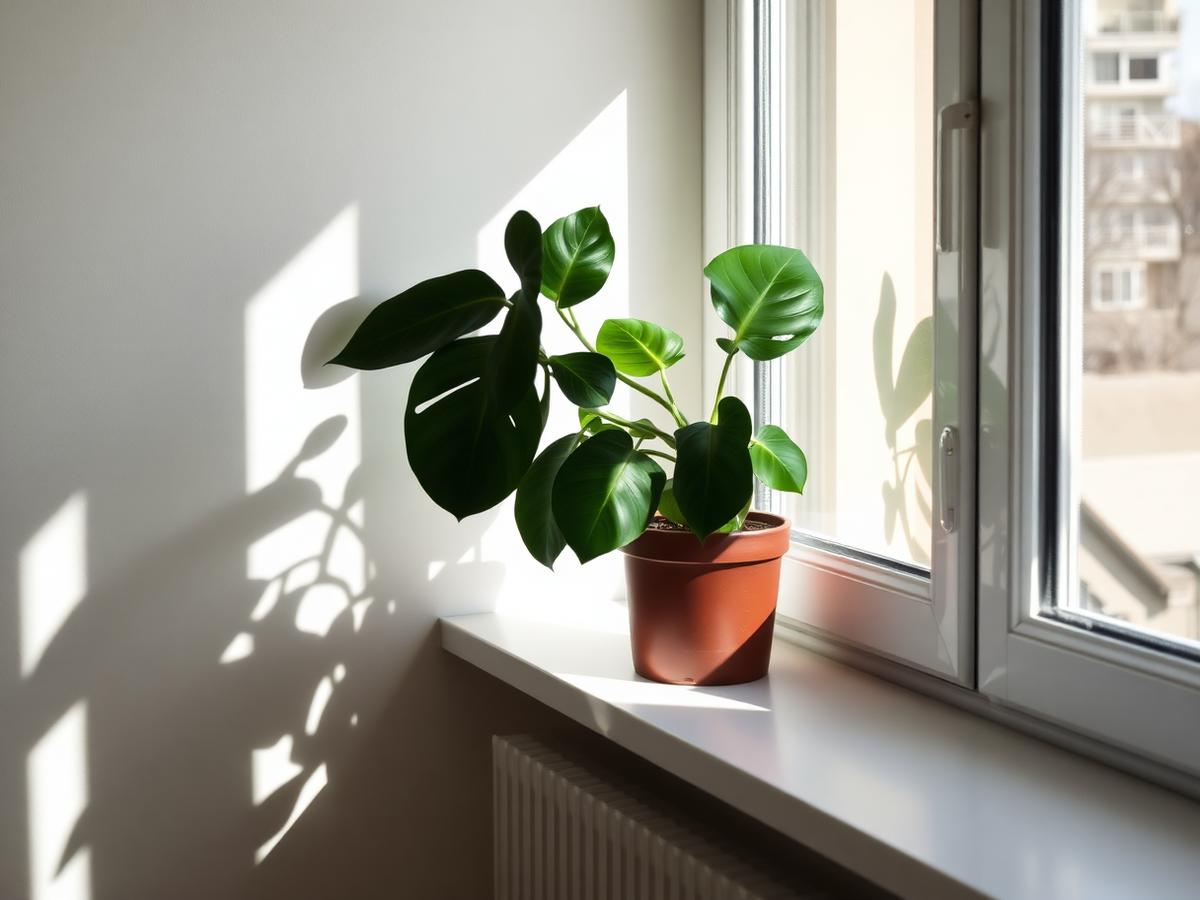
The Nordic summer is not like anywhere else
Between the spring equinox and the autumn equinox, latitudes above roughly 55° N receive substantially more daylight than temperate-zone houseplant guides assume. At Stockholm's latitude (59° N), June solstice gives 18 hours of daylight; at Helsinki's (60° N), 19 hours; north of the Arctic Circle (66.5° N), the sun never sets at all for weeks. Even at Copenhagen's 55° N, June days run 17 hours.
Most popular houseplants evolved in tropical latitudes where day length stays close to 12 hours year-round. Putting a Monstera through a six-week stretch of 18-hour days is not what the plant evolved to handle. Some plants thrive — succulents, cacti, and sun-loving foliage lean into it. Others scorch, stretch, or get heatstroke. The fix is not to block the light but to match each plant to the amount it can actually use.
South and west windows are now the danger zone
In winter the south-facing window is gold — the only spot in the flat that reliably exceeds 5,000 lux. In June the same window, with the sun at a higher angle and the day four times longer, delivers 30,000–80,000 lux at midday. That's the upper end of what a Calathea or variegated aroid can handle for a couple of hours, and double what they can handle for eight.
The practical rule: any plant that was labelled "bright indirect light" in your shop should be 1–1.5 metres back from a south or west window by the end of May, or behind a sheer curtain. Plants on the window glass itself (succulents, cacti, citrus, Monstera deliciosa with mature leaves) should be inspected for heat damage weekly — crispy leaf edges are the first sign, bleached patches are the second.
What long daylight does to a tropical plant
Photoperiod — the daily cycle of light and dark — is a signal plants use to regulate growth, flowering, and rest. Most tropical foliage species (monstera, pothos, philodendron, calathea, anthurium) are short-day or day-neutral plants from equatorial regions; they don't need long days, and 18 hours of light does not make them grow faster indefinitely. Beyond roughly 14 hours of light, photosynthesis saturates for many of these species and extra hours just mean more water loss through transpiration and more heat stress.
The practical effect: plants that get 18 hours of summer daylight still need their rest. If their conditions are otherwise right — temperature, water, humidity — they'll adjust. If they're also heat-stressed and drought-stressed, the long photoperiod compounds the damage. Succulents and sun-loving plants (bird of paradise, citrus, hoya, most cacti) are the exception: they evolved in environments with long, hot summers and positively thrive on the extra hours.
Carnivorous plants are the other group where Nordic photoperiod genuinely complicates care: Venus flytraps and temperate sundews use day length as a dormancy cue, and 18-hour summers push them into active growth right up to the autumnal equinox. See carnivorous plants for beginners — Nordic indoor edition for the dormancy fix that prevents the November leaf collapse.
Watering doubles or triples
In summer a pothos in a sunny Nordic flat can need water every 3–4 days; the same plant in December needed water every 14. Two things change. Higher temperatures accelerate transpiration — a warm, well-lit plant pumps water through its tissues 2–3× faster than a cool plant in dim light. And direct summer light increases the top-of-soil drying rate dramatically. Together they multiply water demand.
Use the finger test or the weight-lift method; don't rely on a fixed weekly schedule. See the full watering guide. Expect to water twice as often as your winter cadence, with roughly double again for plants in terracotta or direct sun. Bottom-watering becomes more useful in summer because the top of the soil dries out so fast; watering from below ensures the root zone actually gets wet.
- ·Succulents and cacti: every 10–14 days (summer), checking for pot weight.
- ·Foliage tropicals (pothos, monstera, philodendron): every 5–8 days.
- ·Calathea, ferns, anthurium: every 3–5 days, never letting the root zone dry fully.
- ·Fiddle leaf fig: every 7–10 days, deep watering.
- ·Snake plant, ZZ: every 14–21 days even in summer — still drought-tolerant.
Heat waves: the two weeks that threaten everything
Nordic summers are no longer temperate. Stockholm hit 35 °C in July 2022 and has seen multiple 30 °C+ stretches since. Indoor temperatures in flats without AC often run 3–5 °C above outside peak — a 30 °C day outside can mean 33–35 °C in your flat by evening, and it stays that way overnight because stone buildings don't cool.
Most tropical houseplants cope with heat if humidity stays up and they aren't also in direct sun. The dangerous combination is high heat + low humidity + direct window light + dry soil — plants wilt and scorch within a day. During heat waves: move plants off sunny windows, increase humidity (damp towels near the plants, bowls of water on radiators, close curtains), water more frequently but not more deeply, and avoid fertilising (root uptake is disrupted at high temperatures). Cacti and succulents are fine; tropicals need active intervention.
The growth window: what this light is actually good for
For the right plants, Nordic summer is the best growing season they will ever get. Bird of paradise, citrus, succulents, cacti, hoya, adenium, alocasia (once acclimatised), and hibiscus all respond to long hours of bright light by growing two to four times faster than they do indoors anywhere in Europe in winter. If you have sun-loving plants and you've been waiting for them to actually grow, June to August is when it happens.
Use the window deliberately: propagate in June, repot in early July, fertilise at half-strength every 2–3 weeks, and expect visible new leaves every 10–14 days on healthy tropical foliage plants. This is also the window when plant propagation works best — cuttings root in days rather than weeks.
Moving plants outdoors for summer
Plants that winter indoors at Nordic latitudes can go outside from early June to mid-August in sheltered spots — balconies, shaded terraces, garden patios. See our full moving plants outside guide for the acclimatisation protocol. The short version: move the plant outside on an overcast day into full shade for five days, then into part shade for another five, and then into dappled morning sun. Jumping straight to full sun burns indoor-grown leaves within an afternoon.
Plants that benefit most from a summer outdoors: bird of paradise, hibiscus, citrus, jade, Epipremnum cuttings you want to root fast, and any aroid that has been languishing. Plants to keep inside: anything with velvet leaves (calathea, anthurium velvet species, alocasia reginula) — they don't handle outdoor humidity swings well.
Humidity is a summer problem too
Summer humidity in Nordic flats is counterintuitive. Outdoor humidity is high, but during the hottest days, indoor air dries out fast — warm air holds more water vapour, so the same absolute humidity reads as lower relative humidity. Heat waves can drop relative humidity indoors to 30–40%, which is fine for most tropicals but stresses calathea, anthurium, and any fern.
A humidifier, grouped plants, or damp pebble trays help. More useful than misting (which only raises humidity for minutes). If you run AC or use fans, humidity drops further; a humidifier near the humidity-sensitive plants becomes more important, not less. See our humidity guide.
The vacation problem
Most Nordic households take two to four weeks off in July or August, and most houseplants are at their highest water demand in exactly those weeks. Leaving plants untended in a sunny Nordic flat for 14 days in July is one of the fastest ways to come back to a dead collection.
The options, in rough order of reliability: a person who waters (neighbour, friend), a self-watering system (reservoir pots, wicking, capillary mats), bottom-water ahead of departure and move plants to shadier spots, or group plants tightly to raise local humidity and slow drying. See the full vacation-proofing guide and the two-week away guide for specific setups.
Signs your plants are struggling in the sun
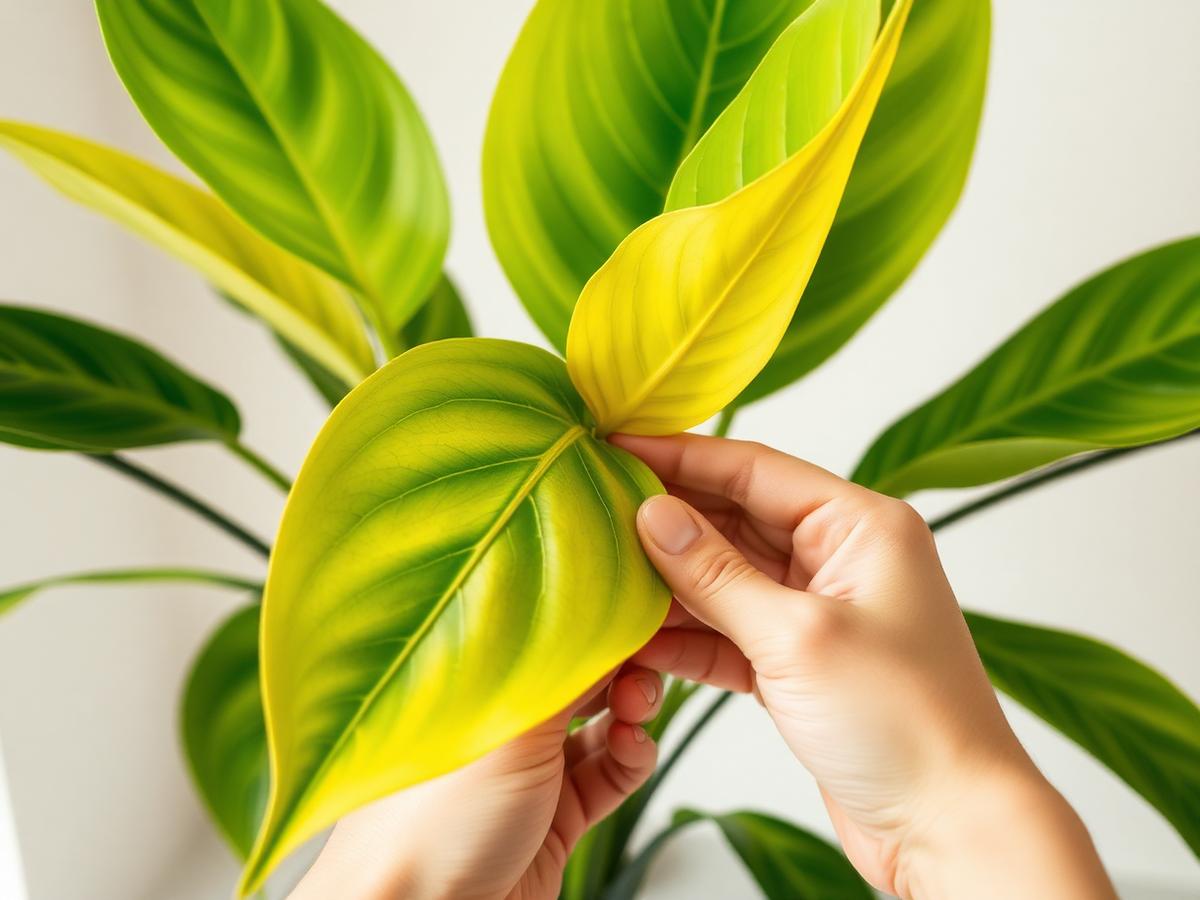
Summer damage looks different from winter damage. Watch for these — all appear within a week of a heat-wave or sunburn episode:
- ·Crispy, papery brown edges on leaves facing the window — classic sunburn.
- ·Bleached patches on the top of leaves — direct light intensity exceeded what the plant can dissipate.
- ·Leaves curling inward (taco-shape) during the day — heat stress, often recovers at night.
- ·Drooping with dry soil — underwatering compounded by heat.
- ·Yellowing and dropping inner leaves — the plant is shedding foliage it can't hydrate.
- ·Sudden appearance of spider mites — they thrive in hot, dry conditions.
What to do when summer ends
From late August the photoperiod shortens fast — Stockholm loses 4–5 minutes of daylight per day through September. Plants that adjusted to summer rhythm will start to slow, and growth rates drop sharply by mid-September. This is the window to repot anything you didn't get to in July, fertilise one last time at full strength, and plan how you'll handle the coming winter.
Plants that went outdoors need to come back inside before night temperatures drop below 12 °C — typically early September in Stockholm, mid-September in Copenhagen. Check them carefully for pests before re-introducing them to your indoor collection — quarantine for two weeks if possible.