What guttation actually is
Guttation is the active expulsion of liquid water from a plant's leaves through specialised pores called hydathodes — modified stomata at the tips and edges of leaves that connect directly to the xylem (the water-transport tissue). It happens when root pressure pushes water up the stem faster than the leaves can release it through transpiration. Excess water builds in the xylem, gets forced out through the hydathodes as discrete droplets, and beads up at the leaf margin overnight. By morning, the droplets either evaporate, drip off, or leave a white residue if the xylem fluid was salt-rich.
The mechanism is the opposite of transpiration. Transpiration is passive — water evaporates from leaf surfaces and pulls more water up through the stem like a wick. Guttation is active — the roots pump water upward through osmotic pressure even when the stomata are closed (typically at night or in high humidity). Hydathodes act as relief valves. The sap that comes out is mostly water, but it also contains dissolved minerals, sugars, and small amounts of organic acids — which is why the droplets sometimes leave a sticky or chalky mark when they dry.
How to tell guttation from look-alikes
Several common houseplant phenomena look like droplets on leaves at first glance. The 5-second checks below distinguish them.
- ·Guttation: clear droplets at leaf tips or along the serrated edges, present in the morning, absent by midday. Often a single drop at the tip of a pothos or one bead per serration on a monstera. No sticky residue when wet; sometimes a faint white crust when dried.
- ·Dew (condensation): droplets form on the upper leaf surface and across the entire leaf, not just at tips and edges. Common on cool mornings when room humidity exceeds 70%. Wipes off cleanly with no residue.
- ·Sap from a wound: droplets at a specific cut or break point in the stem; usually thicker, often coloured (white, yellow, or red depending on species).
- ·Honeydew from pests: sticky residue on leaves, stems, and surfaces below the plant — a sign of scale, mealybugs, or aphids. Inspect underside of leaves with a 10× loupe. See sticky residue on leaves for the full pest workup.
- ·Edema bumps: small raised hard spots on the leaf, not droplets — caused by burst leaf cells from chronic over-pressure. See edema on houseplant leaves.
- ·Bacterial leaf spot ooze: yellow or brown wet patches on the leaf body, usually with a halo and progression — guttation never produces a halo or spreads.
Species that guttate most often
Guttation is universal across vascular plants but most visible on species with strong root systems and large hydathode pores. The aroids dominate the houseplant list, and a few unrelated species are also frequent guttators.
- ·Monstera deliciosa and Monstera adansonii: one bead per leaf serration, especially on new growth.
- ·Pothos / Epipremnum aureum: single drop at each leaf tip.
- ·Philodendron varieties (Brasil, hederaceum, gloriosum): tip droplets on new leaves.
- ·Alocasia 'Polly', zebrina, and others: droplets along leaf edges, often on the same morning new leaves unfurl.
- ·Peace lily (Spathiphyllum): tip-only guttation, often after a thorough watering.
- ·Calathea / Goeppertia and Maranta: edge droplets that follow the prayer-plant nightly leaf raise.
- ·Strawberry, tomato, and grass species (visible outside the houseplant world): edge serrations bead heavily at dawn.
When guttation is meaningful — the three signal cases
Most guttation is decorative biology — a sign of healthy roots and a well-watered plant. Three patterns are worth a closer look.
- 1Daily heavy guttation that has just started: usually means you have started over-watering. If the plant has been guttating dry for months and suddenly produces visible drops every morning, check soil moisture before the next watering and consider stretching the interval by 30–50%. See overwatered vs underwatered for the wider check.
- 2White or chalky residue left behind: the xylem fluid is carrying excess fertiliser salts. Flush the pot with plain water (3× pot volume) and skip the next two feeds. Persistent residue points to over-fertilising — see how often to fertilize houseplants.
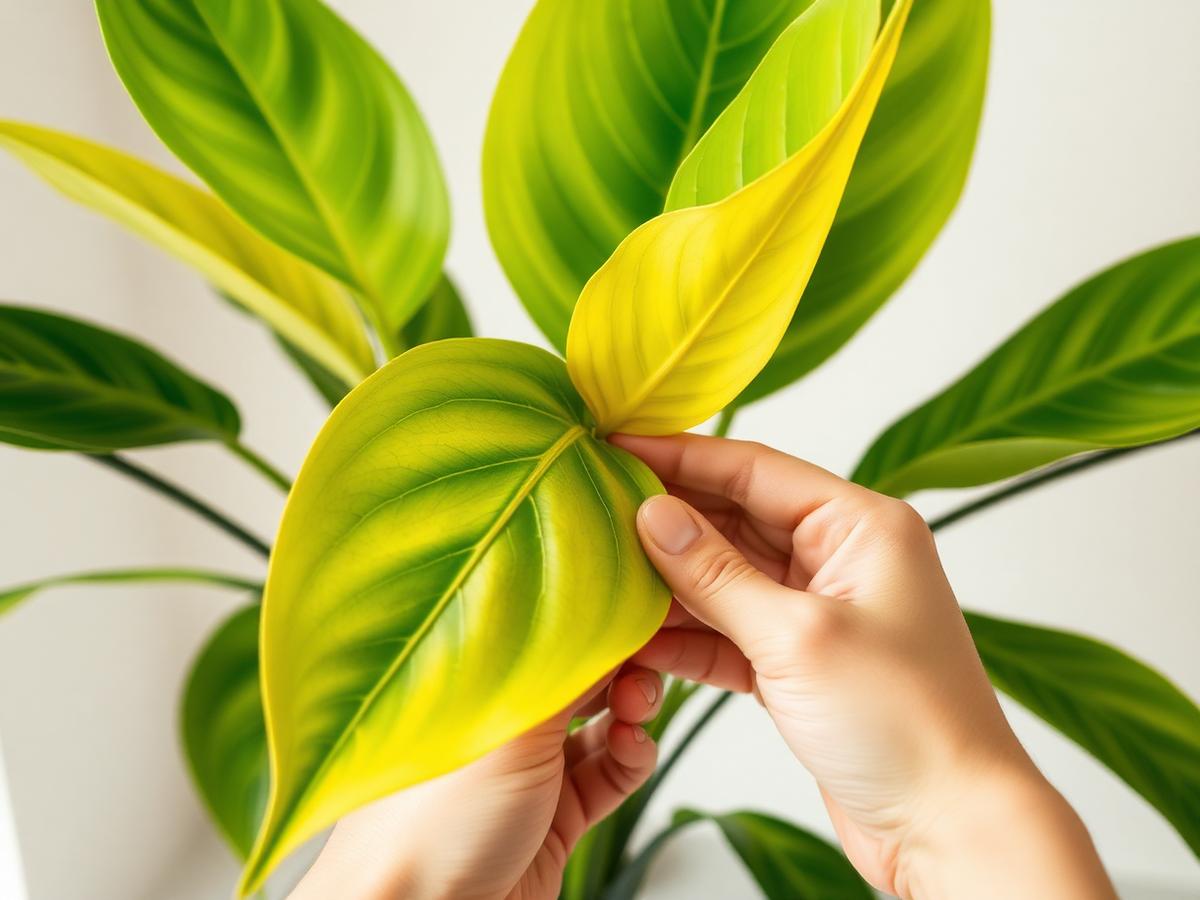
- 3Brown or burnt leaf tips on a guttator: some species (calathea, spider plant, dracaena) develop necrotic tips when guttation drops contain too many minerals — usually from hard tap water. Switch to filtered or rainwater. See hard water and houseplants.
Why guttation is more visible at night and in winter
Two conditions drive guttation: high root pressure (recently watered, healthy roots) and low transpiration (closed stomata, high humidity, cool air). Both peak overnight. During the day the plant transpires water through open stomata in response to light; at night the stomata close, transpiration drops to a trickle, and the relief valve becomes the hydathodes. By morning the droplets are visible. By 10 AM transpiration has resumed, the leaves dry, and the cycle resets.
Winter and Nordic flats amplify the effect. Cool overnight temperatures (16–18 °C) slow transpiration; central heating raises room humidity around plants near a humidifier; and the days are short enough that plants spend most of their hours in stomata-closed mode. A monstera that never visibly guttated in summer can develop a daily droplet routine in November. This is normal and not a sign that anything is wrong with the plant.
Are the droplets toxic?
Guttation droplets contain dissolved sap from the plant's xylem — mostly water, but with small amounts of whatever the plant has in solution. For aroids (monstera, pothos, philodendron, alocasia, peace lily) that includes trace amounts of calcium oxalate raphides, the same toxin that makes the leaves toxic to chew. The droplets are not strongly toxic — they are extremely dilute compared to leaf sap — but they are not water and not harmless to a curious cat or toddler that licks them up regularly. Wipe up morning droplets with a paper towel if your plants are in pet or child range.
For non-aroid guttators (peace lily is technically aroid, but spider plant, calathea, strawberry, and grasses are not), the droplets are essentially dilute mineral water with trace plant exudates — not toxic in any meaningful sense. The species-by-species toxicity question is the same one as for chewed leaves; see are houseplants toxic to cats and dogs for the full catalogue.
Can I stop guttation?
You can reduce it but rarely eliminate it. Guttation is the plant's natural pressure-release valve, and a healthy root system will guttate occasionally regardless of conditions. Three changes reduce frequency:
- ·Water 20–30% less per session, especially in the evening — soggy soil overnight is what spikes root pressure.
- ·Move the plant to brighter light — higher transpiration during the day means less excess water needs to be released at night.
- ·Improve air movement — a small fan on low circulating air keeps stomata more open and increases transpiration.
- ·Reduce humidity slightly if you are running a humidifier — over-humid air slows night transpiration further.
- ·Switch to filtered or rainwater if hard tap water is leaving residue you object to.
Cleaning up after guttation
Wipe leaves with a soft damp cloth in the morning if dried droplets have left a chalky white deposit. Built-up mineral residue blocks light from reaching the leaf surface and is mildly aesthetic; it is not a disease. Use plain water — no soap, no leaf shine, no diluted milk (the supermarket trick that does damage on its way to looking good). For wide-leaved plants like monstera and fiddle leaf fig, leaf-wiping every couple of weeks is a reasonable hygiene routine anyway. See cleaning houseplant leaves.
If the droplets keep landing on a wooden floor or shelf, slide a saucer or a piece of wax paper under the leaves overnight. Aroid sap can dull varnish and stain pale wood over months — not catastrophic, but worth a one-time fix.
When to take guttation seriously
Guttation crosses from "interesting biology" to "check this out" when it appears with another symptom. Single droplets in the morning on a healthy-looking plant are fine. Droplets plus yellowing lower leaves, droplets plus wilting despite damp soil, or droplets plus a sour smell from the pot all point to root rot — guttation in those cases reflects an oversaturated rootzone with damaged drainage. Inspect the roots; see root rot in houseplants.
Droplets that appear alongside small flying insects emerging from the soil flag a separate problem — fungus gnats, which thrive in the same persistently-wet conditions that drive heavy guttation. Both signal the same root-zone moisture issue. See fungus gnats in houseplant soil for the elimination protocol.