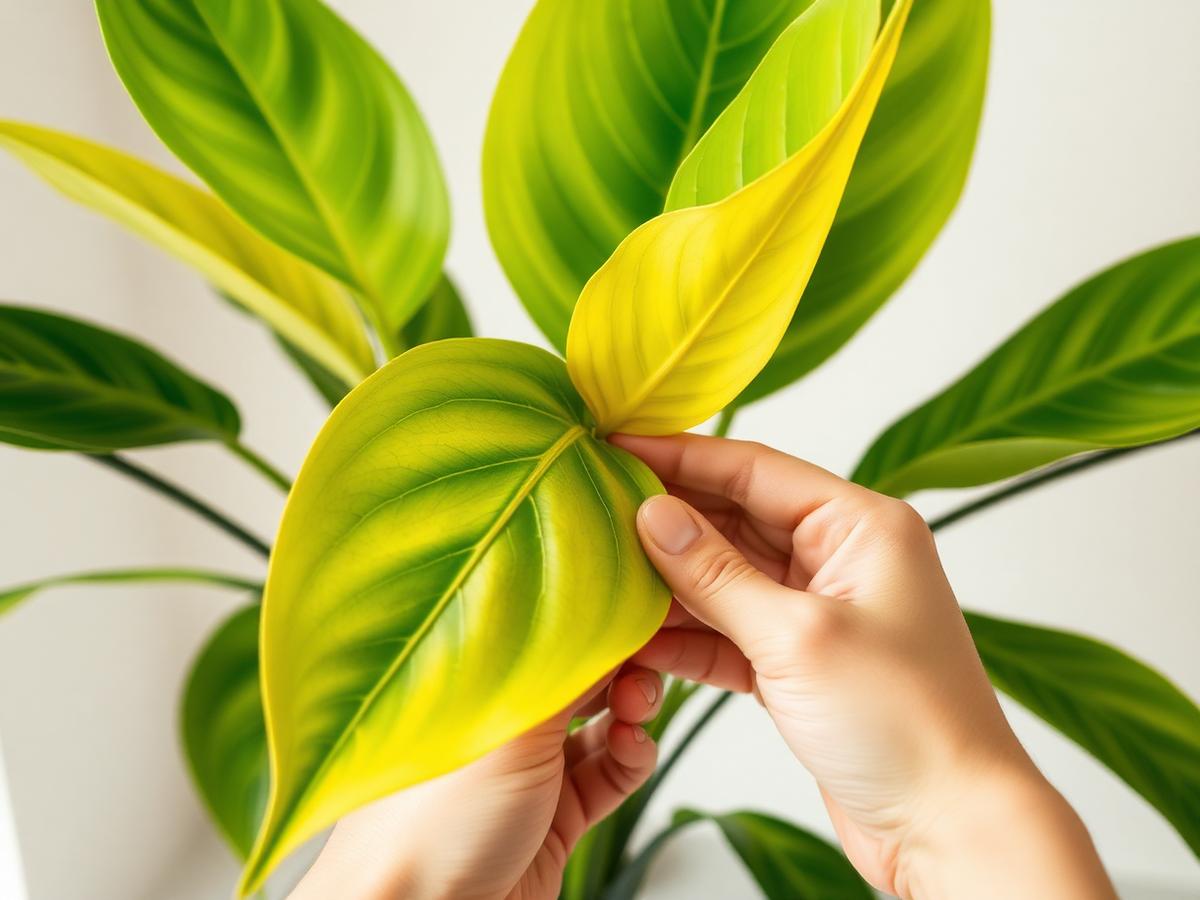
30-second diagnostic flow
Before changing anything, spend a minute on this. The curl shape alone eliminates most candidates, and the remaining checks narrow it to one.
- 1Name the curl direction. Upward (taco / canoe) → underwatering or heat. Downward (cup) → overwatering or nutrients. Inward edges only → humidity. Twisted, puckered, or distorted → pests or viral.
- 2Push a finger 2–3 cm into the soil. Bone dry + upward curl → thirst. Wet + downward curl → overwatering. Slightly damp → keep reading.
- 3Check the undersides of 3–4 curled leaves with a phone light. Silver streaks, black dots, tiny moving specks, or sticky residue → pests.
- 4List what changed in the last 2 weeks — new spot, radiator turned on, repot, fertilizer dose, different water. Curl usually lags the cause by 5–10 days.
- 5Check whether only new leaves, only old leaves, or both are affected. New-only → pests, light, humidity. Old-only → watering or nutrients. Both → environmental shock.
1. Underwatering and heat stress
The classic upward taco curl. When a plant can't pull water fast enough to replace what it's losing through the leaves, it curls inward along the midrib to reduce surface area and cut transpiration. Direct sun and radiator heat accelerate the same process — even on moist soil, a plant sitting in 28 °C afternoon sun against single glazing will taco in hours.
Confirm: Leaves curl upward along the midrib. Edges may be crispy or papery. Soil is dry 2–3 cm down. Pot feels unusually light. Often paired with a hard lean away from the heat source.
Fix: Bottom-water the pot for 20–30 minutes to rehydrate hydrophobic soil, then top-water until runoff appears. Move the plant at least 30 cm from radiators, south-facing glass, and afternoon sun until it recovers. Most tropicals uncurl new growth within a week; the already-curled leaves will not fully flatten.
Prevent: Check soil, not the calendar. In Nordic winters, plants near radiators dry out 2–3× faster than in summer — adjust the schedule, not the plant.
2. Overwatering and root rot
Downward, limp, cupping curl on damp soil is the mirror image of the taco. Roots suffocating in waterlogged soil can't deliver water to the canopy even though there is plenty present — the classic cruel twist of overwatering, and the reason people "water more" and make it worse. Lower leaves often yellow at the same time.
Confirm: Leaves curl down and feel soft or limp. Soil is wet 2 days after the last watering. Sometimes a sour or musty smell from the pot. Pot feels heavy.
Fix: Stop watering. If the plant sits in a decorative pot without drainage, transfer it to one with holes. Wait until the top 4–5 cm is dry before watering again. If the downward curl doesn't ease within a week, unpot and inspect the roots — see the full root rot recovery protocol.
Prevent: Finger test before every watering. Drainage holes are non-negotiable. Empty saucers 10 minutes after watering.
3. Low humidity
Inward edge curl — where the lamina rolls toward the midrib from the margins while the centre stays flat — is almost always dry air. Nordic winter apartments regularly sit at 20–28 % relative humidity with the heating on; most tropicals want 50–60 %. The species that protest first are calatheas, marantas, ferns, alocasia, anthurium, and fiddle leaf figs.
Confirm: Edges curl inward, often paired with crispy brown tips. New leaves emerge smaller than older ones. Hygrometer reads under 40 %. Symptoms worse on plants near radiators or exterior walls.
Fix: Group plants together to raise local humidity. Run a cool-mist humidifier within 1–2 m of the plant for 8–12 hours a day during heating season — it is the only reliable intervention; misting is theatre. Target 50 %+ for sensitive species. Full protocol in the humidity guide.
Prevent: In winter, put a hygrometer next to your fussiest plant and treat any reading under 40 % as a problem to fix, not a fact to live with.
4. Light stress — too much direct sun
Upward curl paired with bleaching, pale patches, or brown scorched zones on south- or west-facing windows is sun damage, not thirst. The curl is the plant's attempt to reduce the leaf surface exposed to the light. A thirsty plant uncurls after watering; a sun-scorched one keeps its shape and adds permanent bleach marks.
Confirm: Upward curl on the sun-facing side of the plant only. Pale, washed-out patches or dry brown scorch on the most-exposed leaves. Symptoms appeared within days of moving to a brighter spot. Soil moisture is fine.
Fix: Move the plant 50–100 cm back from the window, or add a sheer curtain. Don't reverse back to deep shade overnight — a second shock. The bleached tissue will not recover; new growth in the corrected spot is the recovery signal. More on reading windows: understanding light levels.
Prevent: Acclimate any plant to direct sun over 10–14 days. In Nordic summers, the midday sun at 60°N can burn a plant that was happy in the same spot in March.
5. Thrips, aphids, and broad mites
If new growth is emerging already distorted — puckered, twisted, asymmetric — and the older leaves were fine before, the cause is almost always a sap-sucking pest. Thrips leave silver streaks and tiny black frass dots. Aphids cluster on new stems and leave sticky honeydew. Broad mites are too small to see but warp new leaves into crinkled, bronze-tinted spirals within days.
Confirm: Distortion is on new growth, not old. Phone-light the undersides and stem tips — silver streaks, sticky spots, black specks, or cotton-like clumps narrow the species. Shake the plant over a sheet of white paper to catch thrips adults. Full visual ID: tiny bugs on houseplants.
Fix: Isolate the plant immediately — pest-induced curl is the only contagious curl. Wipe leaves with a damp cloth. Spray thoroughly with insecticidal soap or neem oil, including undersides and growing tips, every 7 days for 3–4 weeks. Broad mites need a miticide (abamectin) because neem alone rarely clears them.
Prevent: Quarantine new arrivals for 2–3 weeks. Inspect weekly during the first 2 months after a purchase. Keep humidity around 50 % — it slows thrips and broad mites without encouraging fungal disease.
6. Temperature shock and cold drafts
Sudden curling localized to one side of the plant almost always has an environmental cause — a cold window in winter, a radiator that kicked on in October, or an AC vent in summer. The giveaway is the spatial pattern: the side facing the draft or heat source curls, the other side is fine.
Confirm: Curl is on one face of the plant only. There's been a recent change — heating on, window cracked open at night, plant moved closer to glass. Tropicals exposed to under 12 °C for more than a few hours often curl within 48 hours.
Fix: Move the plant at least 30 cm from cold glass and away from radiator and AC airflow. Keep tropicals consistently above 15 °C. Expect some leaf loss even after the move — the cell damage is already done. Broader winter protocol: Nordic apartment guide.
Prevent: In winter, pull tropicals back from single-glazed windows at dusk. In summer, never place a plant directly under an AC outlet — even 20 °C airflow at close range is a shock.
7. Fertilizer burn and mineral toxicity
A downward curl paired with crispy brown tips, white crust on the soil surface, and a plant that was fertilized recently is salt damage. The excess ions pull water out of root cells by osmosis — the plant looks thirsty even on damp soil. Hard tap water produces the same pattern more slowly.
Confirm: Downward curl + crispy brown tips + white or yellowish crust on the soil rim or pot edge. Recent history of fertilizing more than monthly, or fertilizing at full label strength. Affected leaves may also pucker slightly along the edges.
Fix: Flush the pot with filtered or distilled water — run water through the soil for 2–3 minutes until it drains heavily from the bottom, then repeat 2–3 times with fresh water. Drain fully, skip fertilizer for 6–8 weeks. Severe cases need a full repot in fresh mix.
Prevent: Dilute fertilizer to half the label strength. Feed monthly during the growing season, never weekly. Switch sensitive species (calatheas, marantas, spider plants) to filtered or rainwater.
8. Viral infection
Rare, but real. If leaves are persistently distorted with mosaic patterns, ring spots, or irregular light/dark patches, and nothing — no water change, no humidifier, no pesticide — shifts the symptoms over 3–4 weeks, the plant may have a viral infection. Tobacco mosaic virus, cucumber mosaic virus, and hibiscus chlorotic ringspot virus all show up in houseplants occasionally.
Confirm: Distortion persists through multiple new leaves. No pests visible under 10× magnification. No improvement after correcting watering, humidity, and light. Mottling or mosaic patterns rather than uniform yellowing.
Fix: There is no cure for plant viruses. Isolate the plant immediately and dispose of it — bag it, bin it, don't compost it. Disinfect any scissors or pots with 70 % isopropyl before touching another plant. Spread is usually by sap-sucking pests or contaminated tools.
Prevent: Never reuse un-sterilised pruning tools between plants. Control thrips and aphids aggressively — they are the main viral vectors.
9. Normal new-leaf unfurling
Some species unfurl their leaves from a tightly curled state as part of normal growth, and an anxious owner can easily misread this as a symptom. Monstera deliciosa, rubber plants (Ficus elastica), fiddle leaf fig, and bird's nest ferns all push out leaves that look alarmingly curled for 1–2 weeks before they flatten.
Confirm: Only the newest leaf on the plant is curled; it's glossy, intact, and emerging from a sheath or growing point. No damage on older leaves. No pests. Wait 14 days — if the curl is developmental, it will ease as the leaf expands.
Fix: Nothing. Do not change watering, light, or location. The plant is working. Rushing in with a humidifier, a fertilizer dose, and a new pot at once is how people turn a healthy plant into a sick one.
Prevent: Not applicable — this is healthy plant behaviour.
10. Recent repot shock
A plant repotted in the last 2–3 weeks can push out mildly curled leaves while the root system re-establishes. This is transient — usually resolved within 21 days — and is often confused with underwatering because the symptoms overlap.
Confirm: Repot was within the last 2–3 weeks. Curl is mild, the plant is otherwise stable, and the soil moisture is normal. See the fuller decision tree in should you repot a new plant immediately.
Fix: Keep conditions boring. Water on the finger test. Hold fertilizer for a month. Avoid moving the plant around the room. Most repot-curl self-corrects with the next 1–2 new leaves.
Prevent: Repot only when necessary — outgrown pot, severely depleted soil, or root rot recovery. Pick a pot one size up, not three. Water lightly for the first week and avoid full sun for 10 days.
How to read the curl: a photographic vocabulary
Photographers and plant diagnosticians use four shape words. Learning to name the curl you're looking at is the fastest way to narrow the cause, and it's how the [/diagnose tool](/diagnose) ranks symptom combinations.
- ·Taco (or canoe): leaf folds upward along the midrib, edges pointing up. Reads like a taco shell. Almost always underwatering or heat/sun stress.
- ·Cup: leaf curves downward at the edges, centre still flat. Limp rather than crisp. Almost always overwatering, root damage, or a heavy nutrient problem.
- ·Inward edge (roll): only the leaf margins roll toward the midrib, often with crispy tips. Classic low-humidity signature on calathea, maranta, and fern.
- ·Twisted / puckered: leaf is asymmetric, wrinkled, or distorted, especially in new growth. Strongly suggests pests — thrips, aphids, broad mites — or, rarely, viral infection.
When curling won't recover (and how to move on)
Once a leaf has been curled for more than about a week, the cells along the curl have locked in. Even after you fix the underlying cause, that leaf will usually stay curled — sometimes flattening a little, rarely fully. This is not a failure. Focus on the next 2–3 new leaves as the real recovery signal.
If the curled leaves are also crispy, yellow, or mostly dead, prune them at the base with clean, sharp scissors. For leaves that are still mostly green and photosynthetically useful, leave them — they're still earning their keep while the plant regrows. Trim gradually as healthy new leaves replace them.
Quick reference — curl shape to first action
When in doubt, this is the order to work through. Confirm the shape, run the matching first fix, and wait a week before layering a second intervention.
- ·Upward taco → bottom-water for 30 minutes, move 30 cm from any heat source.
- ·Downward cup on wet soil → stop watering, move to better airflow, check roots if no change in 7 days.
- ·Inward edge curl with crispy tips → humidifier within 1–2 m, target 50 % RH.
- ·Twisted or puckered new growth → isolate, phone-light the undersides, start insecticidal soap on a 7-day cycle.
- ·Curl on one side only → move away from the cold window, radiator, or AC vent on that side.
- ·Downward curl + white crust + recent feed → flush the soil with filtered water, skip fertilizer 6–8 weeks.
- ·Only the newest leaf is curled → do nothing for 14 days.
- ·Curled within 2–3 weeks of a repot → do nothing, keep conditions boring.