What top dressing actually changes
Top dressing is any layer of decorative or functional material placed on top of the potting mix — pebbles, moss, bark, gravel, sand, decorative aggregate, even glass beads. It changes the surface of the soil and nothing else. Drainage is set by what is at the bottom of the pot and how compacted the mix is — see pots without drainage holes and best soil mix for houseplants. Aeration is set by the porosity of the substrate underneath. The roots are not interacting with the top dressing layer in any meaningful way for the first several months of the pot's life.
What top dressing does change: surface evaporation rate, soil splash onto leaves when watering, the visual reading of soil moisture, and the accessibility of the top 1–2 cm of mix to flying insects (fungus gnats, fungus midges) that lay eggs there. Each of these is a real effect, but most are small. Set expectations honestly: top dressing is mostly a cosmetic and microhabitat tweak, not a horticultural intervention.
Pebbles and decorative gravel
Pebbles are the most popular top dressing — visually clean, easy to work with, and reusable. They come as river rock, aquarium gravel, decorative pumice, or expanded clay aggregate (LECA balls — see LECA vs soil vs semi-hydro). Pebbles slow surface evaporation by roughly 20–30% in a heated dry flat, because they break the airflow over the soil surface and hold trapped air pockets between stones. They also stop water splash from bouncing soil onto lower leaves when you top water — a small but real win for clean foliage on plants like calathea and ferns.
The real horticultural use case for pebbles is fungus gnat suppression. Adult fungus gnats lay eggs in the top 1–2 cm of damp soil; the larvae hatch in the same surface layer and feed on organic matter and root tips before pupating. A 2–3 cm layer of dry pebbles between the soil surface and the air physically prevents adults from landing on damp soil to lay eggs, and dries out before hatched larvae can reach the surface. This works — but only if the pebble layer stays dry between waterings. Bottom-watering is the natural pairing; see bottom watering houseplants.
The cosmetic trade-off: pebbles also hide the surface of the soil, which is exactly what you read when you do the finger test. A 1 cm pebble layer is fine — fingers go through it easily. A 3 cm layer, especially with chunky stones, makes finger-testing awkward and tempts the owner to skip the check, which is the start of every overwatering story.
- ·Best for: fungus gnat suppression, cosmetic finish, splash protection.
- ·Layer depth: 1 cm cosmetic, 2–3 cm for gnat control.
- ·Pairs with: bottom watering or careful top watering through a watering can spout.
- ·Risk: hides soil for finger test if too deep.
- ·Reusable: yes — rinse between repots.
Sphagnum moss and live moss
Moss is the most photogenic top dressing and the one that creates the strongest tropical-plant aesthetic. There are two distinct materials: dried long-fibre sphagnum (sold compressed in bags, harvested from peat bogs) and live moss (sheet moss, mood moss, pillow moss — sold as ornamental ground cover). They behave very differently.
Dried sphagnum holds water — a lot of it. A dry sphagnum cap on a plant pot will absorb the next watering and stay damp for days, which raises local humidity around the leaves of moisture-loving species like calathea, maranta, and ferns. This is real and measurably useful. The catch: damp sphagnum on top of damp soil is the textbook habitat for fungus gnats and the start of crown rot on plants whose stems sit on the moss. It also breaks down within 6–12 months, becoming an acidic mulch that needs replacing.
Live moss is more demanding. It only stays alive in conditions a houseplant would not tolerate (very high humidity, low light, damp constantly), so on top of an aroid or fern pot it dies within 2–4 weeks and turns to brown crust. Skip live moss as houseplant top dressing unless the entire setup is a sealed terrarium.
- ·Best for: short-term humidity boost for calathea, maranta, fern; tropical aesthetic.
- ·Replace every: 6–12 months — sphagnum decomposes and acidifies over time.
- ·Pairs poorly with: fungus-gnat-prone plants, plants with crown-rot-prone stems.
- ·Live moss: not recommended outside terrariums.
- ·Risk: keeps surface chronically damp — overwatering symptoms intensify.
Orchid bark and wood chips
Bark chips top dressing is a softer aesthetic choice — woodland tropical, less stylised than pebbles or moss. Orchid bark (chunky fir or pine bark, the same material used in phalaenopsis orchid potting) is the standard. Bark chips slow surface evaporation similar to pebbles, give a forest-floor look, and break down slowly into the mix below — adding a small amount of organic matter and slightly acidifying the soil over time, which is fine for most aroids.
The trade-offs are practical. Bark floats during top watering and gets pushed around the surface. Bark also hosts fungus gnats slightly more readily than pebbles because it retains some moisture. And the slow decomposition means the layer needs topping up every 6–12 months. The horticultural case is weaker than for pebbles — choose bark when the aesthetic matters more than the functional outcome.
Sand and fine grit
A 2–3 cm layer of horticultural sand or fine grit (not builder's sand — too compacted) is the gold standard for fungus gnat suppression. Sand dries out within hours of top watering, and the dry top layer is impassable to gnat larvae trying to reach the surface and to adult gnats trying to lay eggs. Coarse silica sand, fine pumice, or crushed perlite all work; aquarium silica sand is the easiest to source.
The aesthetic trade-off is significant. Sand and fine grit look like beach or potted-cactus styling, which fits well with succulents, snake plants, and other dry-loving plants but looks slightly out of place under a tropical aroid. For a fungus-gnat infestation in a pothos, use sand functionally for 6–8 weeks (the gnat lifecycle) and consider switching to pebbles for cosmetic reasons after.
What top dressing does NOT do
Several common claims about top dressing are wrong or massively overstated. Worth being explicit about, because the materials are usually sold with marketing that implies more.
- ·Does NOT improve drainage. Drainage is set by the pot bottom and the substrate porosity — the top layer is irrelevant. Adding a pebble layer at the bottom of a pot (a related myth) actively reduces drainage by raising the water table; see pots without drainage holes for the perched-water-table physics.
- ·Does NOT increase aeration of the root zone. Roots breathe through air pockets in the substrate around them, not through the surface.
- ·Does NOT feed the plant. None of these materials are nutrient sources at meaningful concentrations. Bark and sphagnum slowly add tiny amounts of organic matter as they decompose; that is not feeding.
- ·Does NOT prevent overwatering. If the substrate underneath is soggy, the top dressing does nothing about that — and may actively obscure the problem from the owner.
- ·Does NOT add humidity to the air around the plant in any meaningful quantity, except briefly after watering damp sphagnum. A humidifier does this; a moss top does not.
The silent risk: hidden moisture
The biggest practical downside of top dressing is that it hides soil moisture from the daily check. The finger test — pushing a finger 2–3 cm into the soil to feel moisture — is the most reliable watering cue available, and a 2–3 cm pebble cap or a thick moss layer makes that check awkward enough that owners skip it. The result is overwatering, which kills more houseplants than every pest combined.
Three workarounds. First, use a cosmetic-depth top dress (1 cm) so a finger easily reaches the soil through it. Second, switch to bottom watering and the weight-lift method — pick the pot up before each watering and water only when it feels noticeably lighter. Third, install a stick-style soil moisture probe (10–15 €) and read it from the top — these read through pebble or bark layers. The fix is whatever lets you keep the check honest. See overwatered vs underwatered houseplant for the wider read of what overwatering looks like.
When top dressing actually earns its place
There is a short list of situations where the horticultural benefit clearly justifies the practice — and a longer list of cosmetic reasons that are also legitimate. Be honest about which one is doing the work.
- 1Active fungus gnat infestation: a 2–3 cm dry pebble or sand cap genuinely suppresses the population over the lifecycle. Pair with bottom watering and yellow sticky traps. See fungus gnats in houseplant soil.
- 2Calathea or maranta in a heated dry winter flat: a thin sphagnum top adds some local humidity, replaced quarterly. Helps short-term; not a substitute for a humidifier.
- 3Large-leaf plant on a pale floor or shelf: pebbles or bark prevent soil splash on leaves and on the floor when top watering. Real cosmetic and hygiene benefit.
- 4Decorative pot in a public area: a styled top hides soil edges, dropped leaves, and the plastic nursery pot inside a cachepot. Aesthetic-only, but it is a legitimate aesthetic.
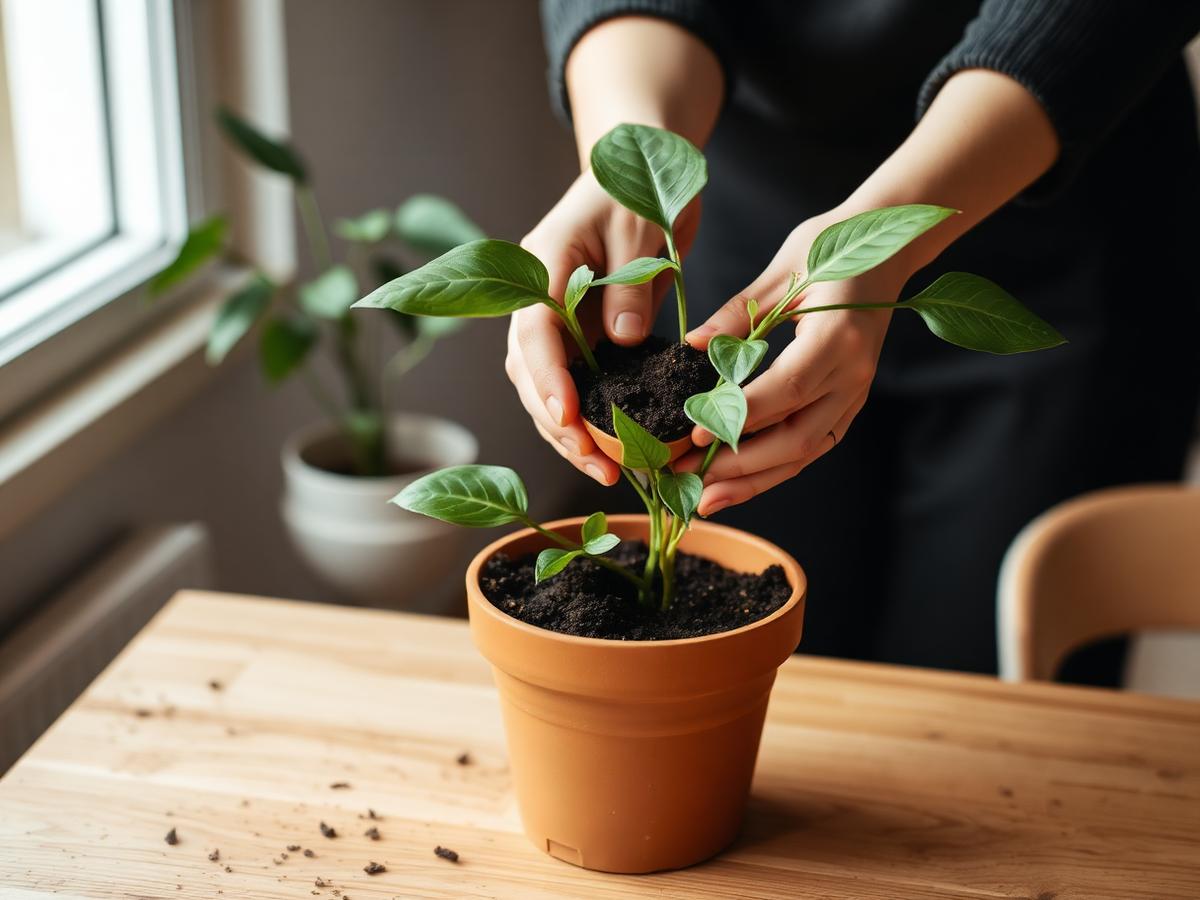
- 5After repotting: a thin top layer keeps fresh mix from blowing, drying, or splashing around the pot for the first few weeks while the plant settles. Optional, mostly cosmetic.
What to skip
Three top-dressing practices are commonly recommended online and almost never worth doing.
- ·Live moss caps on indoor pots: dies within weeks, turns brown, has to be removed.
- ·Decorative coloured glass beads: hold water in pockets that stay wet, breeding ground for moss/algae and fungus gnats.
- ·Thick (>3 cm) moss caps that swallow the stem of the plant: traps moisture against the stem and causes crown rot — particularly bad for snake plants, ZZ plants, and most succulents.
How to apply a top dressing
If you are styling a pot, the application is a 5-minute job and worth doing properly.
- 1Water the plant first and let it drain — putting top dressing on dry soil and then watering through it can cause the layer to redistribute and bare patches to appear.
- 2Sweep the soil surface flat and remove any fallen leaves or debris.
- 3If using moss, dampen lightly first — dry sphagnum is hydrophobic and will sit on top of water without absorbing.
- 4Pour or place the material evenly. Aim for 1 cm cosmetic depth, 2–3 cm functional depth (gnat control or sphagnum-for-humidity).
- 5Leave a 1 cm clear ring around the plant stem — material against the stem traps moisture and causes rot.
- 6Top up every 6–12 months for organic materials (moss, bark) or replace if it shifts during watering. Pebbles can stay indefinitely.